

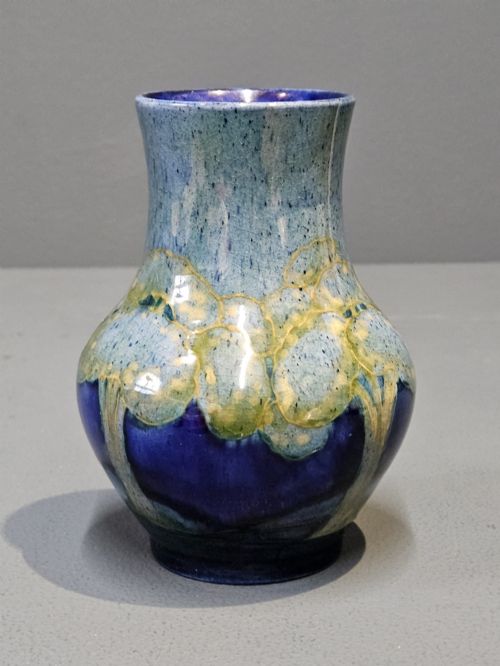

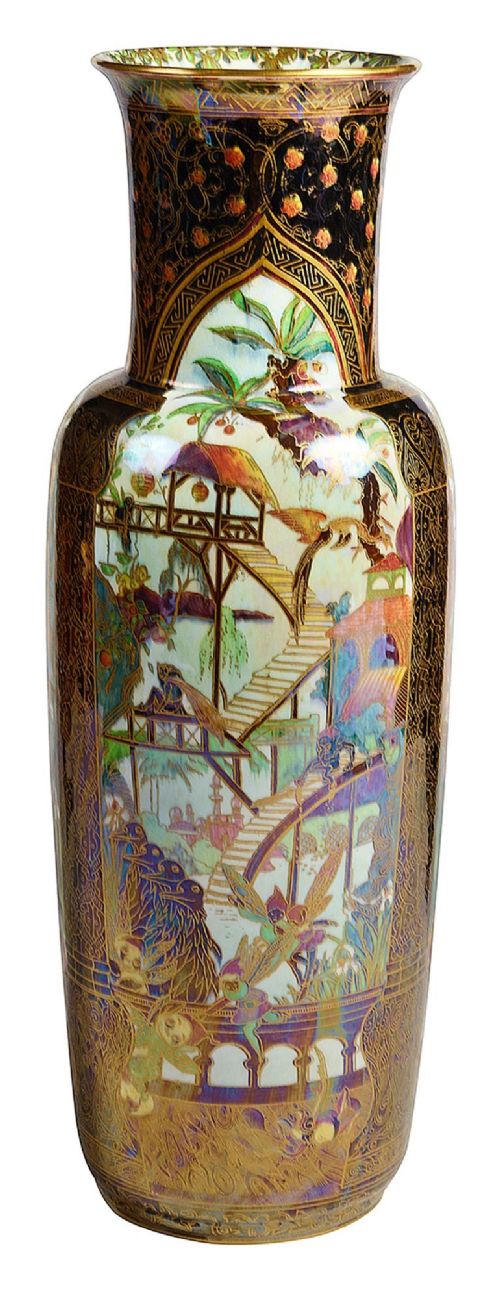
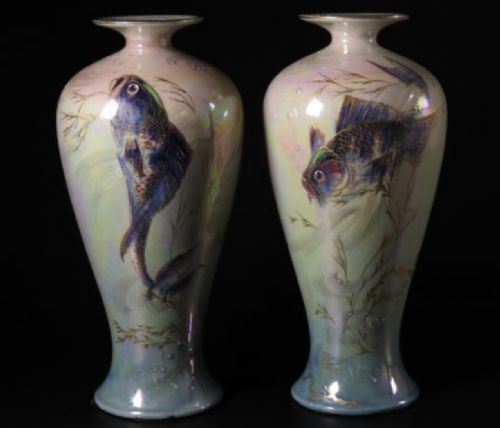
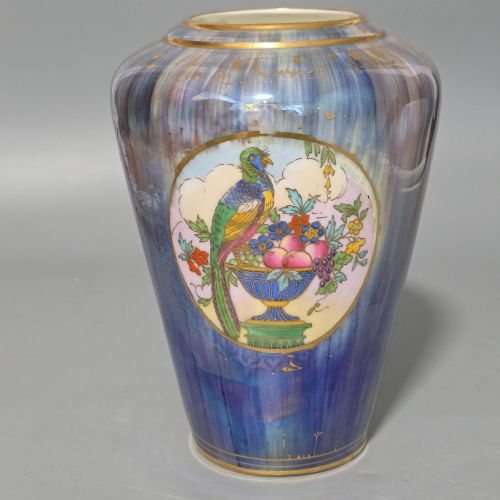


1920s Pottery Vase
A 1920s pottery vase brings bold Art Deco design and lustrous glaze work into a room.
1920s Pottery Vase
A 1920s pottery vase captures the transition from ornate floral motifs to geometric Art Deco styling. Most pieces encountered on this page date directly from the 1920s and 1930s, though some examples reach back towards the turn of the century.
The forms vary widely from slender jars to broad decorative vessels. English potteries like Shelley, Carlton Ware and Royal Doulton sit alongside French works by Robert T Lallement and Pierrefonds, as well as Japanese Kutani wares.
Collectors seek out these vessels for their striking glazes and painted surfaces. They function well as standalone display pieces or as focal points on a mantelpiece.
How they were made
Potters shaped earthenware, bone china, and porcelain on the wheel or in moulds before firing. Earthenware and porcelain formed the structural bodies for rich decorative treatments.
Surface decoration relied on specialised techniques such as lustre glaze, enamel painting, and applied gold leaf. Artists like Daisy Makeig-Jones and Walter Slater applied intricate hand enamelling and shimmering lustre finishes that required multiple firings.
1920s Pottery Vase Retail Price Guide 2026
Typical asking prices for 1920s pottery vase among the pieces listed under this phrase on Sellingantiques today, from the lower quarter to the upper quarter. They describe what is for sale here now, not the wider market.
The selection spans English, French, and Japanese origins, encompassing Art Deco and Taisho Period styles.
What varies in quality
Quality rests on the complexity of the glaze chemistry and the precision of the hand painting. Pieces featuring multi-layered lustre glazes or detailed enamel work by named designers demand greater technical skill.
The clarity of the transfer print or the sureness of the brushwork distinguishes standard production ware from artist-signed studio pieces. Weight, balance, and the crispness of moulded relief details also separate ordinary vessels from finer examples.
Wedgwood·Shelley·Minton·Robert T Lallement·Carlton Ware·Royal Doulton·Royal Lancastrian·Mougin·Carter Stabler Adams
The 1920s Pottery Vase Glossary
- Lustre glaze
- A type of pottery glaze containing metallic salts that produce an iridescent, shimmering surface upon reduction firing. This finish catches the light and shifts in colour depending on the viewing angle.
- Earthenware
- Porous pottery fired at lower temperatures, requiring a glaze to become impermeable to water. It served as the primary body for many British decorative vases of this period.
- Bone china
- A type of soft-paste porcelain containing bone ash, known for its high strength, chip resistance, and milky white translucency. It allowed makers to create thinner, more delicate vessel walls.
- Enamel
- Opaque glass fused to the ceramic surface through firing to create colourful painted designs. Hand enamelling allowed artists to build rich, textured patterns over the base glaze.
- Art Deco
- The dominant design style of the 1920s and 1930s characterised by stylised motifs and clean geometric lines. It replaced organic Edwardian curves with bold symmetry and modern abstraction.
1920s Pottery Vase: Frequently Asked Questions
How do I identify a 1920s pottery vase?
Look for characteristic maker marks, impressed pottery numbers, and stylistic clues such as bold geometric patterns or iridescent lustre finishes. Many pieces carry backstamps specific to the decade of production.
Examining the glaze type and the weight of the ceramic body also helps determine the manufacturing period and origin.
Where were these vases made?
The pieces originate from major ceramic hubs in England, France, and Japan. English potteries in Staffordshire and beyond produced much of the earthenware and lustre ware.
Continental studios and Japanese kilns contributed distinct artistic styles ranging from French Art Deco to traditional Kutani designs.
Can I use these vases for fresh flowers?
Most glazed earthenware and porcelain vessels hold water safely, but delicate antique pieces benefit from careful handling. Using a small liner prevents moisture from seeping into any historic porous bodies.
Consider the interior condition and the presence of any hairline cracks before filling the vessel with water.