


1920s Platinum Brooch
A 1920s platinum brooch brings geometric lines and brilliant stones together, offering the sharp elegance collectors seek.
1920s Platinum Brooch
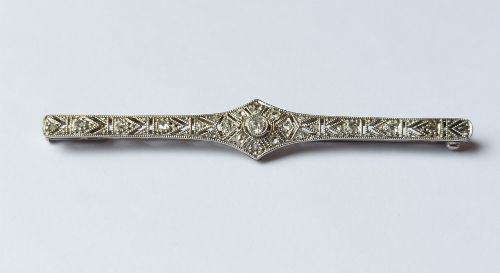
A 1920s platinum brooch centres on the geometric grammar of the Art Deco period, often taking the form of linear bar brooches or substantial openwork plaques. These pieces combine crisp metalwork with fine stones to create striking accessories designed to pin to lapels and gowns.
Most examples found here date strictly to the 1920s, though occasional Edwardian crossover pieces appear alongside them. The dominant style relies on symmetrical layouts and architectural motifs that define the jewellery of the era.
Materials and construction methods
Platinum serves as the primary structural metal for these pieces, chosen for its strength in holding intricate piercing and micro-setting work. Goldsmiths frequently paired platinum with yellow gold or 18ct gold elements, particularly for pin mechanisms and backing structures.
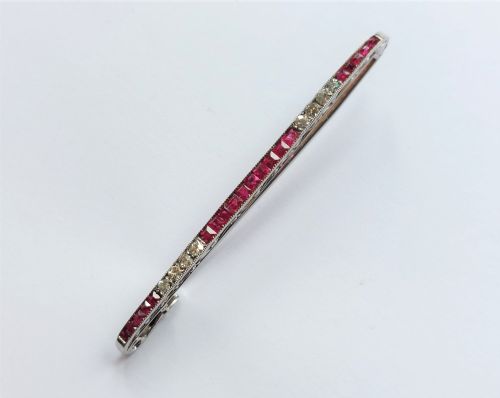
Diamonds dominate the stone selection, cut primarily as old cuts to catch the candlelight, and are often accented with onyx, rubies, or pearls. French workshops also contributed significant output, utilising precise stone-setting techniques to lock each gem flush into the metal framework.
Some brooches double as pendants, offering an ingenious 1920s two-in-one wardrobe solution.
Distinctions in quality and execution
Quality rests heavily on the complexity of the pierce-work and the crispness of the geometric design. Superior pieces display meticulous millegrain edges and seamless integration between the platinum face and the gold elements behind.
The choice and scale of secondary stones also divide the range, with larger diamond carat weights and well-matched calibré-cut onyx or rubies elevating the overall standard of the jewellery.
Cartier Paris
The 1920s Platinum Brooch Glossary
- Platinum
- A dense, durable white metal that became the preferred medium for fine jewellery during the 1920s. Its strength allowed jewellers to create delicate, lace-like settings without risking structural failure.
- Art Deco
- A design style spanning the 1920s and 1930s characterised by symmetry, geometric abstraction, and clean lines. This aesthetic replaced the flowing, organic curves of earlier Edwardian work.
- Old cut
- A traditional diamond cutting style with a small table, high crown, and large culet that produces a soft, candlelit sparkle. These stones are typical of authentic 1920s pieces.
- Bar brooch
- A horizontal pin configuration shaped like a narrow rod or bar, often mounted with clustered diamonds or central gemstones. It represents one of the most common formats for daytime wear in this era.
1920s Platinum Brooch: Frequently Asked Questions
How do I wear a 1920s platinum brooch today?
Pin the piece firmly through heavy fabrics such as wool lapels, winter coats, or structured evening shawls to support the weight safely.
Ensure the safety clasp is secure before wearing the brooch out for the evening.
Are these brooches suitable for daily wear?
Platinum provides exceptional durability for everyday use, holding small diamonds and onyx securely within the metal framework.
Regular checks on the pin hinge and clasp will help prevent accidental loss during regular rotation.
Can a brooch also be worn as a pendant?
Certain designs feature hidden loops or conversion mechanisms that allow the piece to double as a pendant on a chain.
Check the reverse of the mount for hinged bails or loops designed specifically for necklace suspension.
How do I distinguish 1920s work from Edwardian pieces?
Art Deco pieces from the 1920s favour strict geometric lines, strong symmetry, and bold contrasts like platinum paired with black onyx.
Edwardian jewellery generally leans towards softer garlands, floral motifs, and lighter filigree work.