


Platinum Bar Brooch
A platinum bar brooch is a linear fastening of considerable strength, prized for holding crisp geometric lines and brilliant stones.
Platinum Bar Brooch
A platinum bar brooch represents a slender, elongated form of jewellery designed to secure garments while displaying gemstones along a rigid axis. When searching for a platinum bar brooch, buyers encounter pieces spanning the Victorian, Edwardian, and Art Deco periods, alongside later mid-century examples.
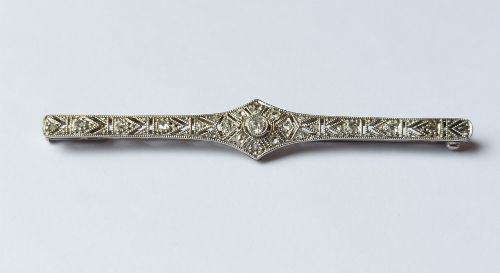
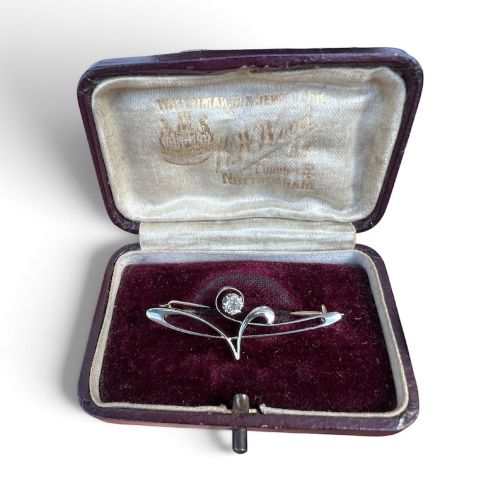
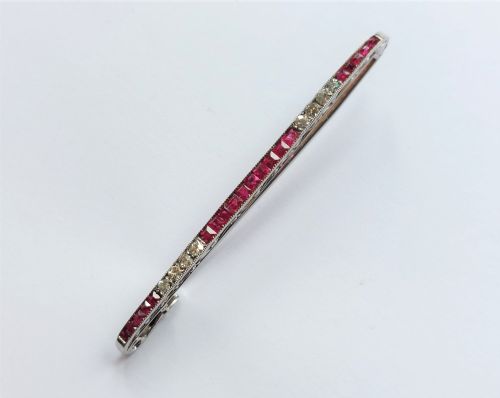
The version most commonly met on this page is the Art Deco creation from the 1920s, which pairs crisp platinum settings with diamonds, geometric onyx, or calibrated rubies. Edwardian iterations also appear frequently, often combining platinum-topped gold with natural pearls or aquamarines in delicate openwork frames.
Originating across Britain, France, and Sweden, these pieces range from simple diamond line settings to pictorial motifs such as flying ducks. The fundamental structure remains a sturdy horizontal pin or bar, engineered to support heavier stones without bending.
How they were made
Makers utilised platinum for its unique combination of strength and malleability, allowing metalworkers to form ultra-thin settings that held stones securely while minimising visible alloy. This dense white metal was frequently combined with yellow gold or white gold on the reverse or pin mechanism to provide the necessary spring and structural tension.
Gemstones including diamonds, sapphires, emeralds, rubies, and pearls were hand-set into the platinum face using meticulous millegrain borders and tiny claw or channel techniques. Many examples rely on old-cut diamonds paired with contrasting materials like black onyx or enamel to achieve the sharp linear contrasts characteristic of the era.
Materials recorded across these pieces include platinum, yellow gold, diamonds, pearls, rubies, sapphires, emeralds, onyx, and aquamarine.
What varies in quality
The hierarchy of quality rests primarily on the calibre and integration of the gemstones relative to the metalwork. Superior examples display perfectly matched stone sizes, high colour clarity in the diamonds, and secure, hand-beaded millegrain edges that show no sign of modern repair.
Construction rigidity also separates fine pieces from simpler production, as top-tier bar brooches maintain absolute straightness along the pin axis even under daily wear. The quality of the hinge and pin mechanism, alongside the crispness of any engraved gallery work, marks the distinction between standard workshop output and exceptional jeweller craftsmanship.
The Platinum Bar Brooch Glossary
- Platinum
- A dense, durable white precious metal that rose to prominence in fine jewellery during the Edwardian era because it could support intricate openwork settings without bending. Its natural silvery lustre does not tarnish over time.
- Millegrain
- A decorative technique involving a tiny beaded border pressed into the edge of metal settings to frame gemstones. This soft textured line characterises Edwardian and Art Deco fine jewellery.
- Old-cut diamond
- A vintage diamond cutting style predating the modern brilliant cut, typically featuring a smaller table, higher crown, and open culet. These stones catch candlelight and softer ambient illumination with a distinct warm charm.
- Bar brooch
- A horizontal pin designed with a long, narrow central shaft that distributes weight evenly across a fastening surface. They were worn widely on lapels, collars, and heavy fabrics.
- Art Deco
- A design style spanning the 1920s and 1930s defined by strict geometric symmetry, streamlined shapes, and strong contrasts between white platinum and dark stones like onyx.
Platinum Bar Brooch: Frequently Asked Questions
How do I wear a bar brooch safely?
Secure the pin through a sturdy layer of fabric such as a coat lapel, heavy knit, or scarf rather than delicate silk. Ensure the safety catch or C-clasp is fully engaged before stepping out.
For extra security, a pin protector can be slipped onto the sharp end behind the garment. This prevents the brooch from working loose during movement.
What is the difference between Edwardian and Art Deco brooches?
Edwardian pieces tend to feature lacy, garland-style platinum-topped gold work with pearls, aquamarines, and soft curving motifs. They reflect a romantic aesthetic focused on lightness and delicate floral or ribbon themes.
Art Deco brooches embrace bold symmetry, sharp angles, and strict linear geometry. They rely heavily on diamond and onyx combinations to project a modern, architectural look.
Can these brooches be converted into pendants?
Many collectors choose to suspend a bar brooch from a chain to wear it as a necklace. Jewellers can attach a discreet, removable loop without altering the original platinum structure.
This conversion offers a practical way to enjoy antique jewellery on a daily basis while keeping the back pin fully intact.
How should I clean antique platinum jewellery?
Soak the piece briefly in warm water mixed with a few drops of mild washing-up liquid to loosen surface oils. Gently brush around the diamond settings with a very soft toothbrush.
Avoid harsh chemical dips, especially if the brooch contains pearls, emeralds, or onyx, which can be permanently damaged by strong solvents.