



1920s Diamond Pin
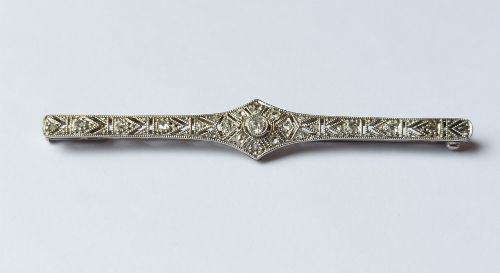
A 1920s diamond pin brings geometric elegance and brilliant sparkle to your lapel, capturing the definitive spirit of Art Deco design.
1920s Diamond Pin
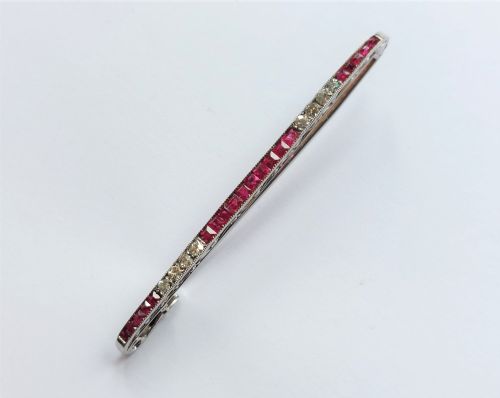
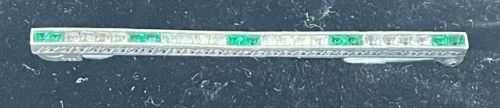
A 1920s diamond pin represents the height of geometric grace, taking the form of bar brooches, crescent designs, and convertible brooch pendants. You will most frequently encounter platinum and white gold settings shaped in clean lines that showcase brilliant-cut stones alongside contrasting materials.
The aesthetic is deeply rooted in the Art Deco movement, occasionally bleeding into Edwardian sensibilities with softer pearl and gold combinations. Pieces range from delicate linear bar brooches to substantial multi-stone creations set with significant diamond carat weights.
Originating largely from British, French, and broader continental workshops, these jewels often combine diamonds with onyx, rubies, sapphires, or aquamarines. The form serves primarily as a decorative fastening for lapels, scarves, and structured garments.
Materials and Construction
Platinum and white gold dominate the metalwork of this era, offering the tensile strength required for intricate, needle-thin geometric frames. These white metals provide a seamless reflective backdrop that enhances the brilliance of the diamonds.
Master jewellers combined precious stones with contrasting natural elements such as black onyx, rock crystal quartz, chrysoprase, and colourful gems like rubies and sapphires. Settings frequently utilise old-cut diamonds hand-set within precise millegrain borders and open-work platinum galleries.
1920s Diamond Pin Retail Price Guide 2026
Typical asking prices for 1920s diamond pin among the pieces listed under this phrase on Sellingantiques today, from the lower quarter to the upper quarter. They describe what is for sale here now, not the wider market.
Several pieces double as pendants, proving that 1920s owners enjoyed versatile jewellery that worked just as hard by night as by day.
Distinctions in Quality
The upper echelon of these jewels displays superior stone matching, where every individual old-cut diamond shares a uniform brilliance and proportional depth. Master craftsmanship shows in the crispness of the open-work platinum frames and the precision of the onyx or gemstone inlay.
Lesser examples may rely on heavier gold settings with lower carat total weights or less rigorous stone selection. The finesse of the piercing and the tightness of the stone settings ultimately determine the standing of an individual piece.
Cartier Paris
The 1920s Diamond Pin Glossary
- Art Deco
- A design style dominant in the 1920s characterised by sleek geometric shapes, stylised motifs, and streamlined elegance. It rejected Victorian ornamentation in favour of modern industrial influences.
- Bar Brooch
- A horizontal pin designed in a narrow linear format, often featuring a central gemstone cluster or graduating stones along a precious metal bar. This form was exceptionally popular for securing lapels during the 1920s.
- Old-Cut Diamond
- A diamond cut by hand before modern machinery standardised proportions, featuring a smaller table, higher crown, and deep pavilion that produces a distinctive soft, candlelit sparkle.
- Millegrain
- A decorative jewellery technique involving a border of tiny, raised metal beads along the edges of a setting. It imparts a delicate, refined texture typical of fine 1920s craftsmanship.
- Platinum
- A dense, durable white precious metal favoured in the 1920s for its ability to hold delicate gemstone settings securely without bulk.
1920s Diamond Pin: Frequently Asked Questions
What is the difference between white gold and platinum pieces?
Platinum is naturally white, exceptionally dense, and strong enough to support fine, intricate wirework without bending. White gold is an alloy mixed with other metals to achieve a pale tone and tends to feel slightly lighter on the garment.
While both metals visually complement the 1920s aesthetic, platinum was the premier choice for top-tier jewellery of the period due to its superior durability and prestige.
Can these pins also be worn as pendants?
Certain examples are constructed with hidden bails or loops on the reverse, allowing them to transition seamlessly from a lapel brooch to a pendant hung from a chain. This dual functionality was a clever feature appreciated by jewellers and buyers of the period.
Check the reverse of the piece for hinged loops or fitted attachments if you wish to wear it around the neck.
How should I clean my antique diamond pin?
Soak the piece briefly in warm water mixed with a few drops of mild washing-up liquid, then gently brush around the stones and settings with a very soft toothbrush. Avoid harsh chemical dips, particularly if the brooch incorporates softer natural materials like pearls, onyx, or turquoise.
Pat the jewel thoroughly dry with a soft lint-free cloth before storing it in a lined jewellery box away from other pieces.