



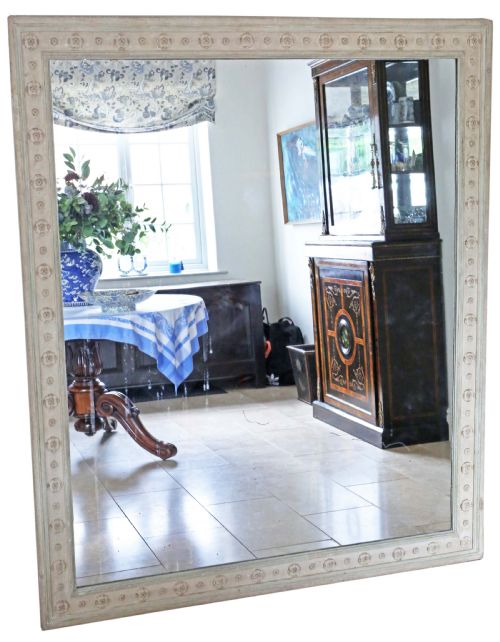

1920s Overmantel Mirror
A 1920s overmantel mirror brings period character and architectural presence to a room, offering generous scale and distinctive framing.
1920s Overmantel Mirror
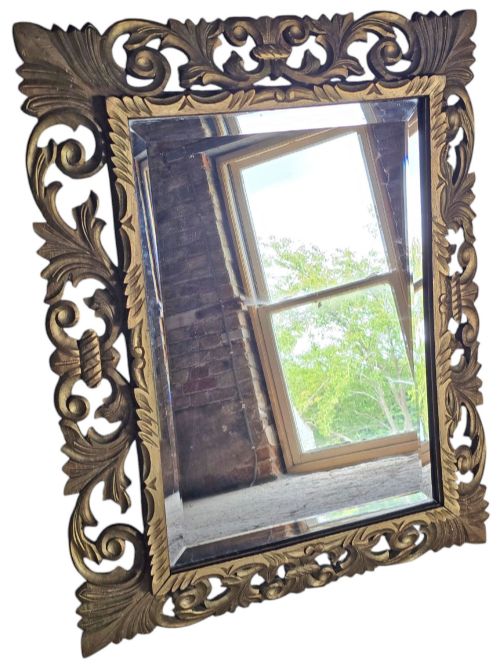
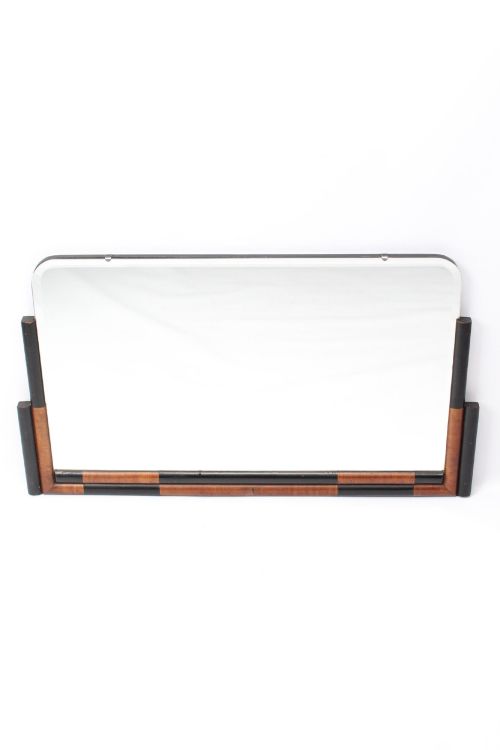
A 1920s overmantel mirror is a substantial wall-hanging glass intended to sit directly above a fireplace mantelpiece. The pieces found here span the 1920 and 1930 periods, incorporating styles from Art Deco geometric designs to Florentine, Chippendale Revival, Regency Revival, Rococo Revival, and French Chateau forms.
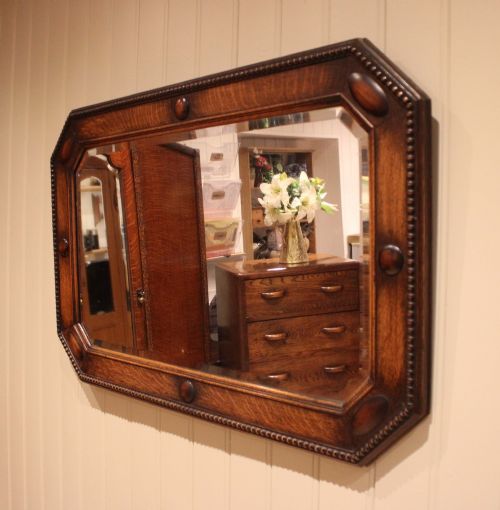
The selection ranges from large rectangular oak frames to ornate giltwood statements and painted finishes. You will encounter long horizontal proportions designed to span a chimney breast alongside tall vertical formats.
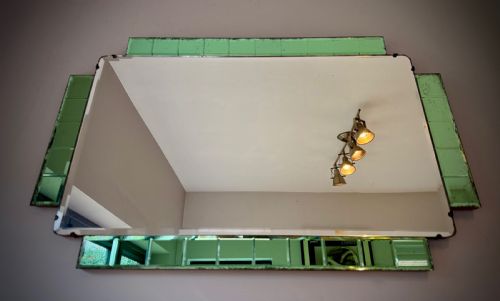
Materials vary widely across the inventory, featuring oak, walnut, ebonised wood, mahogany veneer, and giltwood. Some examples incorporate emerald green glass panels or detailed painted and gilded surface work.
How they were made
Frames are constructed from solid hardwoods such as oak and walnut, or utilise mahogany veneer over a stable core. Giltwood and painted variants apply surface decoration directly onto carved wooden mouldings.
Glass plates are cut to fit large rectangular, diamond, or multi-panel configurations, often featuring bevelled edges to catch the light. Joinery relies on period cabinetmaking techniques appropriate to the revival styles or geometric Art Deco forms of the era.
Listings feature pieces dated 1920 and 1930, spanning Art Deco, Florentine, and various revival styles executed in oak, walnut, and giltwood.
What varies in quality
Quality rests in the depth and execution of the frame carving, whether it is an ornate Florentine giltwood moulding or clean Art Deco veneering in walnut and oak. Substantial scale combined with crisp bevelling on the mirror glass elevates the visual impact.
The choice of secondary woods, the preservation of original gilding or paint, and the structural integrity of the large wooden frame distinguish a standard utility mirror from a high-status statement piece.
The 1920s Overmantel Mirror Glossary
- Overmantel
- A mirror or decorative panel specifically designed to be hung on the wall immediately above a fireplace mantelpiece.
- Giltwood
- Wood that has been coated with gold leaf or gold paint to create a rich, metallic surface finish. It is frequently seen on ornate revival frames from this era.
- Ebonised
- Wood treated with a chemical stain or finish to imitate the dark, dense appearance of ebony. This technique was popular in Art Deco design.
- Bevelled
- Glass with an angled edge ground and polished to a specific slope. This creates a decorative prismatic effect around the border.
- Veneer
- A thin layer of superior wood adhered to a base timber to provide a decorative figured surface. Walnut and mahogany are typical examples.
1920s Overmantel Mirror: Frequently Asked Questions
Where should a 1920s overmantel mirror be hung?
These mirrors are traditionally positioned centrally above a fireplace mantelpiece to reflect light and anchor the room's proportions.
They also function effectively on large living room walls as standalone statement pieces without a fireplace beneath them.
How do I identify an Art Deco mirror?
Art Deco mirrors typically feature geometric shapes, such as rectangles and diamonds, along with materials like walnut, ebonised wood, and occasionally coloured glass panels.
They contrast sharply with the elaborate, flowing curves of the Florentine and Rococo revival styles also found in this period.
Are these mirrors heavy to hang?
Due to their substantial wooden frames and large glass plates, these overmantel mirrors carry significant weight.
Secure wall fixings and mounting directly into structural studs or masonry are essential for safe installation.
What is the difference between giltwood and painted finishes?
Giltwood involves the application of fine gold leaf or metallic gilding to wooden carvings, producing a bright, reflective surface. Painted finishes utilise pigments over wood or plaster mouldings to achieve solid colour or antiqued effects.