


Large Art Deco Mirror
A large art deco mirror delivers strong geometric lines and striking tinted glass to transform a room.
Large Art Deco Mirror
When you search for a large art deco mirror, you encounter pieces spanning the 1920s and 1930s, alongside occasional 19th-century and 1950s examples. Wall mirrors dominate the selection, appearing alongside overmantels, girandoles, and dressing table variants.
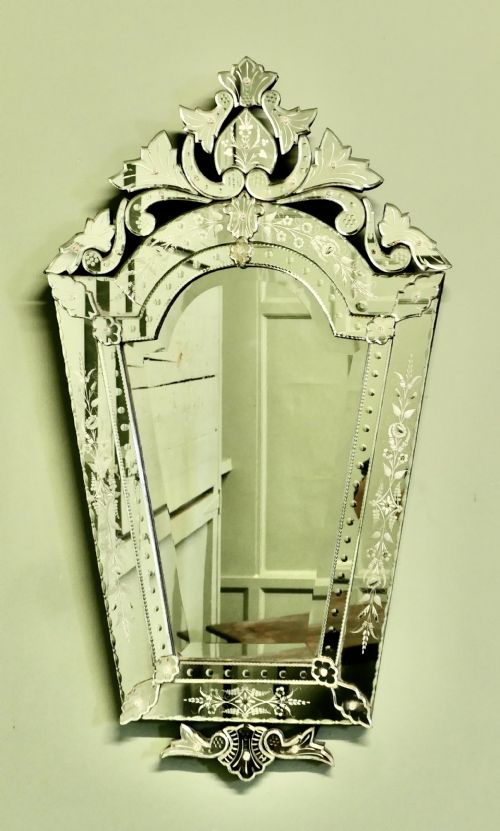
The aesthetic relies heavily on bold shapes, including rectangular, circular, octagonal, diamond, and arch formats. French and Venetian origins bring distinct regional decorative touches to the standard geometric vocabulary.
Beyond standard wall hangings, related forms such as mirrored clocks, vanity pieces, pendant lights, and console tables frequently emerge in the inventory.
Materials and technique
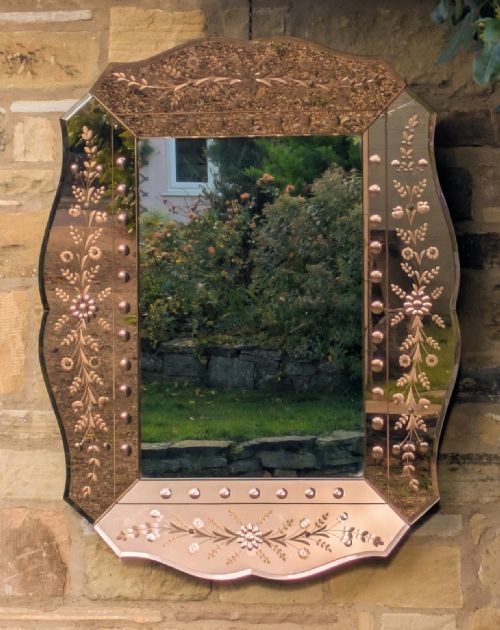
Glass and mirror glass form the primary visual components, often enhanced with silvering, acid-etching, or distinct colour tints like peach, pink, green, and blue.
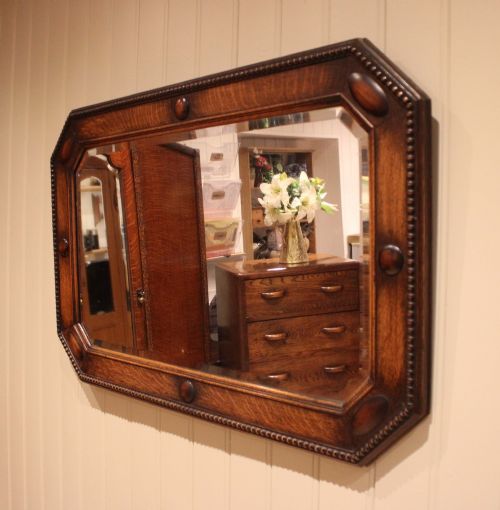
Frames combine structural timber such as oak, bamboo, and carved wood with applied metal elements in chrome, brass, copper, and gilt gesso.
Specialised techniques include layered two-tone glass panels, guilloché enamel detailing, and specialised bevelled edge cutting.
Listings include oak, chrome, brass, and coloured glass in peach, pink, green, and blue.
Judging quality
Quality rests on the integrity of the original glass plates and the precision of the frame construction, whether carved wood, gilt gesso, or polished metal. Pieces featuring specialist coloured glass panels, such as peach or pink, show superior design ambition.
The sophistication of secondary decorative elements, including acid-etched motifs or integrated clock mechanisms, separates standard utility pieces from high-end examples.
William Neale
The Large Art Deco Mirror Glossary
- Overmantel mirror
- A large mirror designed specifically to hang above a fireplace mantelpiece. These often span considerable horizontal widths to match the hearth below.
- Venetian mirror
- A mirror style originating in Italy featuring extensively engraved or shaped glass sections fixed over a wooden backing, often with decorative glass floral motifs.
- Girandole
- A branched wall mirror holding candle sockets or electric lights attached directly to the frame. The reflective glass magnifies the illumination.
- Guilloché
- A decorative engine-turned engraving technique producing intricate repeating geometric patterns beneath a translucent enamel coating.
- Peach glass
- Tinted mirror glass popular in the period that imparts a warm, rosy reflection. It frequently appears in side panels or accent sections.
Large Art Deco Mirror: Frequently Asked Questions
How do I hang a heavy art deco wall mirror?
Heavy pieces require robust wall fixings anchored directly into structural masonry or stud work. Professional mirror hangers utilise heavy-duty D-rings and steel wire rated well above the weight of the frame.
Ensure the weight distributes evenly across multiple points to prevent frame distortion or glass cracking over time.
Where should I place an overmantel mirror?
An overmantel mirror traditionally sits centrally above a fireplace opening to anchor the proportions of the chimney breast. This placement reflects natural light back into the room and enhances the vertical space.
Ensure the width of the mirror does not exceed the width of the mantel shelf below for visual balance.
How do I clean antique silvered glass?
Clean antique mirror glass gently using a soft microfibre cloth and a mild, ammonia-free glass cleaner. Avoid spraying liquid directly onto the glass, as moisture can seep behind the edges and damage the original silvering.
Apply the cleaner to the cloth first to protect vulnerable edges and aged backing materials.
What defines the modernist art deco style?
Modernist pieces strip away excessive ornamentation in favour of stark geometric shapes, clean lines, and industrial materials like chrome and tubular metal. The focus shifts to functional geometry and striking colour contrasts.
This approach reflects the machine-age influences prevalent during the interwar period.