


1920s Oriental Rug
A 1920s oriental rug brings centuries of weaving heritage into a room through rich wools and enduring village designs.
1920s Oriental Rug
When searching for a 1920s oriental rug, buyers encounter floor coverings originating from Persia, Anatolia, the Caucasus, and Central Asian tribal regions. These hand-knotted and flatwoven pieces range from small prayer rugs and runner rugs to large village and tribal carpets.
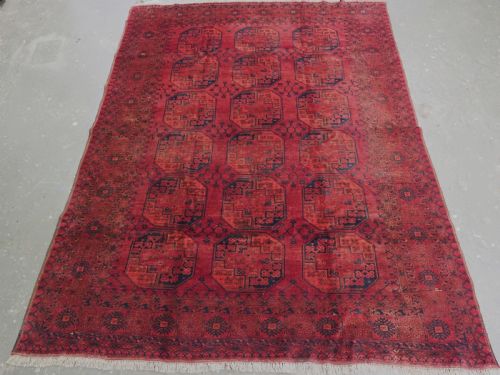
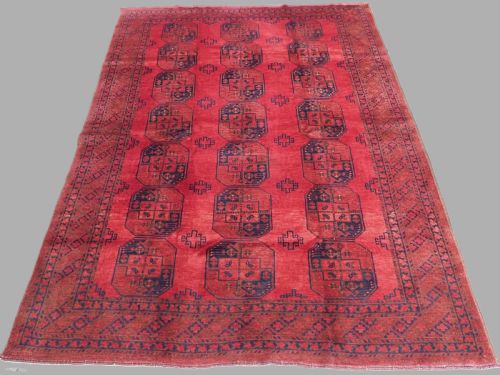
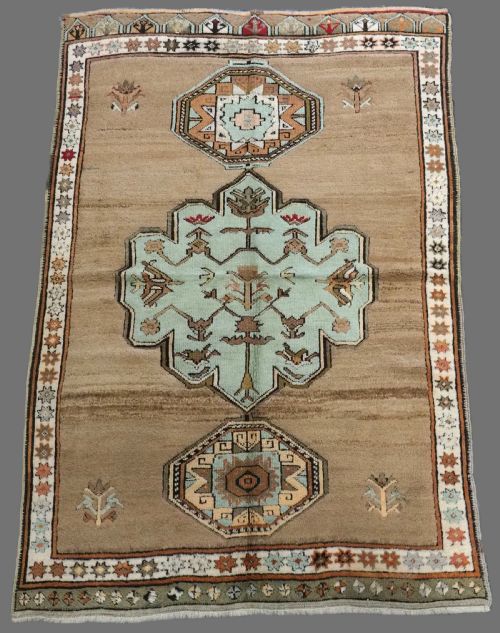
The selection on this page leans heavily toward Afghan tribal and village workshops, alongside classic Persian town pieces from Kashan, Tabriz, and Heriz. Buyers also find Balkan flatweaves and Turkish Konya examples representing the diverse weaving traditions active around 1920.
How they were made
Weavers constructed these rugs predominantly using wool foundations and surface piles, occasionally incorporating camel wool and silk highlights. Natural dyes provided the characteristic warm reds, soft pastels, and ivory grounds seen across the regional styles.
The construction relies on hand-knotting techniques executed on vertical or horizontal looms, paired with flatwoven kilim ends. Durability varied depending on whether the piece was produced for nomadic utility or urban workshop display.
Listings feature wool, cotton, camel wool, and silk materials alongside traditional natural dyes.
What varies in quality
Knot density and structural tightness set finer workshop carpets apart from coarser tribal rugs. Finer materials like silk and premium wool also distinguish urban Persian productions from heavier utility weaves.
The integrity of the pile, the retention of natural dye vibrancy, and the precision of traditional motifs dictate the overall standard of preservation. Completeness of original kilim ends and borders further influences the standing of individual carpets.
Benlian
The 1920s Oriental Rug Glossary
- Kilim
- A flatwoven carpet or rug produced without a pile, often utilised for ends or utilitarian floor coverings. These feature geometric patterns created by interweaving warp and weft threads.
- Mihrab
- A niche design symbolising a prayer arch, frequently centered on Islamic prayer rugs. This motif guides the orientation of the piece.
- Gul
- An octagonal medallion or repeating floral emblem characteristic of Turkmen and Afghan tribal weaving. Each tribe utilised distinct variations of this primary motif.
- Herati
- A repeating botanical pattern composed of a central rosette enclosed by leaves within a diamond lattice. This design appears extensively in Persian town rugs.
- Warp
- The vertical threads stretched across a loom that form the structural foundation of a rug. Weft threads are subsequently passed horizontally between them.
1920s Oriental Rug: Frequently Asked Questions
How do I identify a prayer rug?
Prayer rugs typically feature a distinct mihrab arch design at one end, which historically directed the alignment toward Mecca during daily devotions. They tend to be smaller in format compared to room-sized carpets.
These pieces were woven for personal ritual use rather than general floor traffic, resulting in specific iconography such as lamps, ewers, or floral vases within the niche.
Where were these rugs made?
The pieces originate from across Central Asia, Persia, Anatolia, and the Caucasus, reflecting the major carpet-producing centres of the era. Tribal groups in Afghanistan and the Balkans also contributed distinct regional flatweaves and knotted carpets.
Town workshops in places like Tabriz and Kashan produced structured floral designs, while nomadic and village weavers relied on geometric tribal vocabulary.
What materials are used in these rugs?
Wool serves as the primary material for both the pile and the foundation threads across the majority of these pieces. Selected examples incorporate cotton foundations, camel wool fields, or silk highlights.
Natural dyes provided the colour palette, yielding warm reds, soft pastels, and deep ivory tones that have mellowed over time.
How do I care for an antique rug?
Regular gentle vacuuming without a rotating power brush helps remove grit that can damage wool fibres over time. Professional cleaning tailored for antique textiles preserves the natural dyes and structure.
Placing the rug away from direct, harsh sunlight prevents fading, while a quality underlay reduces friction against hard flooring.