





1920s Console Table
A 1920s console table brings period character to a hallway or reception room, offering a surface for lamps and letters that anchors the interior scheme.
1920s Console Table
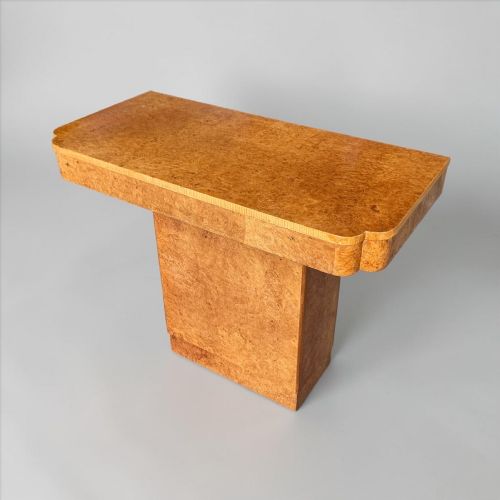
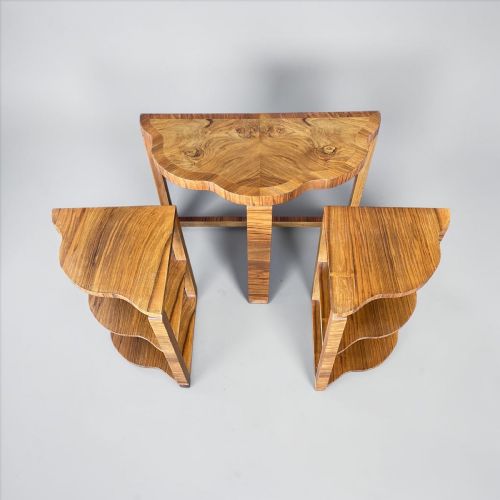
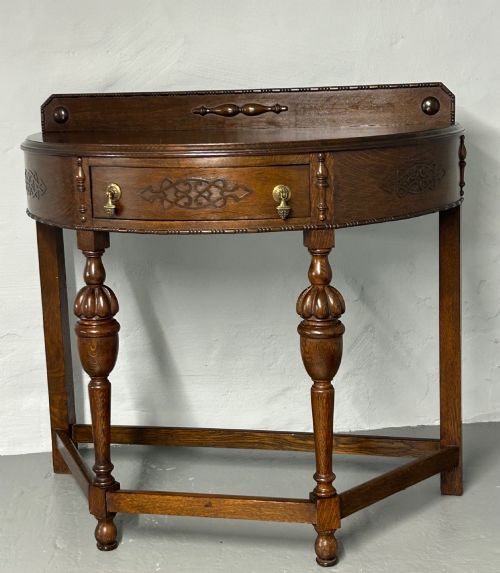
When you search for a 1920s console table, you encounter a surprisingly broad array of forms ranging from streamlined Art Deco designs to revival pieces that look back to earlier centuries. Oak and walnut dominate the selection, appearing in forms such as demi-lune hall tables, lowboys, and serpentine side tables designed to fit narrow spaces.
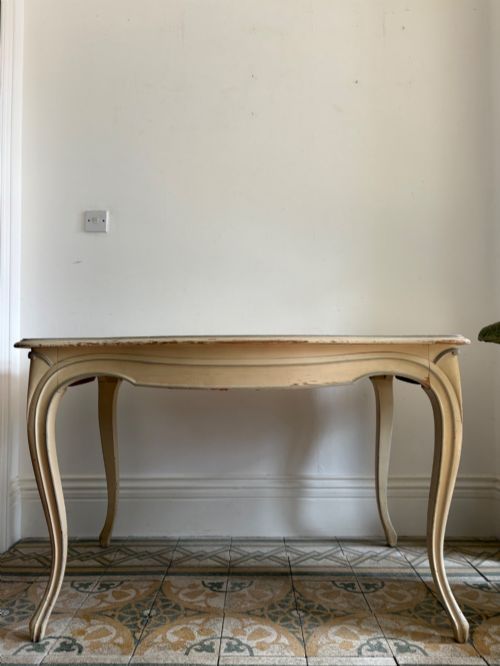
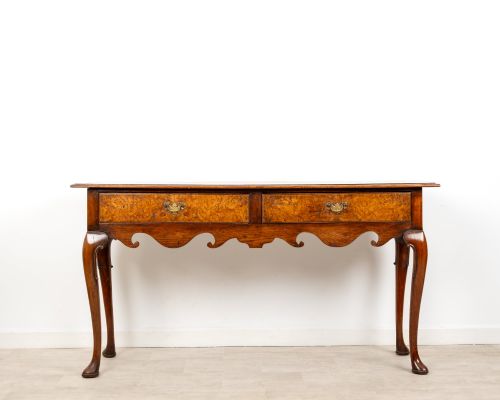
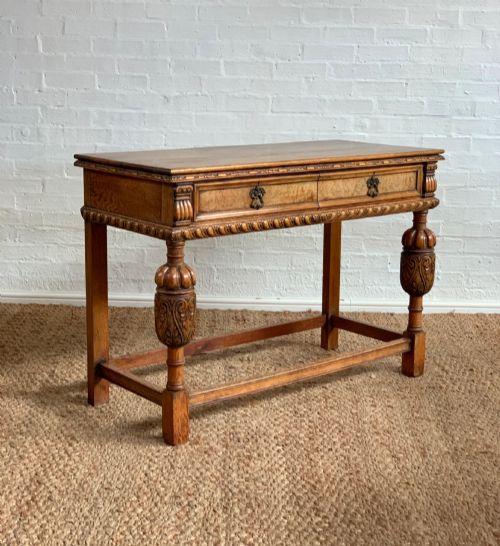
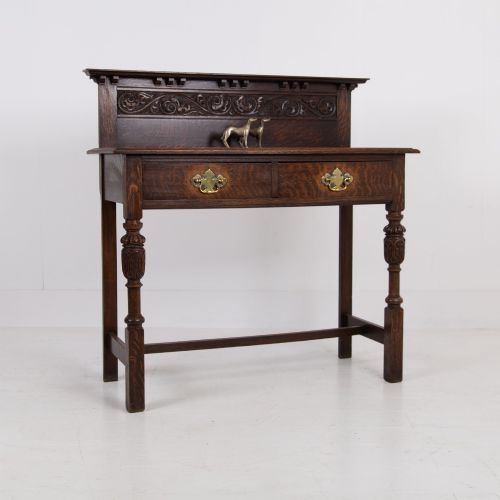
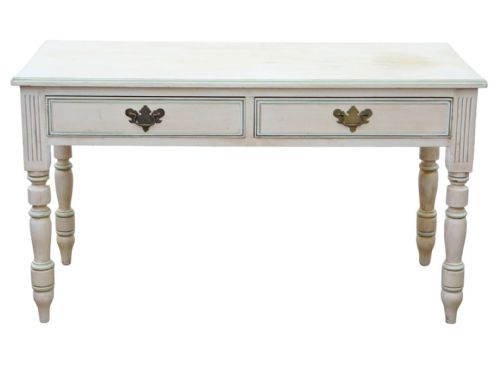
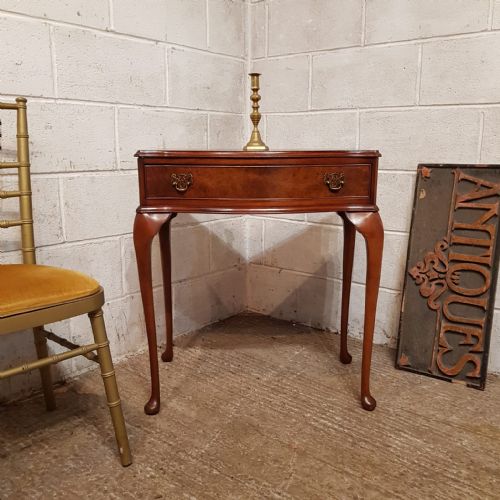
Makers of this era frequently drew inspiration from Queen Anne, Jacobean, and Georgian styles, producing carved cabriole legs and fold-over tops alongside the clean geometric lines of the Art Deco period. Painted and ebonised wood surfaces also emerge across the inventory, sometimes paired with marble tops or inset suede writing surfaces.
The practical function of these tables varies from simple side surfaces to convertible card tables and serving tables equipped with drawers. Walnut and figured walnut versions provide rich grain patterns, whilst oak examples often display robust revival detailing suited to period hallways.
Judging Quality and Execution
The standard of a piece rests largely on the selection of timber veneers and the crispness of any hand-carved detail on legs and friezes. Figured walnut with balanced grain matching across a top denotes superior material selection compared to plain or heavily distressed surfaces.
Construction methods dictate longevity, visible in the tight tolerances of drawer dovetails and the stability of folding mechanisms on card tables. Finer examples retain their original brass hardware, integrated marble slabs, or undisturbed painted finishes that have aged with a stable patina.
The inventory bridges multiple styles, moving from Art Deco geometry to Jacobean, Queen Anne, and Georgian revival forms.
Beresford & Hicks London
The 1920s Console Table Glossary
- Demi-lune
- Half-moon shape. A demi-lune console table sits flat against a wall, making it ideal for narrow hallways and corridors.
- Lowboy
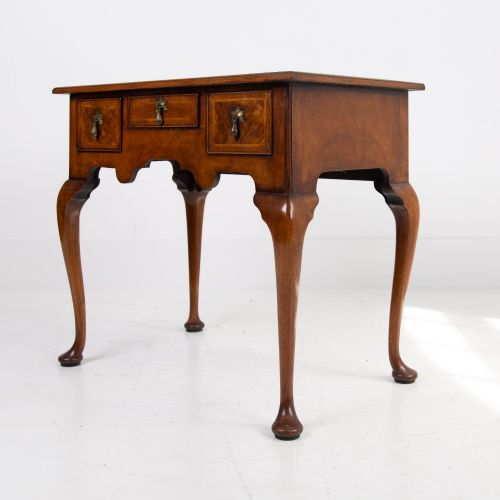
- A small table with drawers, typically standing on four tall legs. This form gained popularity in earlier centuries and saw continued production in walnut and oak during the period.
- Serpentine
- Having a wave-like curved front edge. This contour adds visual movement and sophistication to the profile of a side table.
- Cabriole leg
- A furniture leg that curves out and then in, resembling the leg of an animal. It frequently terminates in a pad or claw-and-ball foot on revival pieces.
- Ebonised
- Wood treated to resemble ebony. Craftsmen stained or painted light timbers black to achieve a dramatic, high-contrast finish often associated with advanced design periods.
1920s Console Table: Frequently Asked Questions
Where do I put a console table?
These tables find a natural home in entrance halls, corridors, and landings where floor space is restricted. Their shallow depth allows them to sit flush against a wall without obstructing movement.
In living areas, they function well positioned behind a sofa or beneath a wall mirror, holding lamps, decorative objects, and everyday items.
How do I spot Art Deco style?
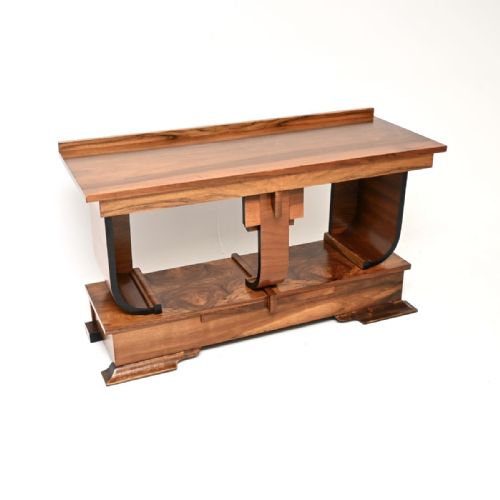
Art Deco pieces rely on symmetrical geometry, streamlined silhouettes, and exotic wood veneers such as birds-eye maple and figured walnut. They eschew historical revival carving in favour of clean, blocky forms.
Look for contrasting ebonised details and polished surfaces that accentuate the natural grain of the timber without relying on historical ornamentation.
Are these tables suitable for dining?
Standard console tables are generally too narrow for dining, but many examples from this era feature fold-over tops or drop leaves. These convertible designs expand to function as card tables, games tables, or small supper tables when entertaining.
Checking the mechanism reveals whether a table can safely transform from a slim wall console into a functional surface.
How do I care for walnut veneer?
Walnut benefits from consistent indoor humidity away from direct heat sources and sunlight, which can dry out timber and fade veneers. Dust regularly with a dry cloth and apply a quality wax polish sparingly to maintain the sheen.
Avoid placing damp glasses or unsealed pottery directly onto the wood to prevent ring marks on the polished surface.