

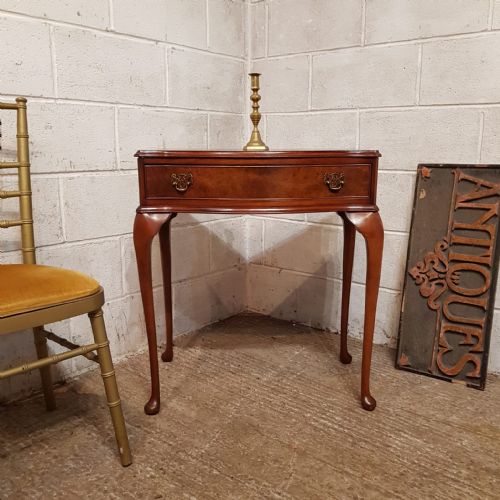


1920s Burr Walnut Drawers
These 1920s burr walnut drawers bring dramatic grain and period presence to a room, offering both generous storage and striking decorative character.
1920s Burr Walnut Drawers
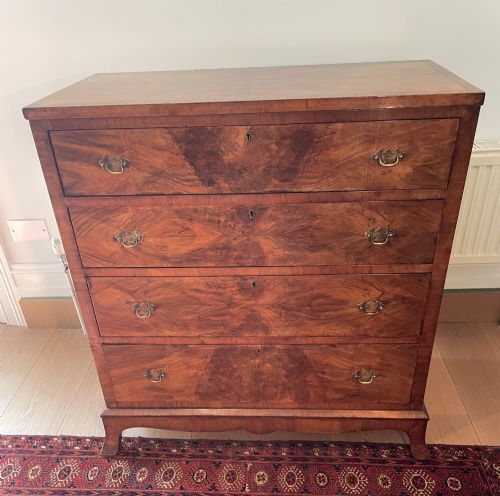
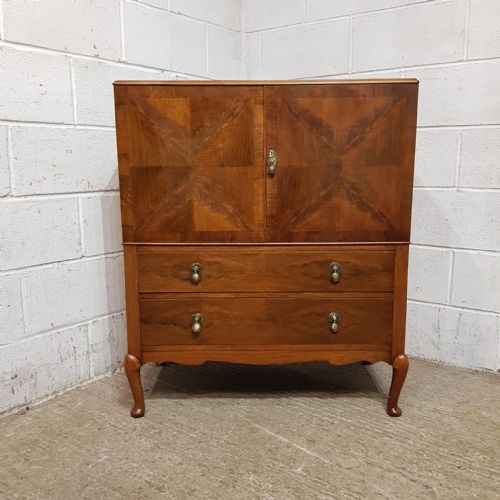
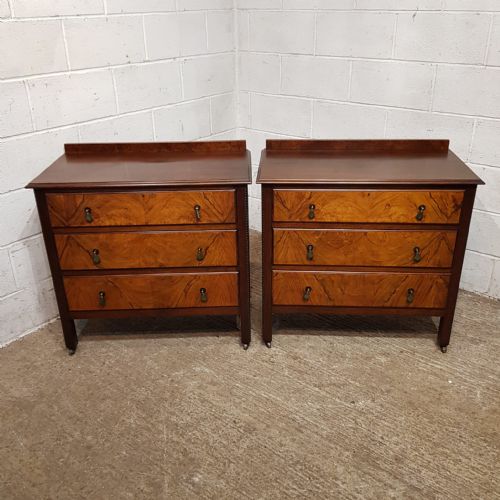
When you search for 1920s burr walnut drawers, you are looking at case furniture defined by intricate wood figures and the distinctive design idioms of the interwar period. The selection on this page centres on tallboys, chests of drawers, and side tables produced around nineteen twenty to nineteen thirty.
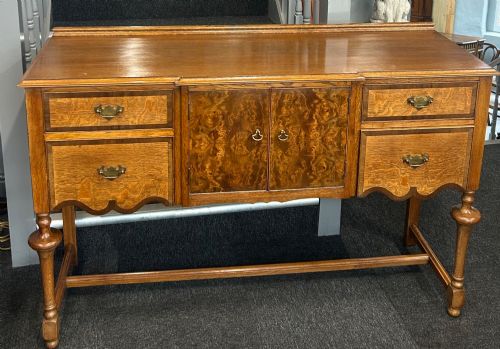
The most common forms you will meet here are tallboys and standard chests of drawers, alongside occasional side tables and sideboards. These pieces combine traditional cabinetmaking proportions with the decorative appeal of burr veneers.
Stylistically, the pieces span Art Deco, Queen Anne Revival, and Georgian Revival designs. This mix reflects a period where makers paired bold modern lines with revived historical silhouettes.
How they were made
Cabinetmakers constructed these pieces using solid timbers like oak and walnut for internal framing and structural stability. Burr walnut veneer was then applied to primary surfaces to create dramatic, swirling grain patterns.
Metal hardware such as brass handles and pulls finished the construction, alongside occasional use of bakelite for decorative details. Veneering techniques required careful matching of the burr cuts across drawer fronts for a balanced visual effect.
1920s Burr Walnut Drawers Retail Price Guide 2026
Typical asking prices for 1920s burr walnut drawers among the pieces listed under this phrase on Sellingantiques today, from the lower quarter to the upper quarter. They describe what is for sale here now, not the wider market.
Some chests arrive with enough secret drawer space to make you wonder if the previous owner hid their diary or their biscuits.
What varies in quality
Quality in these pieces rests primarily on the selection and symmetry of the burr walnut veneer. Finer examples display carefully matched grain patterns that flow evenly across multiple drawer fronts.
Construction methods also separate standard production from superior work, seen in the solidity of the secondary timbers like oak and the precision of the drawer joints. The choice of hardware and the retention of original brass elements contribute further to a piece's standing.
The 1920s Burr Walnut Drawers Glossary
- Burr walnut
- A thin slice of wood veneer taken from a tree growth or burl, prized for its swirling, mottled grain patterns. It creates a highly decorative surface on cabinet fronts.
- Tallboy
- A tall chest of drawers, often comprising a smaller set of drawers stacked on top of a larger base chest. This form maximises vertical storage space.
- Art Deco
- A design style emerging in the interwar period, characterised by sleek geometric shapes, stylised motifs, and modern materials. It contrasts with traditional revival styles of the same era.
- Veneer
- A thin layer of superior wood glued to a base timber of lesser quality. This technique allowed cabinetmakers to utilise expensive burr walnut efficiently.
- Serpentine front
- A furniture front characterised by a double-curved line, convex in the centre and concave at the sides. It adds visual movement and sophistication to smaller side tables and chests.
1920s Burr Walnut Drawers: Frequently Asked Questions
What styles are common in 1920s burr walnut furniture?
The pieces span several distinct aesthetic movements from the early twentieth century. Art Deco designs feature clean geometry, while Queen Anne and Georgian Revival pieces draw on eighteenth-century proportions.
This variety means you can find both streamlined modern looks and softer revival silhouettes within the same material.
How do tallboys differ from standard chests of drawers?
Tallboys are built higher, typically combining a chest of drawers base with an upper section to create greater vertical storage. Standard chests of drawers keep a lower, uniform height.
Both utilise burr walnut veneer on the primary surfaces to create a strong visual statement.
Where does the swirling grain pattern come from?
The pattern comes from burr walnut veneer, which is sliced from irregular growths on the walnut tree. Cabinetmakers arrange these thin slices carefully across drawer fronts.
This technique produces complex, swirling patterns that define the appearance of the furniture.
How do these pieces fit into modern interiors?
Their warm tones and figured grain allow them to function well as focal points in contemporary bedrooms or living spaces. They provide practical storage while adding distinct period character.
Their varied forms, from compact side tables to larger tallboys, suit different room sizes.