


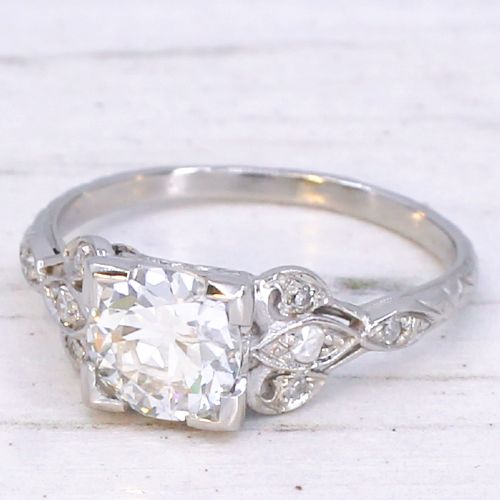

1910s Gold Jewellery
When you search for 1910s gold jewellery, you encounter a refined period spanning Edwardian grace through George V into early Art Deco design.
1910s Gold Jewellery
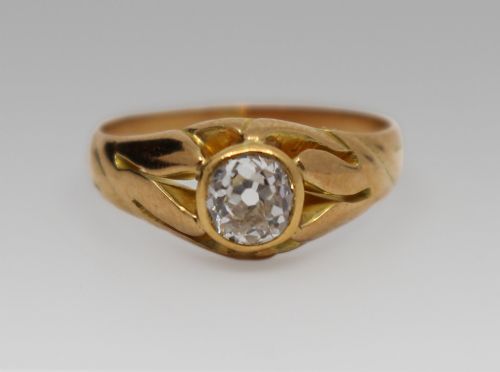
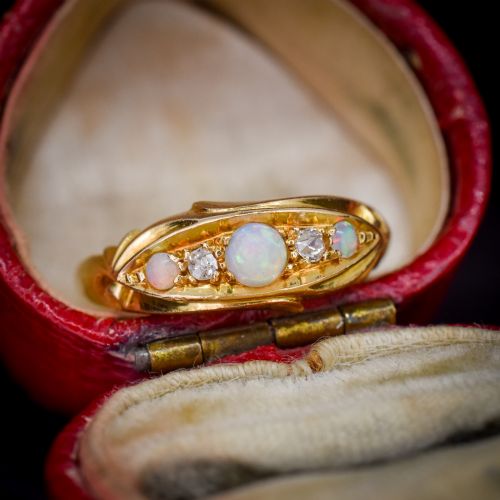
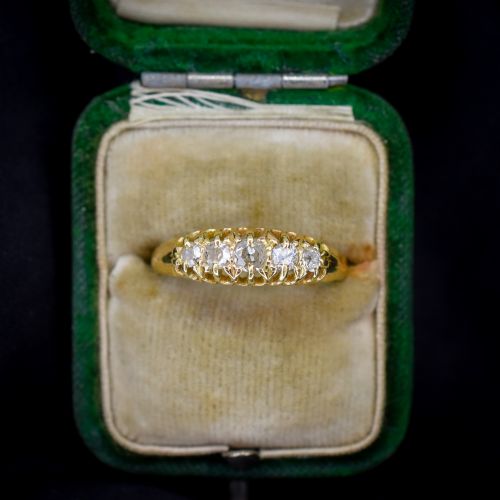
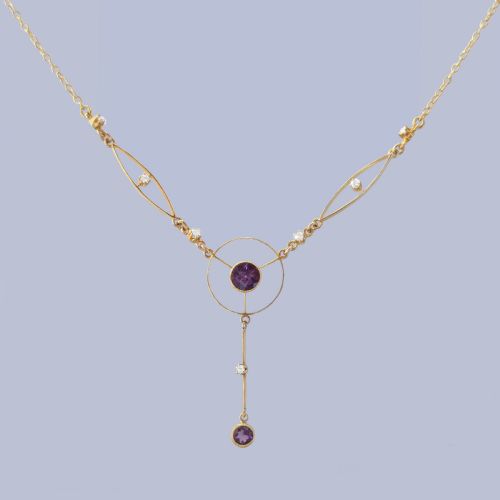
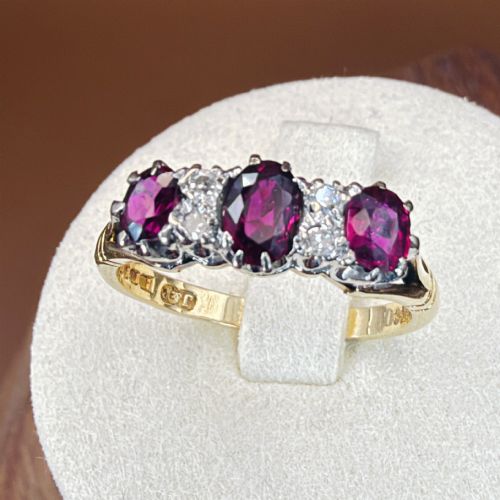
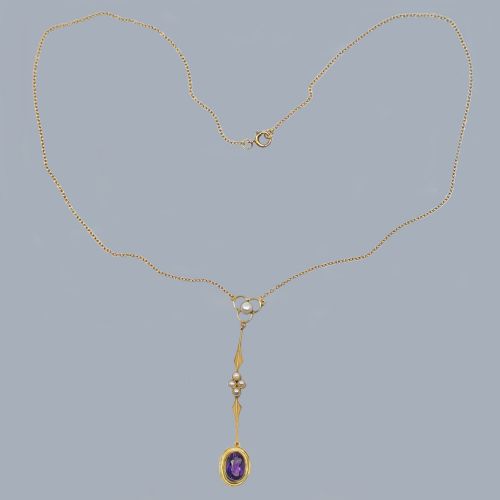
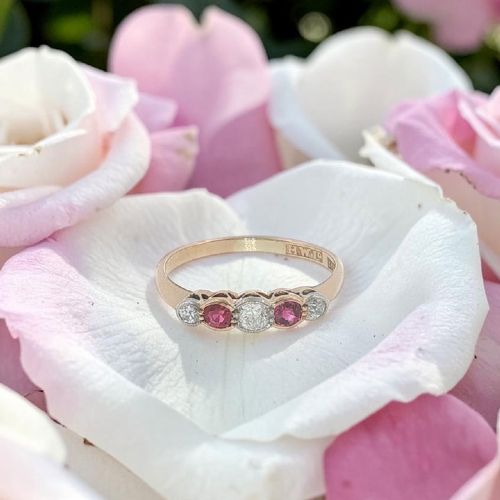
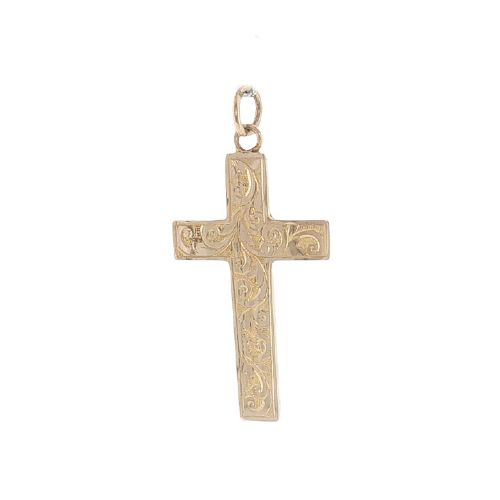
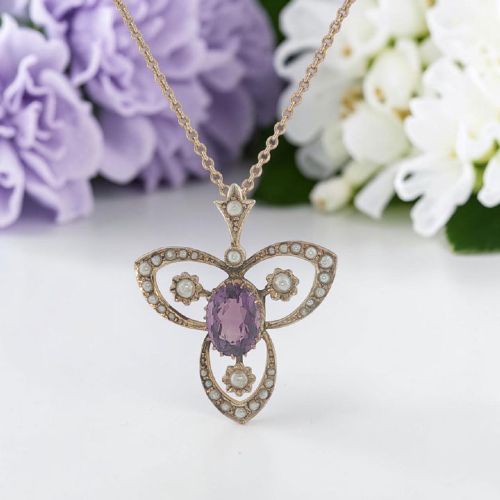
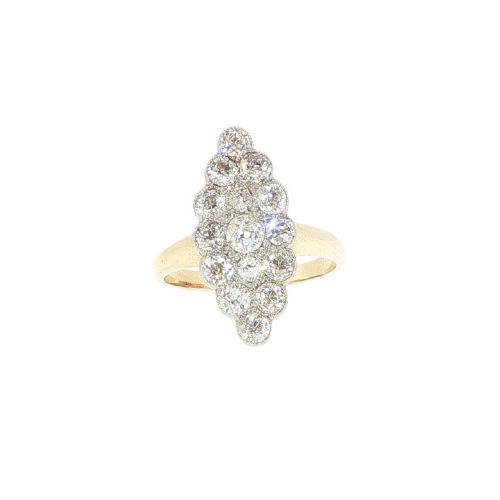
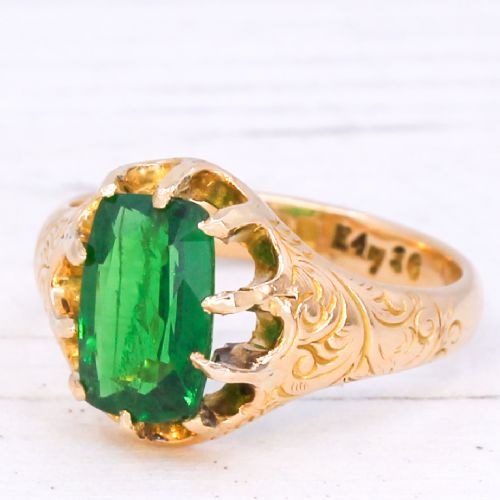
Searching for 1910s gold jewellery brings into view a distinct selection of rings, necklaces, earrings, pendants, bracelets, brooches and pins made during the Edwardian, George V, and early 1920 eras. The versions most commonly met on this page are rings and pendants configured in gold, often accented with platinum settings.
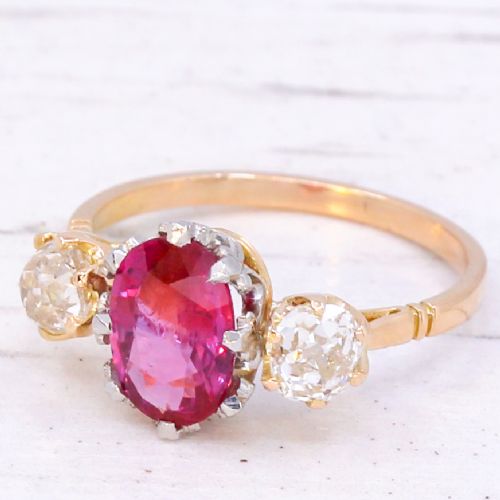
The aesthetic bridges delicate Edwardian floral motifs and flowing Art Nouveau lines with the geometric clarity emerging around the end of the decade. Pieces frequently combine coloured gemstones like rubies, sapphires, amethysts, and opals with old cut diamonds.
Objects range from everyday band rings and boat rings to elaborate diamond cluster engagement rings and drop necklaces. Many items carry hallmarks from assay offices in locations such as Chester and Birmingham, dating specific pieces securely between 1910 and 1920.
How they were made
Jewellers of this decade relied on combinations of 9ct, 15ct, and 18ct yellow gold, alongside emerging platinum settings designed to hold diamonds securely while minimising visible metal. Stones were typically hand-cut as old European or old mine cuts, showing distinctive soft facets that catch candlelight rather than modern brilliant cuts.
Techniques combined traditional hand engraving, delicate millegrain bead borders along metal edges, and openwork galleries that allowed light to pass through gem clusters. Chains and pendants often utilised hollow stamped components or fine wirework alongside solid cast elements to balance intricate detail with wearable weight.
Listings demonstrate that 1910s gold jewellery predominantly utilises 18ct yellow gold and platinum settings, paired frequently with old cut diamonds, amethysts, and sapphires.
What varies in quality
The distinction between standard commercial output and superior examples rests on the precision of hand fabrication and the matching of stones. Master work is visible in the crispness of millegrain edges, the symmetry of multi-stone clusters, and the integration of platinum work over gold bases.
Stone selection introduces further differentiation, marked by the clarity and saturation of rubies, sapphires, and opals, as well as the absence of heavy inclusions in old cut diamonds. Well-preserved hallmarks and minimal past resizing preserve the structural integrity and historical character of the piece.
The 1910s Gold Jewellery Glossary
- Millegrain
- A decorative technique involving a row of tiny raised metal beads along the edge of a setting, common in Edwardian and 1910s design. This adds a soft texture that catches the light around diamond bezels.
- Boat ring
- A ring style featuring a horizontally curved setting resembling the hull of a boat, typically holding a row of graduated stones. This form was popular for multi-stone diamond and sapphire arrangements.
- Navette
- A boat-shaped or eye-shaped gemstone setting that tapers to points at both ends, also known as a marquise shape. It creates an elongated silhouette across the finger.
- Old cut
- A diamond facet arrangement hand-cut before modern standardised machinery, characterised by a smaller table, higher crown, and open culet. These stones exhibit a distinct, warm scintillation under ambient lighting.
- Essex crystal
- Reverse-intaglio rock crystal carved and painted on the flat back to create a three-dimensional illusion when viewed from the front. Animal and floral subjects were frequently rendered in this manner.
1910s Gold Jewellery: Frequently Asked Questions
How do I care for 1910s gold jewellery?
Clean these items gently using warm water, mild soap, and a soft brush, avoiding harsh chemical dips that can damage softer gems like opals and pearls.
Store pieces individually in soft pouches to prevent delicate seed pearls, old cut diamonds, and thin gold settings from scratching against one another.
Can I wear a 1910s ring every day?
Many sturdy 1910s gold and platinum rings suit daily wear, provided the settings and claws are checked periodically by a jeweller for stability.
Items featuring softer natural materials like opals, pearls, or Essex crystals require greater care and should be removed during manual tasks to prevent damage.
How do I identify a 1910s hallmark?
British hallmarks from this decade often include a standard purity mark such as 18 for 18ct gold, alongside an assay office mark like the Birmingham anchor or Chester town mark.
Date letters stamped inside the band or mount provide specific verification, corresponding directly to the active years of production between 1910 and 1920.
What is the difference between Edwardian and 1920s styles?
Edwardian items from the early part of the decade lean heavily into lace-like platinum-topped gold work, floral motifs, and flowing organic curves.
As the decade progressed into the George V and early Art Deco periods, designs began introducing sharper geometric lines, symmetrical clusters, and bolder colour contrasts.