



Gold Cluster Boat Ring
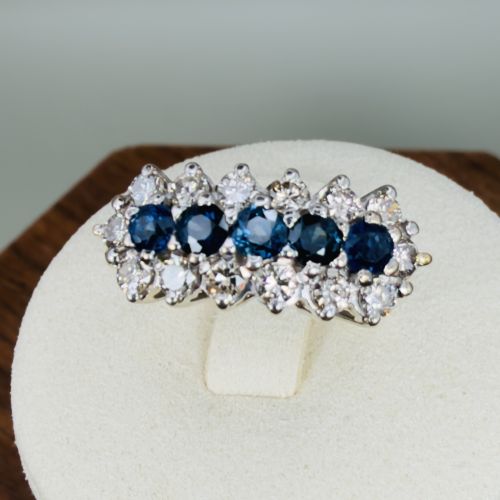
A gold cluster boat ring sits low on the finger, bringing together clusters of diamonds and coloured stones set in gold or platinum.
Gold Cluster Boat Ring
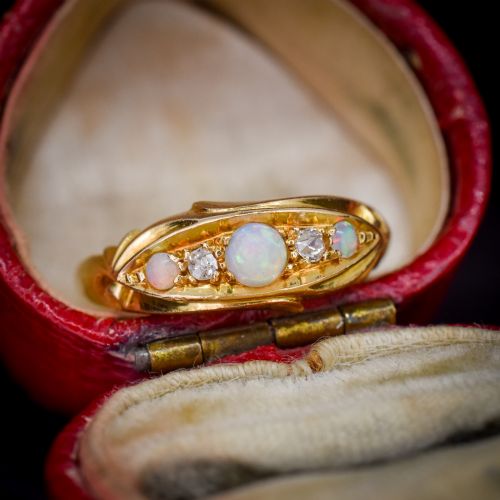
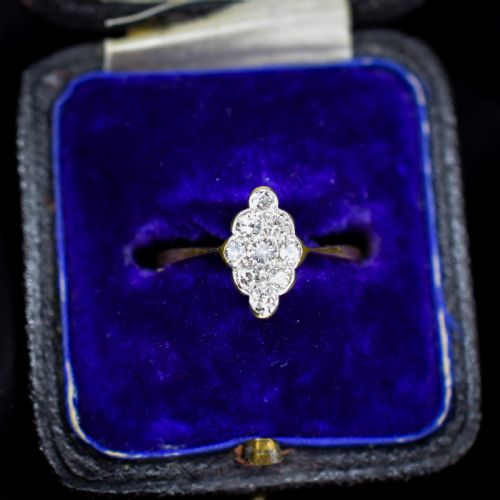
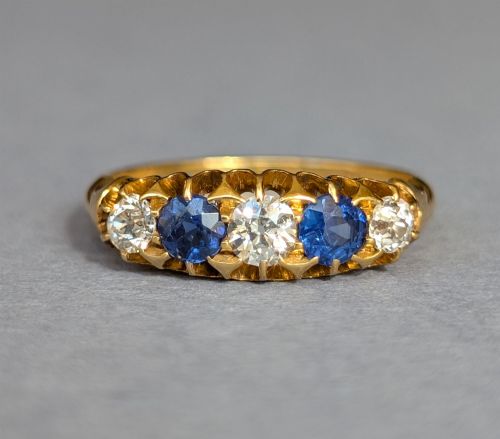
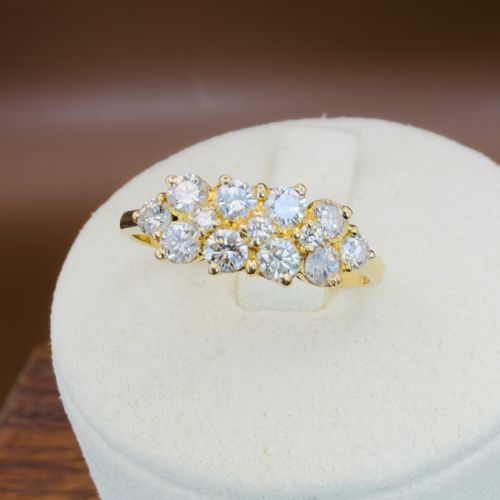
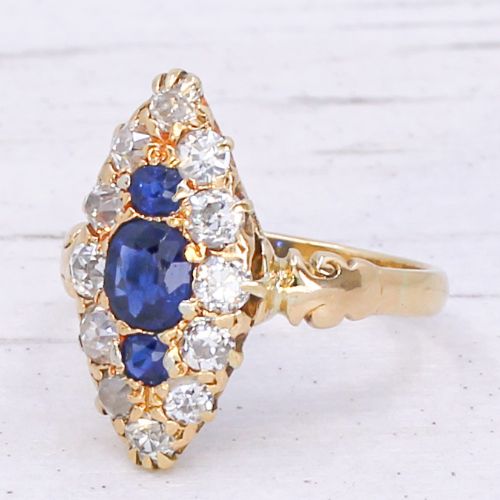
A gold cluster boat ring draws the eye with an elongated, boat-shaped silhouette that stretches horizontally across the finger. Buyers searching for a gold cluster boat ring encounter pieces spanning the Victorian and Edwardian periods, alongside later twentieth-century examples.
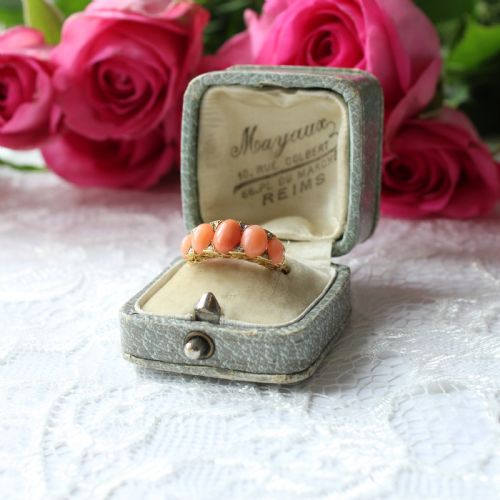
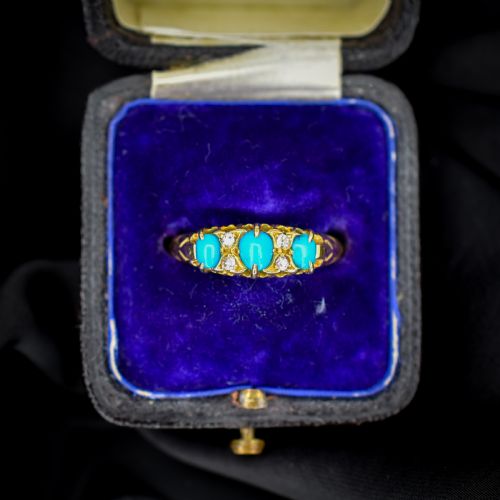
The form relies on a central arrangement of diamonds, sapphires, rubies, opals, turquoise, or coral secured in 18ct gold or platinum. These rings span from the late nineteenth century through to the Edwardian era and the 1960s, showing consistent use of boat and navette profiles.
Materials and construction
Goldsmiths utilised 18ct yellow gold and platinum to build secure settings for old cut diamonds, rose cut diamonds, and brilliant cuts. Gemstones including natural opals, sapphires, Burmese rubies, turquoise, and coral are arranged in close-set clusters.
Settings frequently combine yellow gold bands with platinum heads to highlight the stones. Hallmarks stamped in Chester and London record dates from the late nineteenth century into the twentieth century.
Chester assay office marks appear alongside London records, dating pieces from the late Victorian period through the Edwardian years.
Judging quality in boat and cluster rings
Quality rests on the selection and matching of the central stones, whether old cut diamonds, sapphires, or opals. Weight distribution across the navette or boat shape determines how the ring sits on the hand.
The crispness of the scrollwork and the integration of platinum with 18ct gold distinguish finer workshops. Preservation of original gemstones and clear Chester or London hallmarks elevate a piece.
The Gold Cluster Boat Ring Glossary
- Boat ring
- A ring featuring an elongated, curved profile resembling a boat hull. This shape sits flat across the knuckle and holds clusters of gemstones.
- Navette
- A boat-shaped or marquise outline with pointed ends. The term describes settings where stones follow a tapering, elongated path.
- Old cut diamond
- A hand-faceted diamond cut before modern machinery standarded proportions. These stones display smaller tables and higher crowns.
- Cluster ring
- A jewellery setting where a central stone is surrounded by a tighter grouping of smaller gems. This configuration maximises visual brilliance.
Gold Cluster Boat Ring: Frequently Asked Questions
What periods do these rings come from?
The available pieces date primarily from the Victorian and Edwardian eras, with examples extending into the 1920s and 1960s. Hallmarks often confirm specific years of assay.
Craftsmanship shifts slightly across these decades, moving from Victorian yellow gold settings toward Edwardian and later combinations of gold and platinum.
How do I wear a boat ring?
The horizontal boat shape sits across the finger rather than up and down. This profile requires care regarding knocks against hard surfaces.
Pairing the ring alone on a finger lets the navette silhouette and stone clusters remain the focal point.
What stones are set in these rings?
Diamonds form the primary stone in most clusters, often paired with sapphires, Burmese rubies, natural opals, turquoise, or coral. Gem varieties include old cut, brilliant, and rose cut diamonds.
Coloured gemstones provide contrast against the surrounding diamond work and the 18ct gold or platinum mount.
Are these rings hallmarked?
Many pieces feature British hallmarks stamped inside the band, including Chester assay marks and date letters. These stamps verify the metal standard and year of creation.
Unmarked examples still display period characteristics in their mounting techniques and stone cuts.