



Chester Hallmark Gold Ring
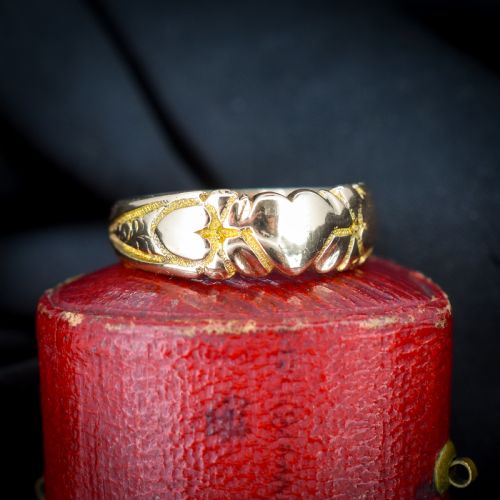
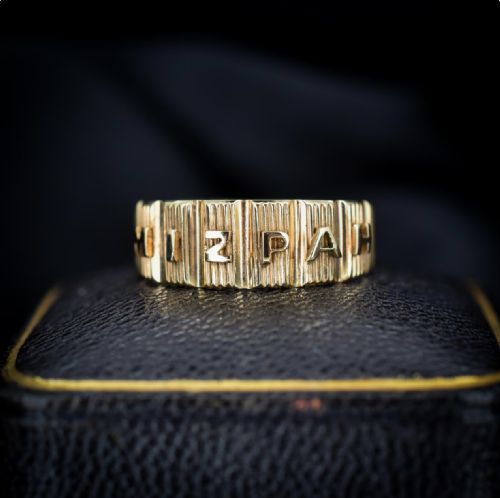
A chester hallmark gold ring carries the distinct three-sheaves-and-sword stamp of the historic assay office on precious metal dating from the Victorian and Edwardian eras.
Chester Hallmark Gold Ring
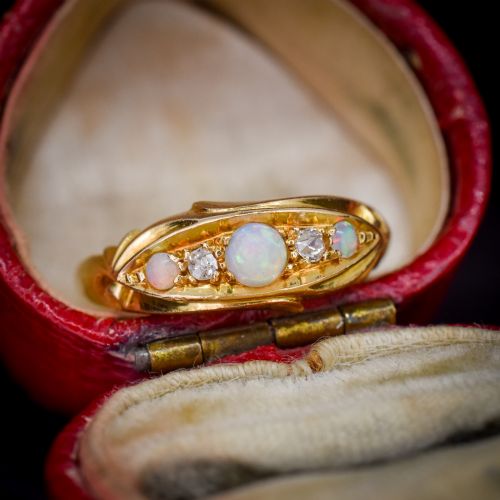
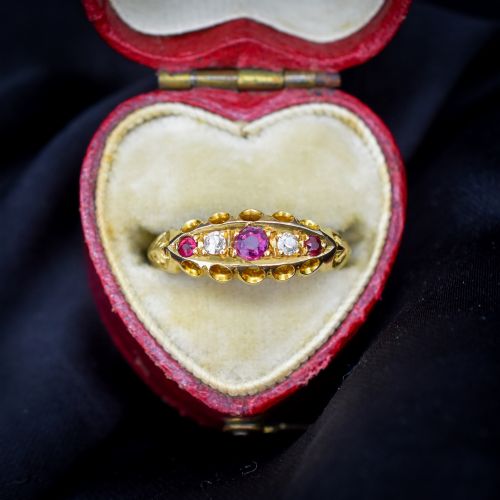
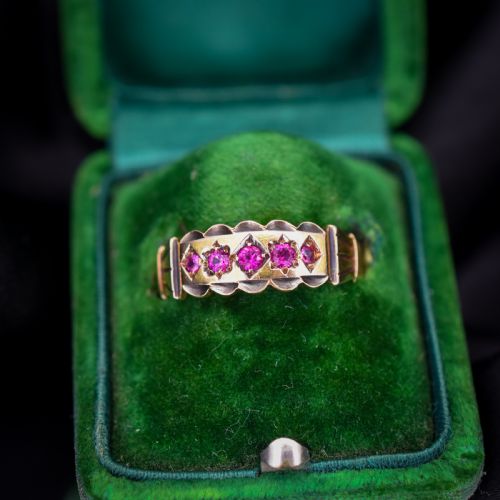
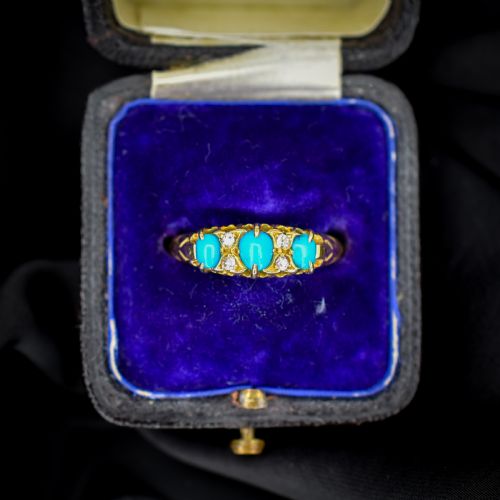
A chester hallmark gold ring brings together regional British assay history and fine Victorian or Edwardian craftsmanship. Buyers seeking this phrase encounter distinctive regional marks alongside gemstones such as diamonds, rubies, sapphires and opals.
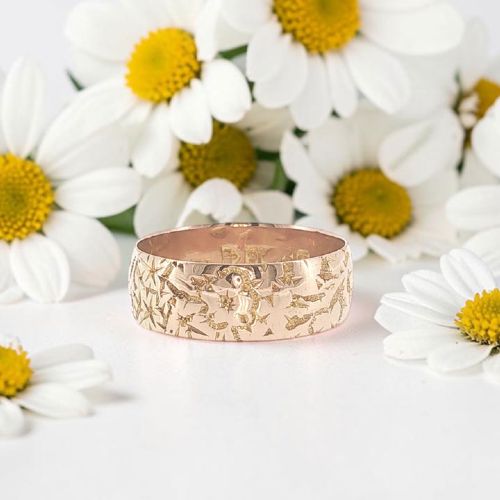
The selections span traditional band designs, five-stone configurations and figurative motifs including snakes and buckle shapes. Pieces cast in yellow and rose gold from the late nineteenth and early twentieth centuries dominate the selection.
How they were made
Goldsmiths shaped these pieces predominantly from eighteen-carat yellow and rose gold, occasionally employing nine-carat or fifteen-carat variations. Metalwork techniques involved casting band structures, hand-engraving scroll patterns and forming intricate settings for gemstones.
Gemstones including old-cut diamonds, rubies and sapphires were secured using claw, flush or gypsy settings. Master craftsmen hand-stamped the distinctive Chester assay office marks directly into the precious metal alongside date letters and carat stamps.
Listings feature gold rings spanning the Victorian and Edwardian eras, incorporating diamonds, rubies, sapphires and opals.
What varies in quality
The clarity of the stamped assay marks and the crispness of any hand-engraved patterns define the primary tier of craftsmanship. Finer examples retain deep, legible town marks and date ciphers alongside well-matched, securely bezel-set or claw-set stones.
Overall structural integrity of the gold band and minimal wear to the gemstone facets separate superior specimens from heavily worn everyday jewellery. The weight of the gold and the precision in balancing multi-stone arrangements also distinguish the standard.
Ring Henry Griffiths
The Chester Hallmark Gold Ring Glossary
- Assay office
- An official body that tests the purity of precious metals and stamps them with statutory hallmarks. The Chester office used a mark featuring three sheaves of wheat and a sword.
- Boat ring
- A ring featuring a curved, boat-shaped setting that typically houses a row of graduated gemstones. This profile was widely favoured during the late Victorian and Edwardian periods.
- Gypsy ring
- A style where gemstones are flush-set directly into a thick, tapered gold band. The metal surrounds the stone smoothly without raised claws.
- Navette ring
- A ring featuring a pointed, boat-shaped or marquise-shaped face resembling a small ship's hull. It usually displays a cluster of diamonds and coloured gemstones.
- Trilogy ring
- A ring set with three stones, often signifying a past, present and future. Old-cut diamonds frequently feature in these traditional configurations.
Chester Hallmark Gold Ring: Frequently Asked Questions
What does a Chester hallmark look like?
The Chester assay office mark displays three vertical wheatsheaves alongside a sword within a shield shape. This stamp appears next to the gold purity mark and a specific date letter.
Collectors rely on this distinct provincial symbol to trace regional British manufacture prior to the closure of the Chester office in nineteen sixty-two.
How can I date my gold ring?
Dating relies upon the official assay office date letter stamped alongside the maker's mark and the gold purity standard. Each working year corresponded to a specific letter font and shield contour.
Comparing these punch marks against standard British assay office tables reveals the exact year the metal was tested and certified.
Are these rings suitable for daily wear?
Most antique gold rings tolerate regular daily wear provided the settings and stone security receive routine professional inspection. Eighteen-carat gold provides a durable foundation for historic gem-set configurations.
Thinner antique bands or softer stones such as opals require greater care to prevent accidental impact damage during heavy manual tasks.
What is an old-cut diamond?
An old-cut diamond refers to stones hand-faceted before modern machine precision was developed. These diamonds feature smaller tables, higher crowns and open culets that produce a distinctive candlelit glow.
Such historic cuts remain characteristic of Victorian and Edwardian jewellery found with regional British hallmarks.