

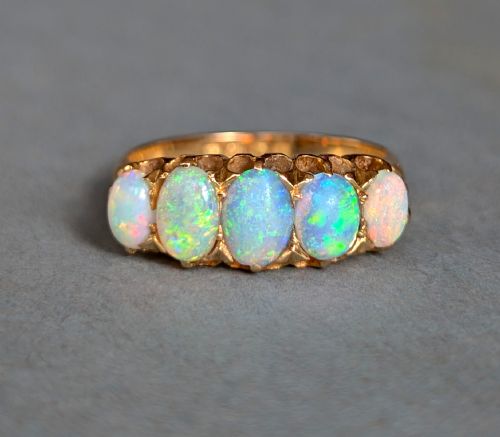
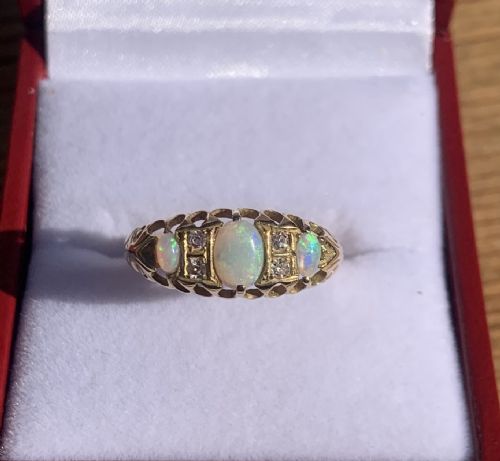


Opal and Diamond Band
An opal and diamond band offers a brilliant play of colour alongside sparkling stones, making it a captivating choice for daily wear.
Opal and Diamond Band
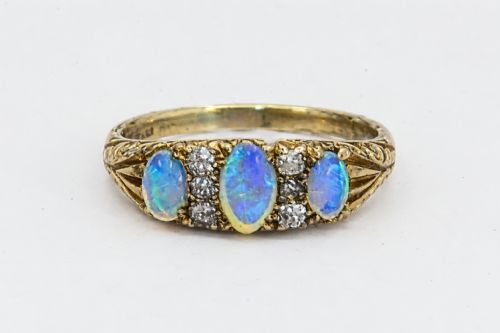
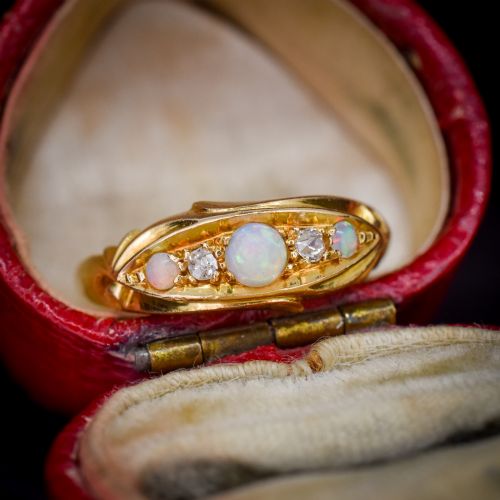
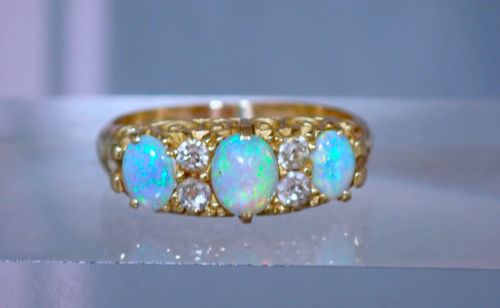
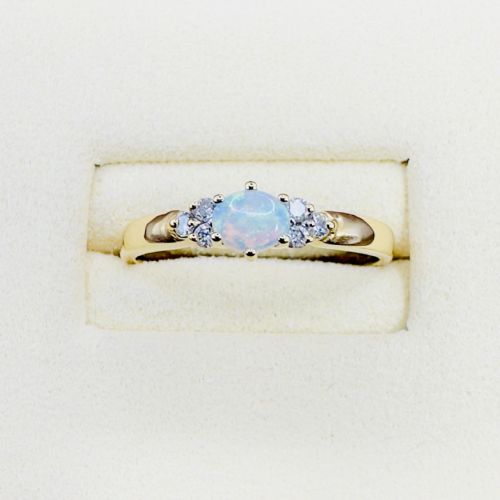
The most common forms you meet on this page are boat rings, cluster designs, trilogy settings, and five-stone arrangements. These pieces typically feature 18ct yellow gold or white gold mountings that securely hold the gem stones in place.
Originating from periods like the late nineteenth century and the early nineteen hundreds, these rings showcase traditional craftsmanship. Each piece demonstrates how jewellers combined cabochon opals with faceted diamonds to create balanced horizontal or vertical finger displays.
How they were made
Maker techniques rely heavily on 18ct gold bands, often shaped into boat or cluster formations to accommodate the stones. Jewellers set white opals and yellow opals alongside old cut or rose cut diamonds using claw or bezel settings.
Hallmarks stamped into the gold indicate assay offices such as Chester, Birmingham, and Glasgow, revealing the regional British origins of the manufacture. The metals are worked into robust shanks designed to support the softer opal material safely.
Some historical listings include a child-sized Edwardian ring with a tiny opal and diamond layout.
What varies in quality
Quality differences stem primarily from the optical play of colour within the opal and the clarity of the accompanying diamonds. Stones displaying vivid flashes of red, green, and blue elevate the standing of the piece considerably.
The integrity of the 18ct gold band and the crispness of the assay hallmarks also influence the overall standard. Well-preserved settings that protect the opal edges demonstrate superior original construction and careful subsequent stewardship.
The Opal and Diamond Band Glossary
- Boat ring
- A ring setting shaped like an upturned boat, tapering towards the ends. This curved silhouette was popular during the Victorian and Edwardian periods for grouping multiple stones.
- Cabochon
- A gem stone shaped and polished with a smooth convex surface rather than faceted. This cut is essential for displaying the internal play of light in opals.
- Rose cut
- An antique diamond cut featuring a flat base and a domed crown composed of triangular facets. It produces a soft, starry reflection rather than modern brilliant sparkle.
- Trilogy
- A ring featuring three main stones set in a row, often symbolising the past, present, and future. In these listings, they pair an opal centre with diamond side stones.
- Assay hallmark
- An official mark stamped onto precious metal items to guarantee the purity of the gold. British pieces frequently display these marks alongside town and date stamps.
Opal and Diamond Band: Frequently Asked Questions
How do I care for my opal and diamond band?
Opals contain water within their structure and score lower on the hardness scale than diamonds, meaning they require gentle treatment. Avoid exposing your ring to harsh chemicals, sudden temperature changes, or ultrasonic cleaners.
Store the piece separately from harder jewellery to prevent scratching. Clean the gold and stones simply with a soft, damp cloth and dry thoroughly.
Can I wear an opal and diamond band every day?
Many people wear these rings daily, provided they take sensible precautions. Because opals are somewhat softer than diamonds, removing the ring during heavy manual work or gardening protects the central stone from impacts.
Checking the claws periodically ensures the opals and diamonds remain secure within the 18ct gold mounting. Proper sizing also prevents undue strain on the band during wear.
How can I tell an Edwardian ring from a Victorian one?
Victorian pieces often feature heavier gold work and robust boat or trilogy settings dating back towards the late nineteenth century. The styles lean towards substantial craftsmanship with clear regional assay marks.
Edwardian examples tend to display lighter, more refined mountings with intricate detailing around the stones. They frequently date from the opening decades of the twentieth century.
What type of gold is most common in these bands?
Eighteen carat gold dominates the material record for these rings, appearing in both yellow and white variations. This gold purity provides a durable yet rich foundation for the stone settings.
The metal colour complements the natural iridescence of the opals while offering enough strength to hold the diamonds securely in place over decades of use.