


Victorian Cabochon Opal Ring
A victorian cabochon opal ring brings together smooth, dome-cut gems and warm gold settings that catch the light with endless plays of colour.

Victorian Cabochon Opal Ring
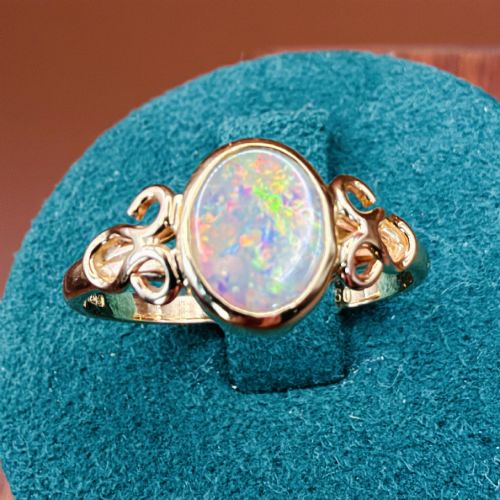
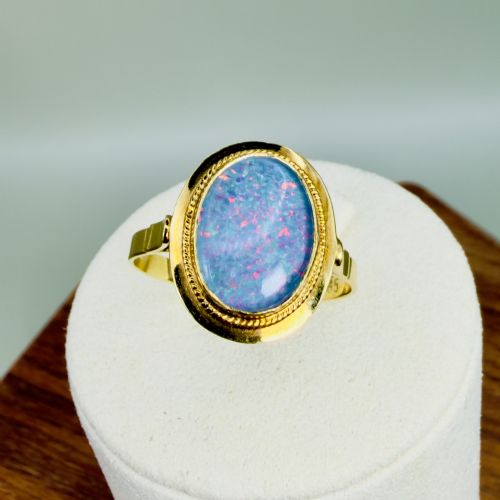
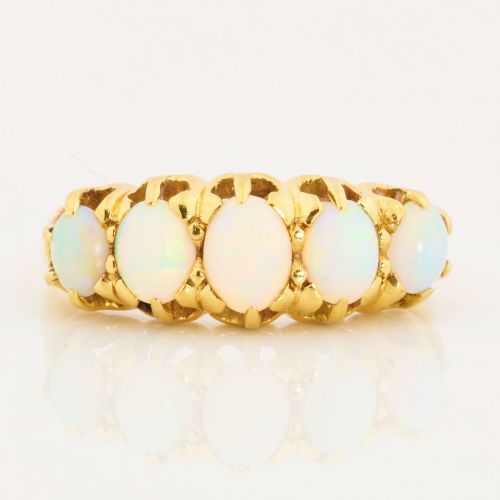
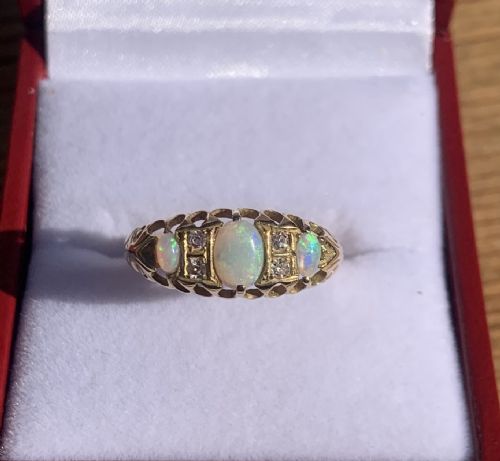
A victorian cabochon opal ring centres on smooth, polished domes of opal rather than faceted stones, glowing with internal flashes of colour. These pieces appear most frequently in rich yellow gold settings, often paired with small diamonds or configured as multi-stone rings.
The selections span distinct periods and configurations, from genuine Victorian examples bearing hallmarks to mid-twentieth-century interpretations. Single-stone solitaire rings sit alongside multi-stone clusters and trilogy layouts, each highlighting the natural character of the opal.
Materials and Construction
Metals used across these rings rely heavily on gold, predominantly 18ct gold alongside 14ct and 9ct variants, paired occasionally with silver settings. Stones are secured using traditional bezel, claw, or cluster mountings designed to protect the softer opal material while maximising visibility.
Gems incorporated alongside opals include rose-cut and standard diamonds, bloodstone, garnets, and rubies. These secondary stones are arranged to frame the central cabochon opal, creating strong geometric or floral cluster patterns.
A sixteenth-century ring with a Glasgow band proves that people have been admiring opal fire for centuries.
Assessing Quality
Quality rests upon the vibrancy and spread of colour play within the opal itself, alongside the integrity of the gold work. Stones showing robust, shifting spectral colours across the dome hold greater visual presence than muted examples.
The proportion and weight of the gold mount also distinguish individual pieces. Substantial bands and well-executed claw or bezel settings indicate careful workshop production that secures the softer gemstone effectively.
The Victorian Cabochon Opal Ring Glossary
- Cabochon
- A gemstone shaped and polished with a smooth, rounded dome rather than faceted edges. This cut allows opals to display their internal play of colour to maximum effect.
- Solitaire
- A ring featuring a single prominent gemstone set into the band. In these listings, solitaire opals range from delicate stones to large boulder opal varieties.
- Trilogy
- A ring design incorporating three stones set side by side in a row. These often combine opals with flanking diamonds to balance the composition.
- Cluster
- An arrangement where a central stone is surrounded by a group of smaller gemstones. Common cluster layouts on this page pair an opal with diamonds, rubies, or bloodstone.
- Hallmark
- An official stamp applied to precious metals indicating purity and origin. Pieces bearing clear hallmarks provide definitive evidence of date and metal standard.
Victorian Cabochon Opal Ring: Frequently Asked Questions
How do I care for my opal ring?
Opals contain natural water content and require gentle handling to preserve their condition. Avoid exposing them to harsh chemicals, ultrasonic cleaners, and sudden temperature extremes.
Store the ring separately from harder gemstones to prevent surface scratches on the softer stone. Regular cleaning with a soft, damp cloth keeps the polished surface bright.
Are these rings suitable for daily wear?
These antique rings can be worn regularly provided proper care is taken during activities that involve impact. Because opals have a lower hardness rating than diamonds, removing the ring during heavy manual work prevents damage.
Setting style also plays a role in daily durability, as protective bezel mounts offer more security than high profile claws. Checking the settings periodically ensures the stones remain firmly anchored.
How can I tell a Victorian ring from later pieces?
Authentic Victorian examples often feature hand-engraved details, specific maker marks, and traditional casting methods characteristic of nineteenth-century workshops. Examining the band and setting under magnification reveals the hand-finished nature of the metal.
Official hallmarks, such as those from British assay offices, provide reliable date letters and standard marks that confirm the period of manufacture.
What is a boulder opal?
A boulder opal is a natural type of opal that forms within ironstone matrix rock, retaining a portion of the host rock on the back. This natural backing adds structural strength and often deepens the contrast behind the opal colour.
These stones provide distinctive visual character due to the natural ironstone patterns visible alongside the play of colour on the dome.