





Yellow Gold Boat Ring
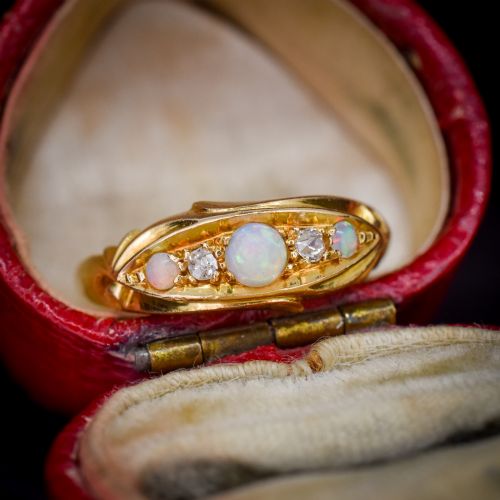
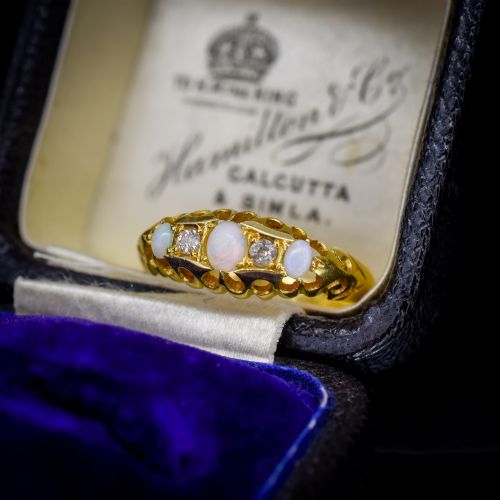
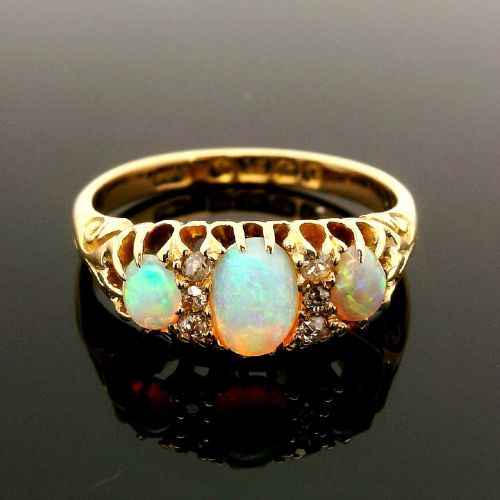
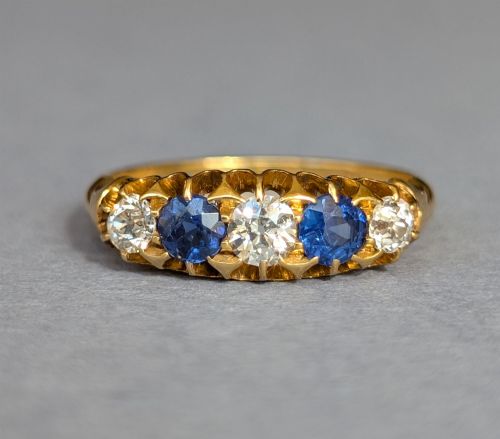
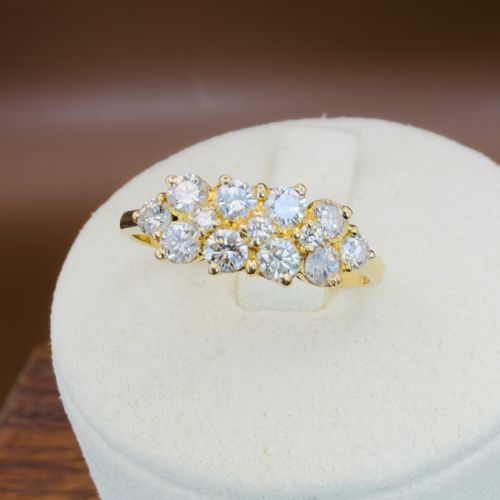
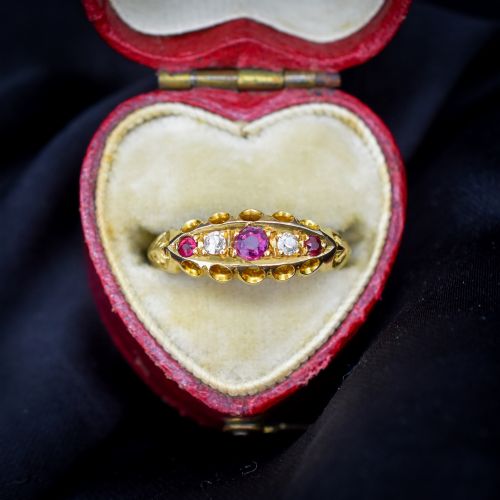
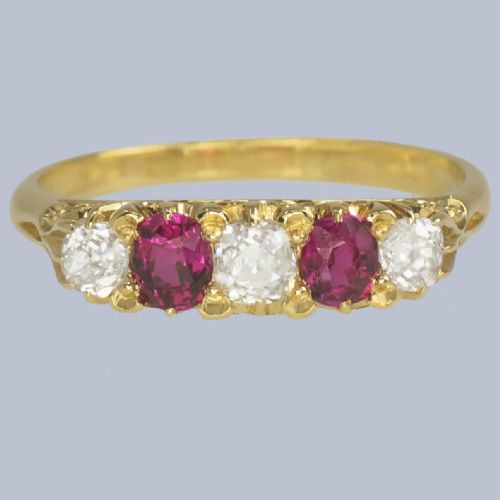
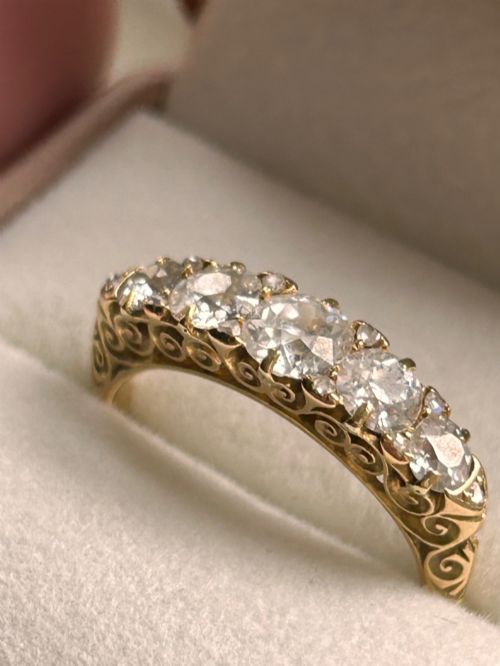
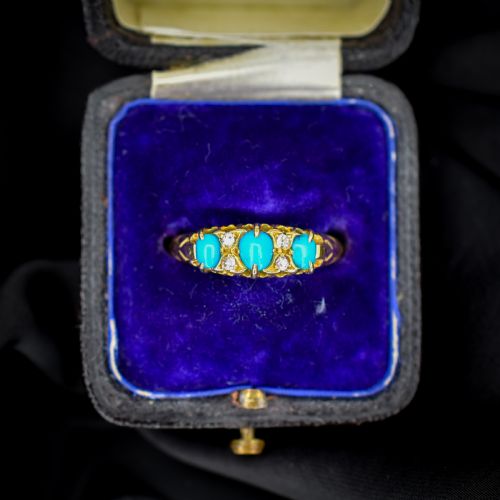
A yellow gold boat ring carries a curved, multi-stone setting reminiscent of a hull, offering a distinctive finger profile from the late Victorian and Edwardian eras.
Yellow Gold Boat Ring
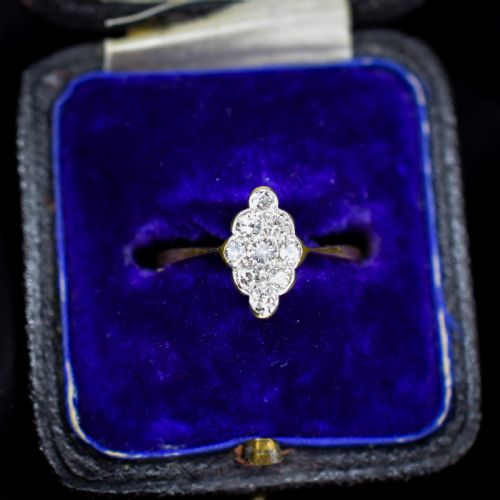
A yellow gold boat ring places gemstones in a sweeping, elongated horizontal mount that sits low against the hand. These pieces emerge predominantly from Victorian, Edwardian, and George V periods, featuring distinctive boat and navette silhouettes.
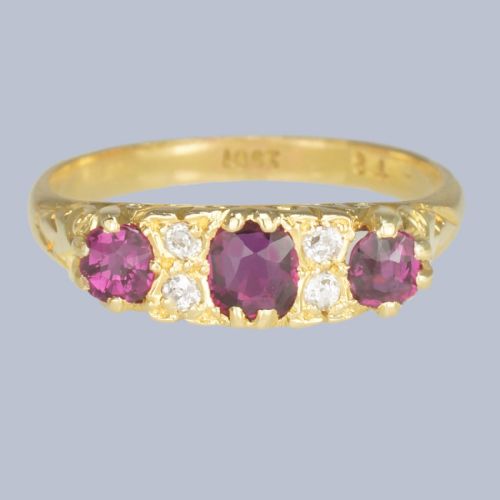
The profile typically arranges diamonds alongside rubies, sapphires, opals, or turquoise within an 18ct yellow gold frame. The construction creates a seamless curve across the finger, often accented by platinum settings on the upper face.
How they were made
Craftsmen utilised 18ct yellow gold as the primary foundation, combining traditional casting and hand-working techniques to shape the curved gallery. Stones were secured using early claw and flush settings designed to highlight old cut diamonds alongside coloured gems.
Platinum appears alongside gold in later Edwardian examples, providing a bright white contrast for diamond clusters. Hallmarks stamped in cities such as Chester and Birmingham record the assay office and year of production.
Yellow Gold Boat Ring Retail Price Guide 2026
Typical asking prices for yellow gold boat ring among the pieces listed under this phrase on Sellingantiques today, from the lower quarter to the upper quarter. They describe what is for sale here now, not the wider market.
Listings feature 18ct yellow gold predominantly, paired with platinum settings on Edwardian and Victorian boat, navette, and cluster ring forms.
What varies in quality
Quality rests in the precision of the stone setting and the integrity of the gold gallery. Finer examples maintain crisp hallmarks, securely mounted gems without looseness in the claws, and balanced proportions across the curved boat shape.
The choice of centre stones and the matching of accent gems dictate the distinction of individual pieces. Well-preserved pieces retain distinct engraving on the shoulders and solid shank thickness through decades of wear.
The Yellow Gold Boat Ring Glossary
- Boat ring
- A ring featuring a curved, multi-stone mounting shaped like the hull of a boat. This silhouette was particularly popular during the late nineteenth and early twentieth centuries.
- Navette
- A boat-shaped or marquise-like design that tapers to sharp points at either end. The shape maximises finger coverage while maintaining a delicate profile.
- Old cut diamond
- A hand-faceted diamond cut before modern machinery standardised proportions. These stones display smaller tables and distinct, charming facet patterns under candlelight.
- Hallmark
- Official marks stamped into precious metals indicating the purity, assay office, and year of manufacture. They provide a reliable method for dating antique jewellery.
Yellow Gold Boat Ring: Frequently Asked Questions
How do I wear a boat ring daily?
These rings suit daily wear when treated with standard care for antique jewellery. Removing them during heavy manual tasks protects the gold claws and softer gems like opal.
Pairing a boat ring with a simple wedding band works well because the curved profile sits alongside straight bands. Stacking variants also combine neatly with slim gold rings.
What periods do these rings come from?
The pieces span from the late Victorian era through the Edwardian period and into the 1920s and 1930s. Hallmarks often confirm exact years from assay offices in Chester and Birmingham.
Victorian examples tend to feature warmer yellow gold tones, while Edwardian pieces frequently introduce platinum tops to frame old cut diamonds.
Which gemstones are set in boat rings?
Diamonds frequently anchor the design, paired alongside natural rubies, sapphires, opals, and turquoise. Coloured stones alternate with diamonds to create patterned rows across the finger.
Natural opals and sapphires appear alongside old mine cut diamonds in many nineteenth-century and early twentieth-century examples.
How do I check the gold purity?
Assay marks stamped inside the shank indicate the metal standard, with 18ct gold serving as the predominant material across these listings. Clear stamps reveal the origin and exact alloy composition.
Magnification helps inspect both the maker marks and the numerical purity stamp located near the inner band.