

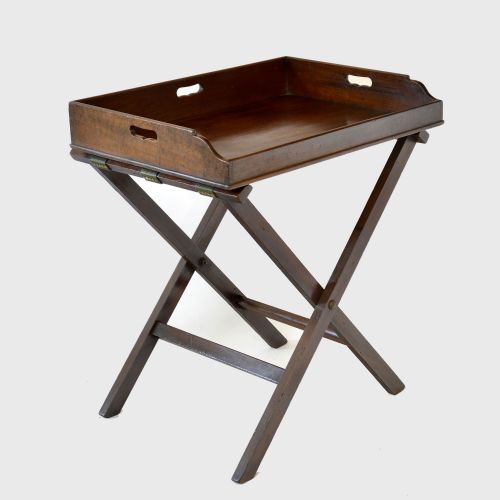


18th Century Wooden Tray
An 18th century wooden tray brings genuine Georgian craftsmanship and warm timber tones into daily domestic service.
18th Century Wooden Tray
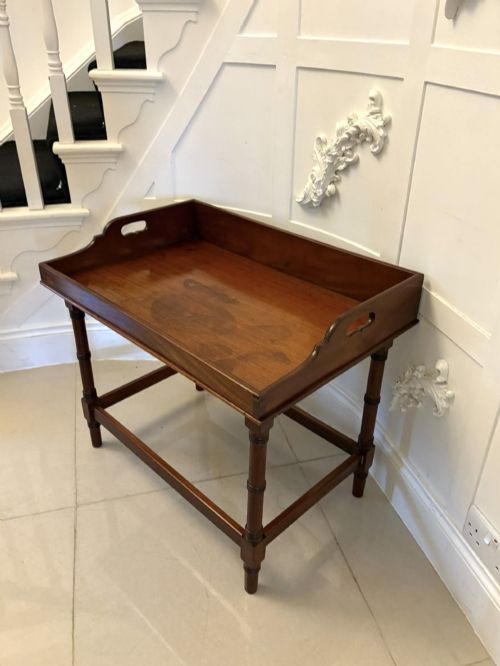
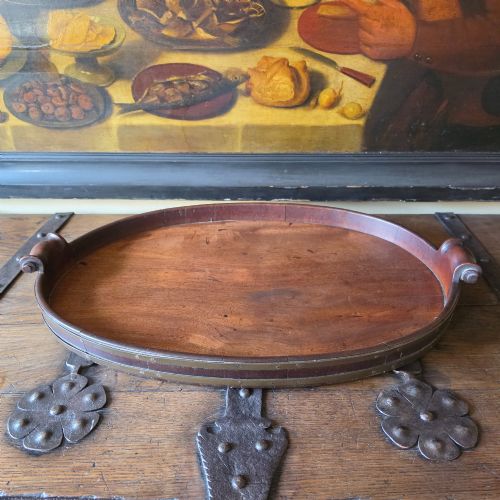
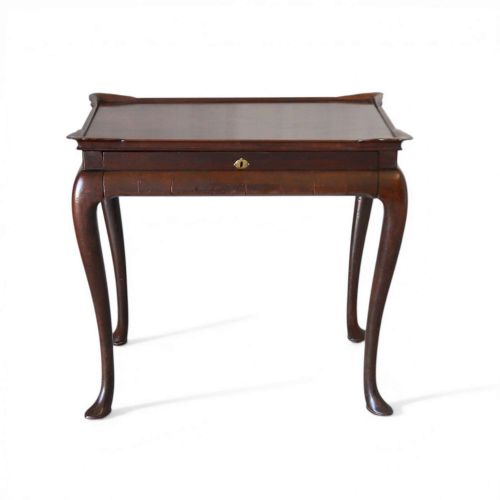
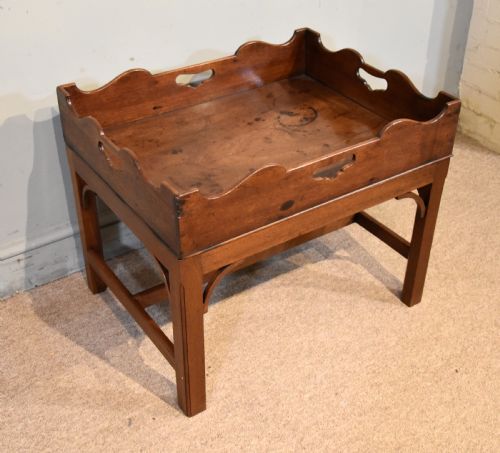
When you search for an 18th century wooden tray, you encounter serving pieces, butler's trays on stands, and silver tables designed for elite households. These items reflect the domestic routines of the Georgian period, serving both functional dining purposes and display.
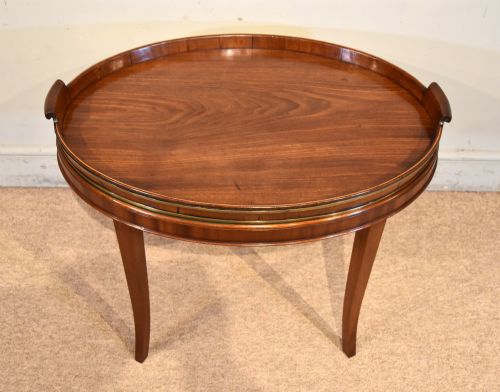
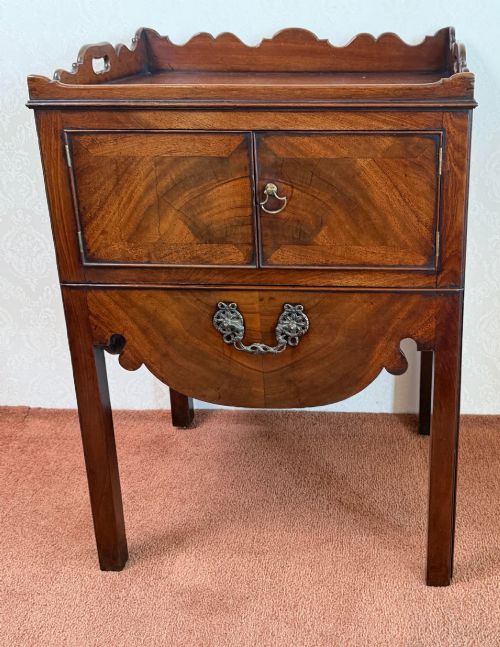
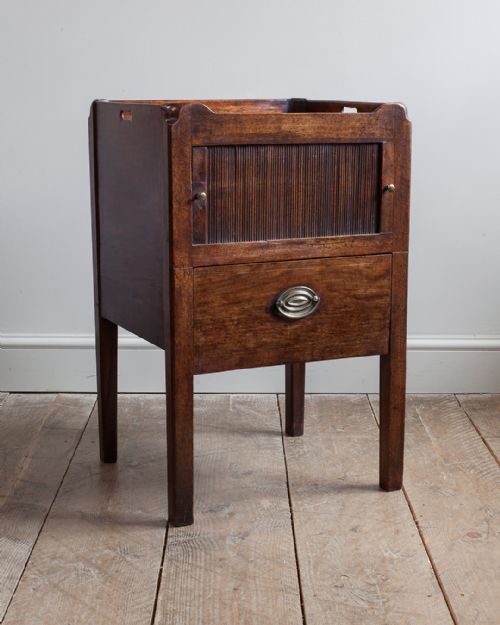
The pieces on this page lean heavily toward serving trays, galleried trays, and tray top tables from the Georgian and George III eras. Mahogany dominates the selection, occasionally accompanied by satinwood inlay and brass mounts.
Buyers select these objects to add period character to modern interiors, utilising them as drinks trays, low side tables, or decorative centrepieces. Their enduring appeal lies in the combination of robust utilitarian design and refined cabinetmaking.
What determines quality in these trays
Quality rests primarily on the choice of timber and the crispness of the carpentry, particularly along the galleried edges and handles. Superior examples display dense, well-figured mahogany grain and hand-carved mouldings rather than plain secondary woods.
The integration of original stands, fine brass hardware, and subtle inlaid decoration separates standard utility pieces from high-status silver tables and documented Georgian serving trays. Proportion and restraint in design mark the better workshop productions.
18th Century Wooden Tray Retail Price Guide 2026
Typical asking prices for 18th century wooden tray among the pieces listed under this phrase on Sellingantiques today, from the lower quarter to the upper quarter. They describe what is for sale here now, not the wider market.
Current listings feature mahogany, satinwood, and brass across Georgian and 19th century periods.
The 18th Century Wooden Tray Glossary
- Galleries
- Raised wooden borders surrounding the edge of a tray or table top to prevent items from sliding off during service. These rims are often pierced or shaped with decorative moulding.
- Butler's tray
- A portable serving tray featuring hinged or folding sides, frequently paired with a dedicated folding stand. They were utilised for clearing dining tables and transporting tableware.
- Cheese coaster
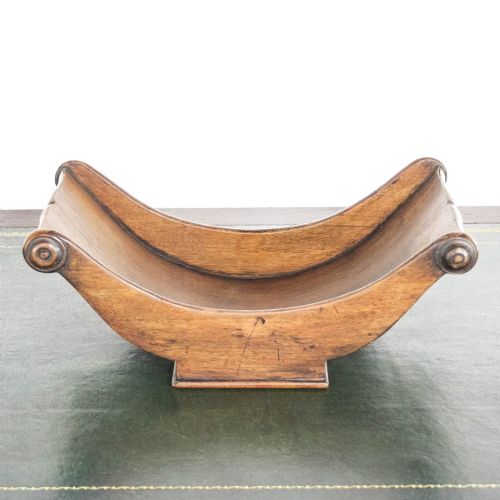
- A small, low tray, often semi-circular or crescent-shaped and fitted with small wheels or rollers. These allowed diners to slide cheese selections smoothly across the mahogany dining table.
- Silver table
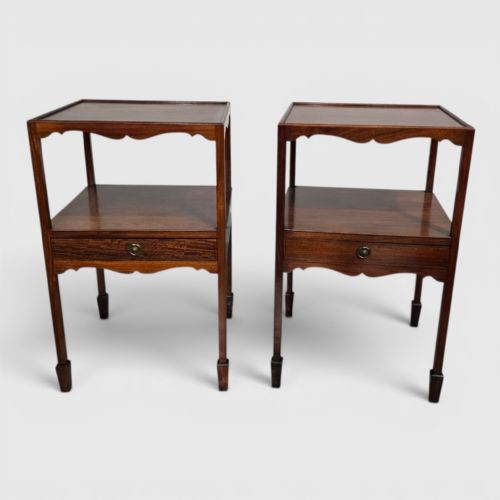
- An occasional table with a raised tray top designed specifically for displaying or serving tea and silver tableware. They typically feature cabriole legs or straight supports.
- Commode
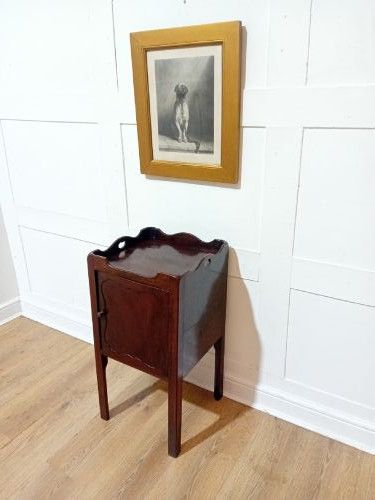
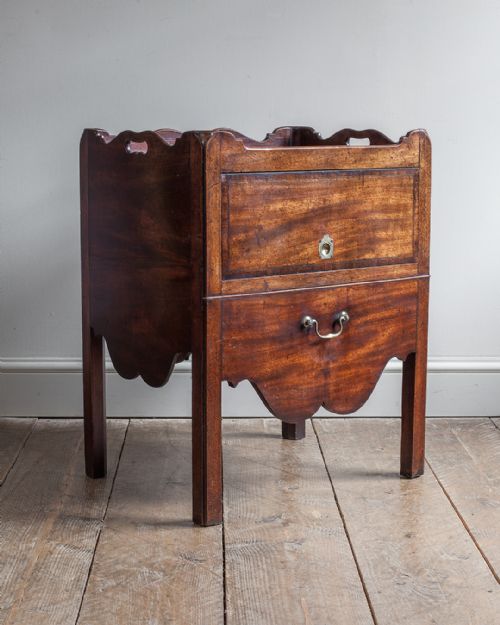
- A small enclosed bedside cabinet or cupboard, frequently constructed with a tray top configuration to prevent spilled liquids from damaging the wood surface.
18th Century Wooden Tray: Frequently Asked Questions
How do I use a butler's tray today?
These trays sit comfortably on dedicated folding stands as low side tables or cocktail bars in living spaces. Their portable nature allows you to move them easily between rooms for entertaining.
Alternatively, larger oval and rectangular trays function effectively as decorative centrepieces on coffee tables or sideboards when not in active service.
How do I identify Georgian mahogany timber?
Georgian mahogany exhibits a deep, rich reddish-brown hue that deepens naturally over centuries of exposure to light and air. Cuban mahogany, often utilised in higher-status pieces, displays exceptional weight and dense, figured grain patterns.
The timber should feel substantial to the touch, showing subtle variations in tone rather than uniform modern staining.
Can I place drinks on an 18th century tray?
Most of these trays were originally built to handle heavy silver tableware, decanters, and wine bottles during active household service. Using coasters and avoiding standing water preserves the historic polish while allowing normal functional use.
Gentle care ensures the timber grain and original joinery remain protected against moisture over time.