


Brown Wooden Gallery Tray
A brown wooden gallery tray brings tactile warmth and refined utility to a room, offering a structured surface for serving or display.
Brown Wooden Gallery Tray
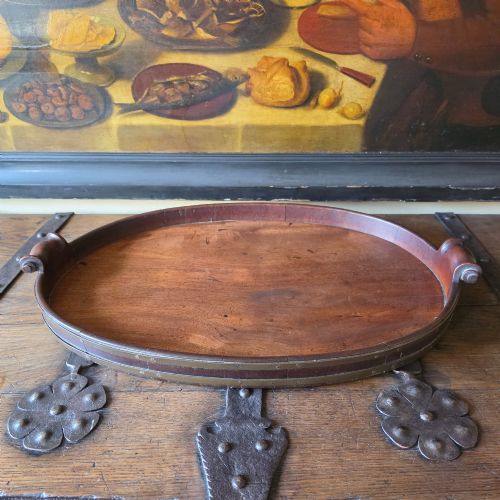
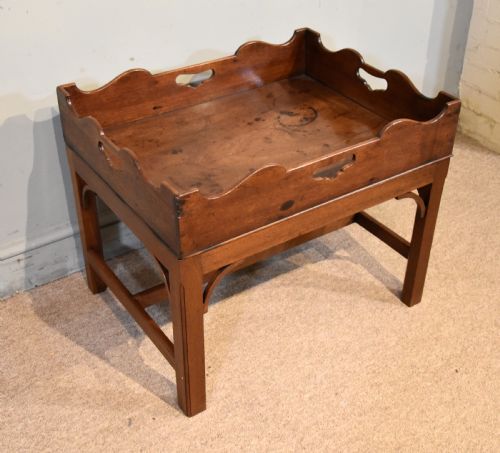
When you search for a brown wooden gallery tray, you are looking at functional serving pieces and display items defined by a raised wooden border designed to keep contents secure.
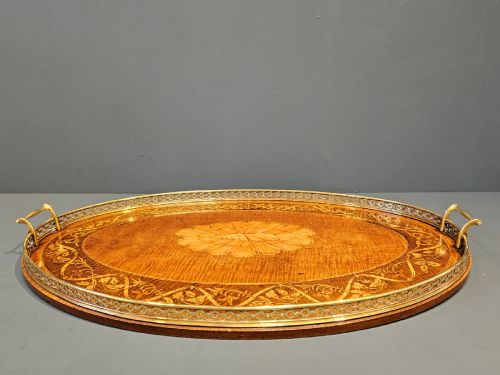
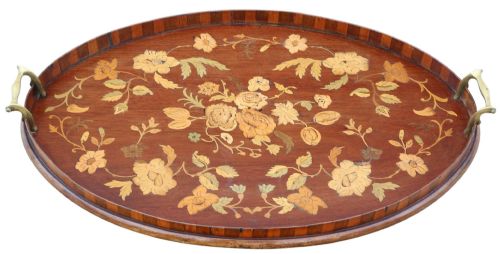
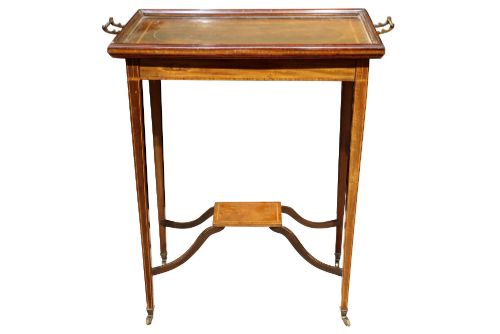
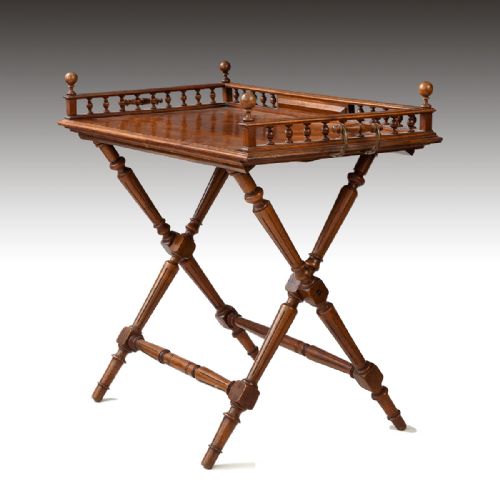
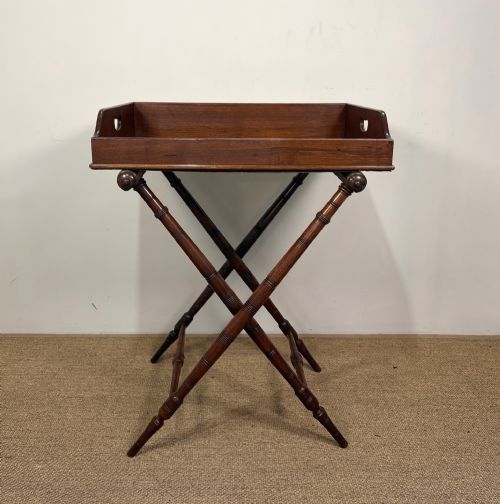
The versions you are most likely to meet on this page span the 18th century, the Georgian and Victorian eras, and the Edwardian period, appearing in forms ranging from handheld oval serving trays to folding tray tables on stands.
Makers utilised rich timbers and occasionally incorporated brass handles or delicate inlay to elevate these domestic objects into decorative centrepieces.
Judging quality and craftsmanship
The distinction between standard domestic utility pieces and finer examples lies in the crispness of the gallery carving and the finesse of the timber selection.
Finer trays display tightly figured mahogany or meticulous satinwood inlay, where the grain follows the contours of the oval or rectangular shape rather than appearing disjointed.
The integrity of the joinery where the raised gallery meets the base floor separates robust, enduring examples from those weakened by poor construction or heavy past use.
Listings feature mahogany, oak, and walnut timbers, with periods ranging from the 18th century through the Georgian, Victorian, and Edwardian eras into the 1930s.
The Brown Wooden Gallery Tray Glossary
- Gallery tray
- A serving tray featuring a low, pierced or solid raised border around its perimeter designed to prevent items from sliding off. This raised rim defines the silhouette of the piece.
- Butler's tray
- A removable tray designed to sit upon a folding X-frame stand for portable serving. These pieces often feature hinged sides that fold down flat.
- Satinwood inlay
- A decorative technique where contrasting light-coloured satinwood is inserted into recesses within a darker primary timber like mahogany. It creates delicate linear or floral borders.
- Silver plate
- A thin layer of silver applied over a base metal foundation, commonly utilised on handles, gallery rails, or mounts. It provides the lustre of solid silver with greater structural resilience.
Brown Wooden Gallery Tray: Frequently Asked Questions
How do I use a gallery tray today?
These trays function well on coffee tables to corral books and decorative objects, or on sideboards for holding glassware during gatherings.
Their raised rims keep items contained while adding a distinct historical texture to modern interior spaces.
Are butler's trays stable on their stands?
Traditional folding stands utilise an X-frame design that locks securely under the weight of the resting tray.
When properly fitted, the tray sits snugly within the wooden rails to prevent shifting during use.
How do I clean wooden serving trays?
Dust the surface regularly with a soft, dry cloth and avoid exposing the timber to excessive moisture or direct heat.
Applying a quality beeswax periodically will maintain the sheen of the mahogany or oak without building up residue.
How do I date an antique wooden tray?
Examination of the timber grain, construction joints, and inlay style provides the primary clues for determining period origin.
Georgian and 18th-century examples often exhibit hand-cut dovetails and dense native hardwoods, whereas Edwardian pieces frequently incorporate machine-cut precision and silver-plated mounts.