

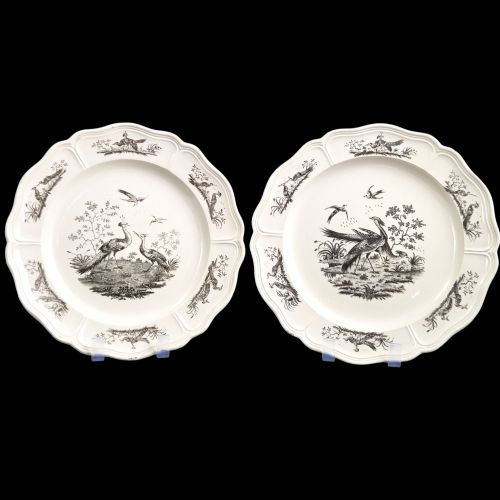


18th Century Transferware Dish
An 18th century transferware dish brings crisp cobalt blue decoration to the table, offering a durable yet refined piece of early ceramic history.
18th Century Transferware Dish
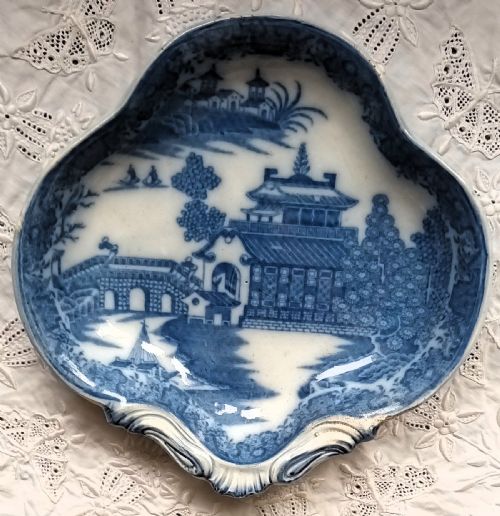
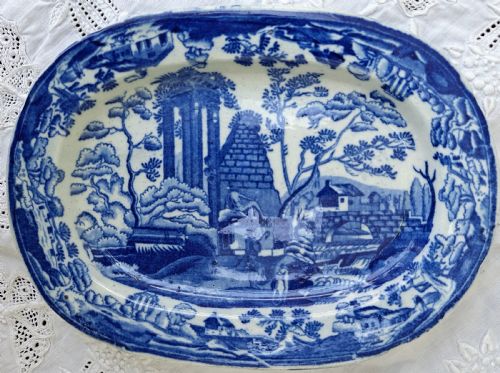
When you search for an 18th century transferware dish, you encounter early ceramic serving pieces, plates, and small trays made during a period of rapid technical innovation in British potteries. These items include delicate pickle dishes, dessert dishes, and larger platters designed for dining tables.
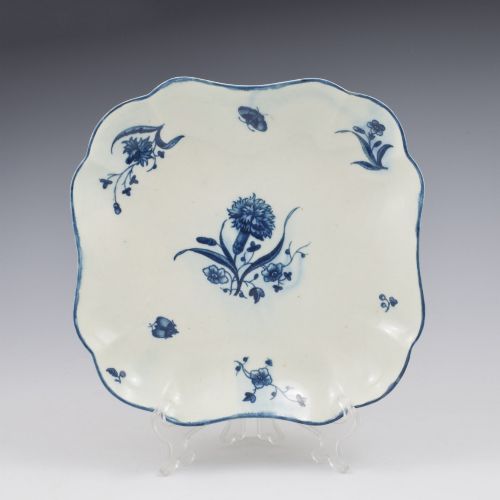
The versions you are most likely to meet on this page span the Georgian era, incorporating earthenware, creamware, pearlware, and soft-paste porcelain. Makers applied cobalt pigment underglaze to create detailed pictorial scenes before the pieces were fired.
How they were made
Potters shaped bodies from earthenware, creamware, pearlware, or soft-paste porcelain, depending on the factory and the desired delicacy of the finished vessel. Creamware and pearlware provided smooth, pale surfaces that accepted printed patterns clearly.
Makers utilised cobalt blue underglaze applied via transfer printing, a technique where an engraved copper plate transferred the design onto tissue paper and then onto the ceramic body. A transparent glaze sealed the pigment before the final kiln firing.
18th Century Transferware Dish Retail Price Guide 2026
Typical asking prices for 18th century transferware dish among the pieces listed under this phrase on Sellingantiques today, from the lower quarter to the upper quarter. They describe what is for sale here now, not the wider market.
What varies in quality
Quality depends upon the clarity of the transfer print and the smoothness of the underlying glaze. Finer examples display sharp lines in complex Chinoiserie or classical ruins motifs without blurring or pooling of the cobalt pigment.
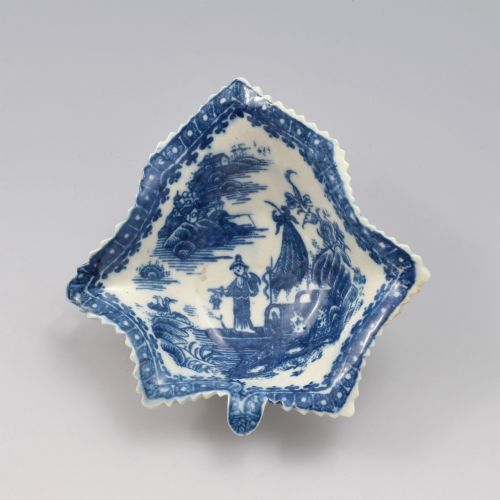
The refinement of the ceramic body also distinguishes the range, moving from thick earthenware bread stands to thin, translucent soft-paste porcelain leaf-shaped dishes and dessert plates.
Thomas Lakin·Leeds Pottery·Caughley Porcelain·Worcester Porcelain·Herculaneum Pottery
The 18th Century Transferware Dish Glossary
- Transferware
- Pottery decorated by printing a design from an engraved copper plate onto tissue paper, which was then transferred onto the unglazed or bisque ceramic body.
- Creamware
- A refined earthenware developed in Yorkshire and Staffordshire during the mid-eighteenth century, distinguished by its warm, pale yellow hue under a clear lead glaze.
- Pearlware
- An improved earthenware introduced in the late eighteenth century, containing a small amount of cobalt in the glaze to neutralise the natural yellow body tone and produce a bluish-white surface.
- Soft-Paste Porcelain
- A ceramic composition made from a mixture of clays, glass frits, and other materials, fired at lower temperatures than true hard-paste porcelain to yield a warm, translucent body.
- Pickle Dish
- A small, often leaf-shaped or shell-shaped serving dish utilised on Georgian dining tables for holding small condiments, pickles, or sauces.
18th Century Transferware Dish: Frequently Asked Questions
What were these dishes used for?
These dishes served practical dining functions, holding specific foods like small pickles, desserts, or bread during Georgian meals. Smaller trays also functioned as spoon holders on the tea table.
Over time, many of these utilitarian items transitioned into decorative display pieces due to their intricate blue and white pictorial patterns.
How do I care for an antique dish?
Wash these ceramics gently by hand in warm water using a mild detergent, avoiding modern dishwashers and harsh scouring pads that can damage the eighteenth-century glaze.
Display them securely on stable surfaces or use padded plate hangers if mounting them on a wall for decoration.
How do I tell creamware from pearlware?
Creamware possesses a warm, buttery cream-coloured tone imparted by its pale yellow earthenware body and clear lead glaze. It dominated tableware production in the mid-eighteenth century.
Pearlware appears whiter and slightly bluish in the pooling areas of the glaze, a result of the small amount of cobalt added by potters from the late eighteenth century onward.
What is Chinoiserie decoration?
Chinoiserie describes European interpretations of Chinese artistic motifs, featuring imaginary landscapes, pavilions, bridges, and figures rendered in cobalt blue. This style was immensely popular among British potteries during the Georgian period.
Artisans adapted these exotic scenes to fit the shapes of leaf dishes, plates, and spoon trays.