

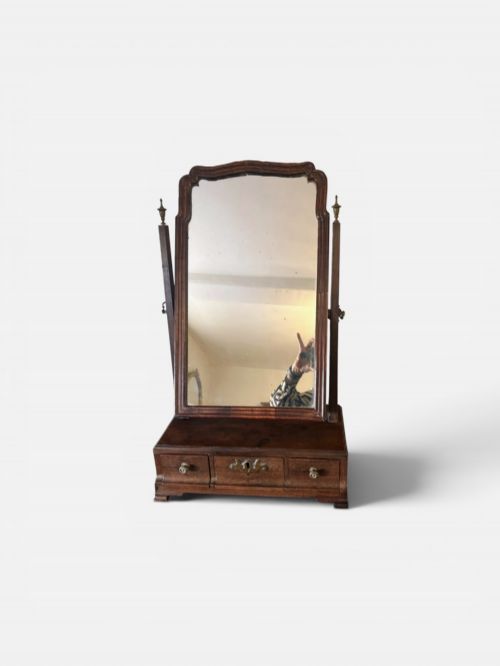
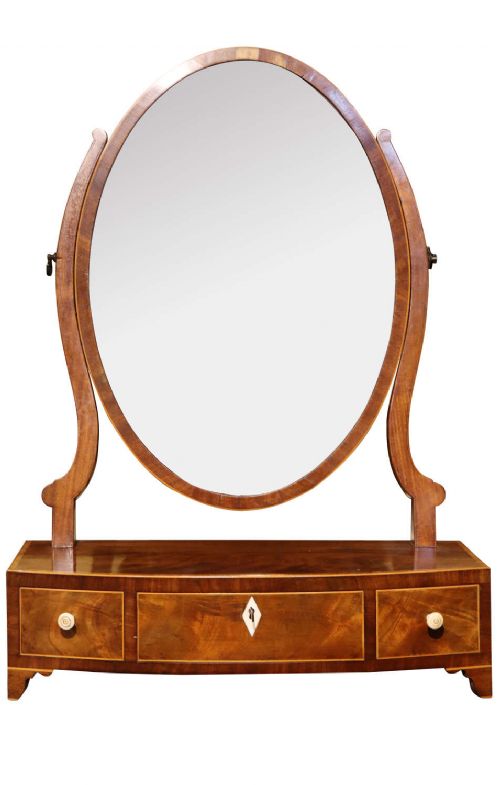


18th Century Swing Glass
When you look for 18th century swing glass, you are seeking adjustable tabletop dressing mirrors that tilt on side pivots to catch the morning light.
18th Century Swing Glass
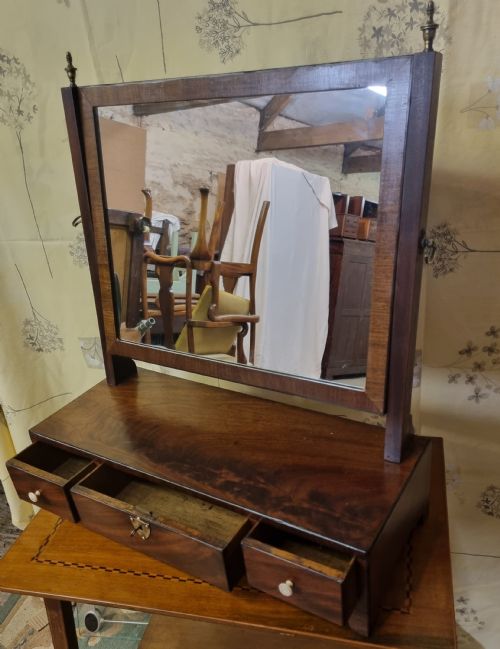
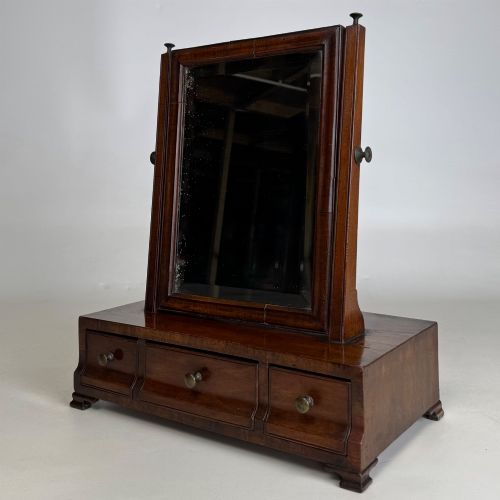
These pieces are freestanding tabletop mirrors designed for grooming and dressing, most commonly encountered as mahogany or walnut toilet and dressing mirrors resting on small box bases.
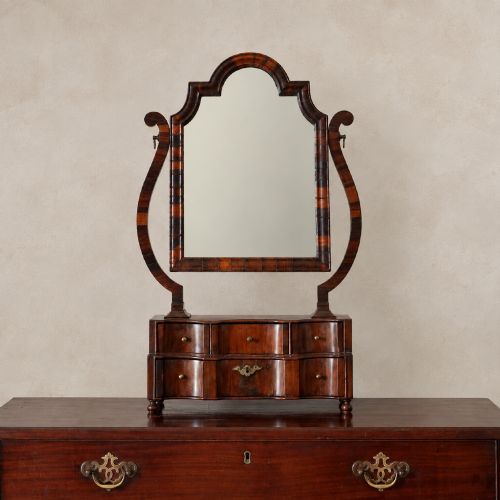
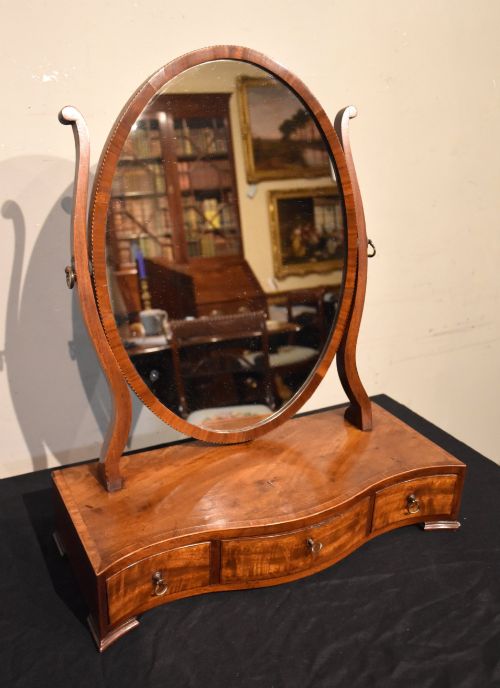
The selection ranges from early Queen Anne and George II forms to later George III and Sheraton designs, frequently featuring serpentine fronts, crossbanding, and occasional miniature bureau compartments.
While most examples are rectangular table mirrors with pivoting side frames, larger floor-standing cheval mirrors and occasional swing-handled silver baskets also appear in the record.
Materials and construction
Cabinetmakers constructed the frames and box bases using dense timbers such as mahogany, walnut, and harewood, often embellished with veneers, crossbanding, and giltwood accents.
Original mirror plates are set into pivoting frames connected to upright arms by brass or bone hardware, allowing the glass to tilt back and forth smoothly on its central axis.
A few clever makers added tiny hidden drawers beneath the glass to guard secret love letters and rouge pots.
Distinctions in quality
The refinement of the timber grain and the crispness of serpentine shaping define the upper tiers of these mirrors, separating standard workshop output from exceptional cabinet work.
Proportion and hardware integration reveal the maker's hand, where finely cast brass pivots and well-figured burr maple or walnut veneers elevate a piece above simpler variants.
The 18th Century Swing Glass Glossary
- Swing glass
- A mirror plate suspended on side pivots within a movable frame. This allows the user to tilt the glass to various angles.
- Toilet mirror
- A small mirror designed to sit atop a dressing table or chest. These often incorporate small drawers in the base for storage.
- Serpentine
- A curved line that undulates with a convex centre flanked by concave sides. It adds visual movement to the base of the mirror.
- Crossbanding
- A strip of veneer applied to the border of a panel with the grain running perpendicular to the centre. This frames the primary wood nicely.
18th Century Swing Glass: Frequently Asked Questions
Where were these mirrors placed?
These mirrors sat upon dressing tables, chests of drawers, or dedicated washstands in bedrooms and dressing rooms. Their elevated position brought the glass to a convenient height for morning routines.
Because they were portable, owners moved them around the house to follow the best natural light from windows during grooming.
How do I date a swing glass?
Stylistic cues such as Queen Anne pad feet, George III serpentine shaping, and Sheraton oval frames help narrow down the period. The choice of primary timber, moving from walnut in the early decades to mahogany later on, offers further chronological clues.
Construction methods within the drawer boxes and the type of mirror plate edge also provide evidence of the decade of manufacture.
What is a box mirror?
A box mirror is a dressing glass where the supporting frame sits directly upon a shallow wooden box or plinth. This base frequently contains one or more small drawers for holding trinkets and cosmetics.
Some elaborate examples include miniature bureau bases with fitted pigeonholes beneath the pivoting glass.
What is a cheval mirror?
A cheval mirror is a large, freestanding floor mirror mounted in a frame with four legs. Unlike table swing glass, it reflects the full length of the person.
These taller glasses also pivot on central side pivots, allowing the full plate to tilt forward or backward as needed.