


18th Century Stemmed Glass
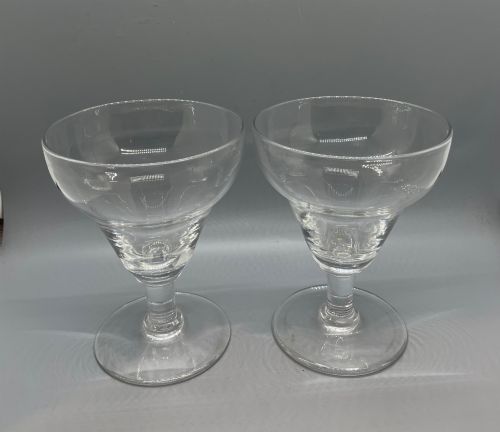
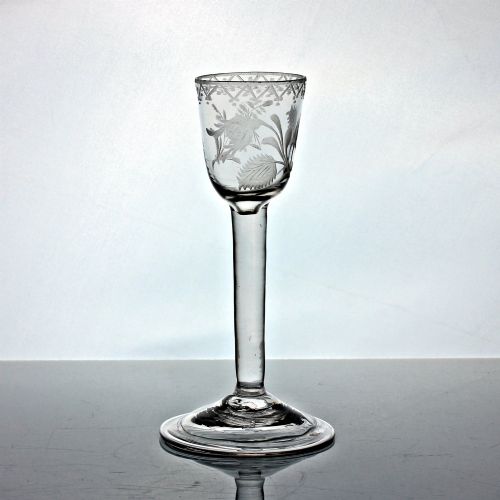
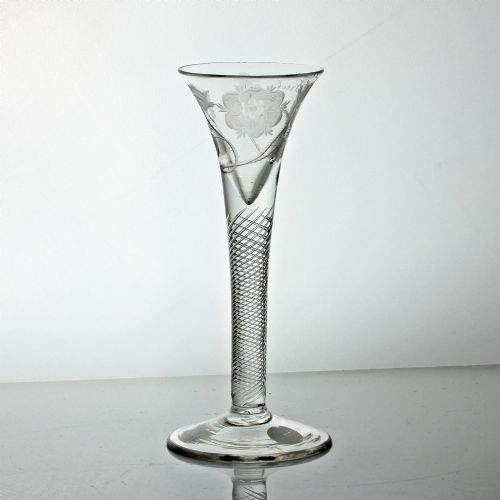
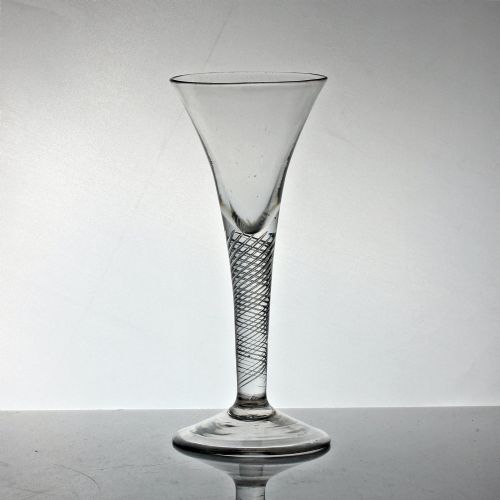
These 18th century stemmed glass pieces are Georgian drinking vessels that collectors prize for their tactile glass forms and historical twist stems.
18th Century Stemmed Glass
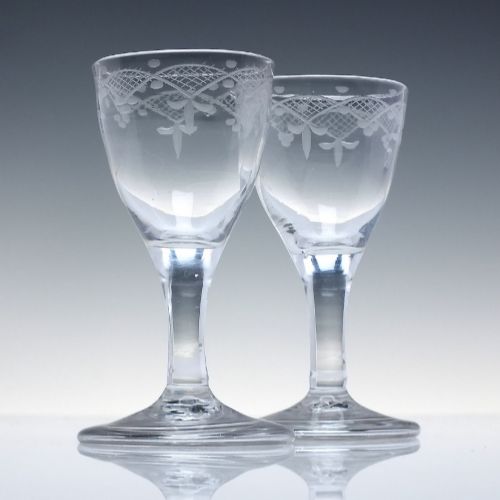
When you search for 18th century stemmed glass, you are looking at drinking vessels, serveware, and table objects primarily originating from the Georgian period. The selection on this page focuses heavily on English wine glasses, goblets, and dram glasses shaped during the seventeen-hundreds.
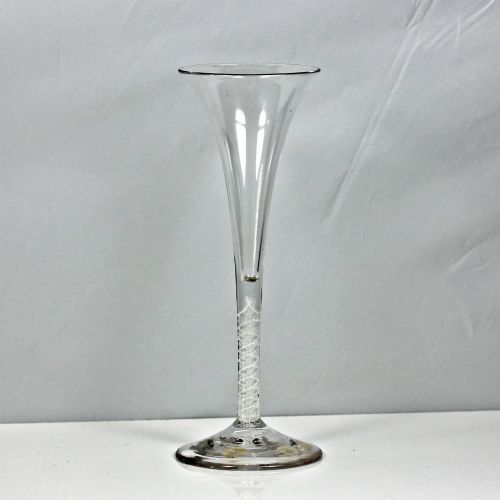
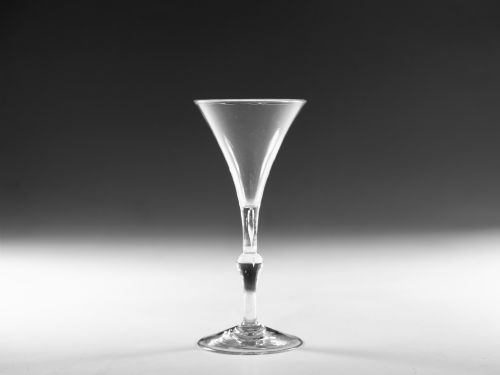
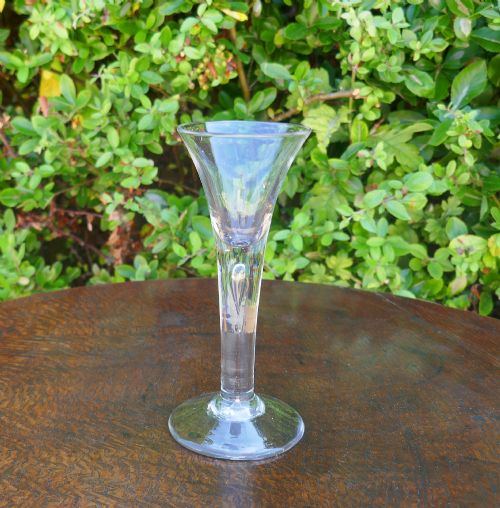
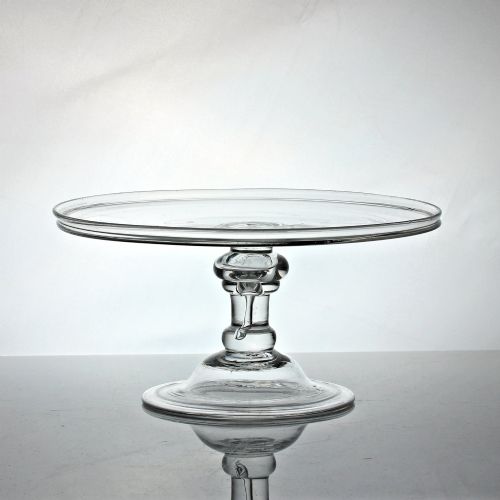
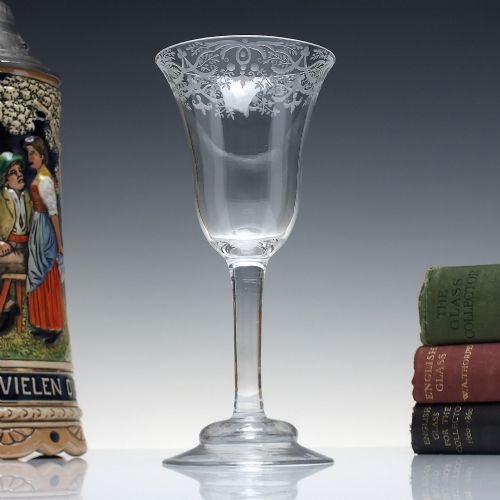
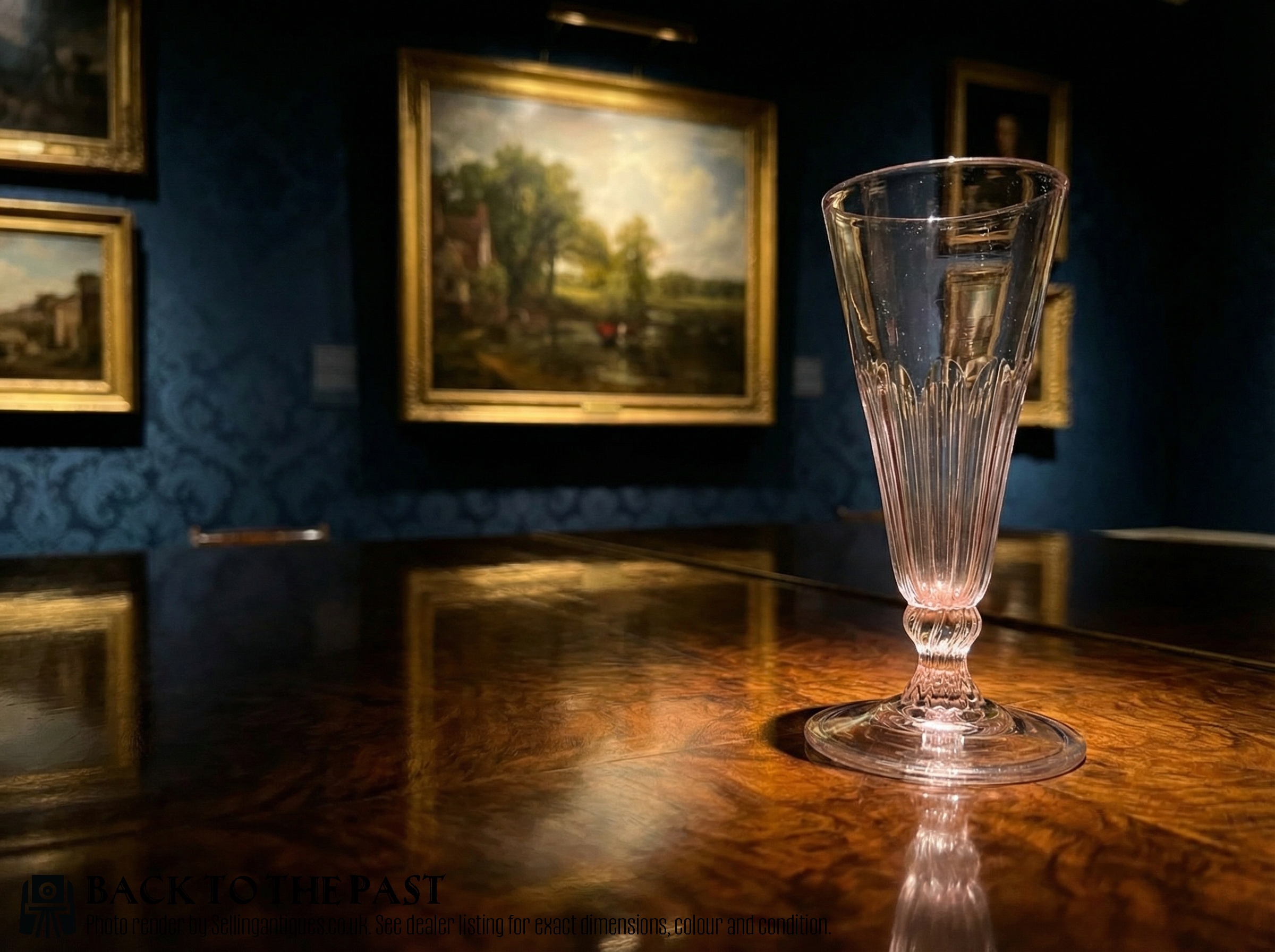
Most examples take the form of wine glasses with trumpet, ogee, or flared bucket bowls resting on various stem types. Alongside standard wine glasses, the selection includes champagne or sweetmeat glasses, ale glasses, tazzas, and patch stands.
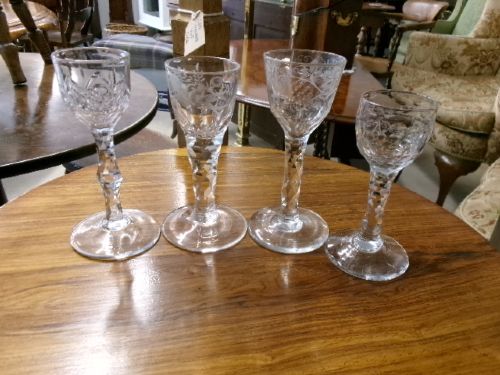
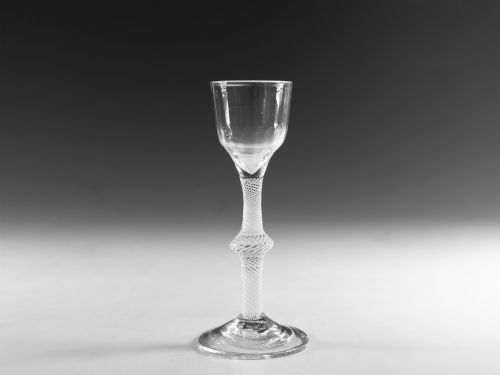
The pieces span the century, with forms ranging from early baluster and balustroid stems to the intricate air and opaque twists that define the middle decades. Collectors encounter plain stems, faceted designs, and heavily engraved ceremonial armorial or political vessels.
How They Were Made
These items are fashioned from lead glass, lead crystal, clear glass, and flint glass, often utilising white enamel or coloured twists within the stems. Makers employed lead metal to give the material weight, clarity, and resonance.
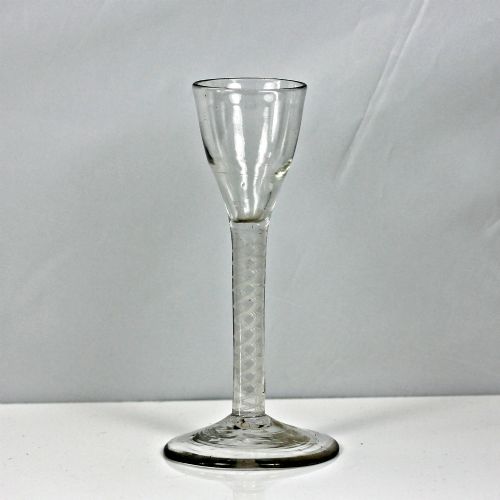
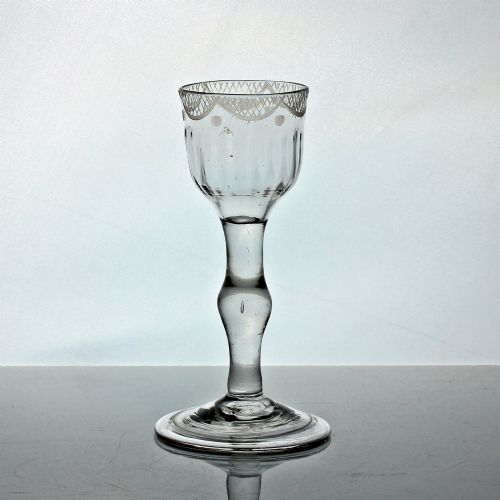
Stems were produced using diverse techniques, creating air bubbles, multi-spiral air twists, single or double series opaque twists, mixed twists, and heavy baluster profiles. Bowls often received hand engraving, such as swag and tail motifs, Jacobite symbols, or rococo patterns, and sit upon folded feet or domed bases.
Listings feature lead glass, flint glass, and clear crystal shaped into wine glasses, ale glasses, tazzas, and patch stands across the Georgian period.
What Varies In Quality
Quality rests in the precision and complexity of the stem formation and the crispness of any bowl engraving. A regular, well-drawn twist or a cleanly moulded baluster separates ordinary production from finer work.
The weight and optical clarity of the lead crystal also distinguish the pieces, alongside the symmetry of the bowl and the stability of the foot. Historical significance, such as armorial engraving or dated political inscriptions, elevates certain examples above standard drinking vessels.
The 18th Century Stemmed Glass Glossary
- Lead glass
- A heavy, brilliant glass containing lead oxide that replaced lighter imported metal and allowed deep wheel engraving.
- Opaque twist
- A stem formation enclosing thin white enamel rods twisted into spirals within the clear glass column.
- Baluster
- A heavy, knopped stem style derived from architectural supports, typical of early eighteenth-century drinking vessels.
- Tazza
- A wide, shallow stemmed dish used for serving sweetmeats or fruit on the dining table.
- Patch stand
- A small pedestal dish used to hold cosmetic patches favoured during the Georgian era.
18th Century Stemmed Glass: Frequently Asked Questions
How do I identify a Jacobite glass?
Jacobite glasses carry engraved emblems such as roses, oak leaves, or specific portraits associated with the exiled Stuart cause.
These covert symbols identify supporters who drank secret toasts to the king over the water.
What is an air twist stem?
An air twist stem contains elongated bubbles drawn into spirals inside the glass column during manufacture.
This technique appeared across the mid-eighteenth century before opaque enamel twists became widespread.
Why do some glasses have folded feet?
Makers folded the outer rim of the foot under itself to create a thickened, stronger edge that resisted chipping.
This method is common on earlier eighteenth-century drinking vessels and dram glasses.
What is a sweetmeat glass?
A sweetmeat glass is a wide, shallow vessel designed for serving preserved fruits, nuts, or confectionery at formal meals.
They often feature flared bowls and elaborate stems matching contemporary wine glasses.
How do I tell an ale glass from a wine glass?
Ale glasses generally feature taller, narrower bowls, often decorated with engraved hops and barley motifs.
Wine glasses typically utilise deeper or more rounded bowl forms suited to smaller volumes of liquid.