





18th Century Silver Vessel
An 18th century silver vessel brings functional Georgian weight and refined metalwork directly to the table.
18th Century Silver Vessel
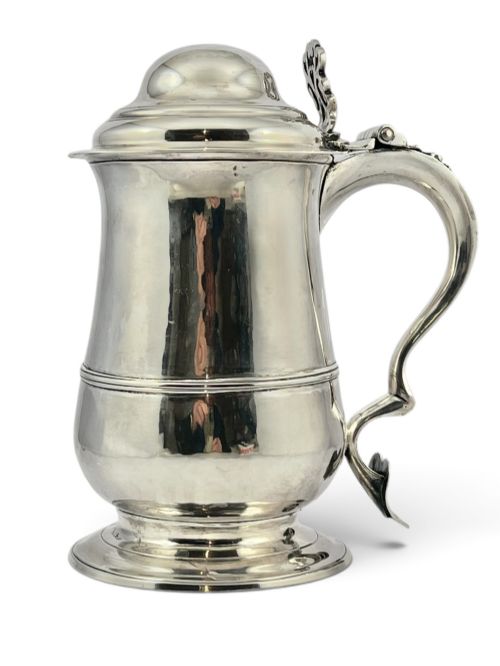
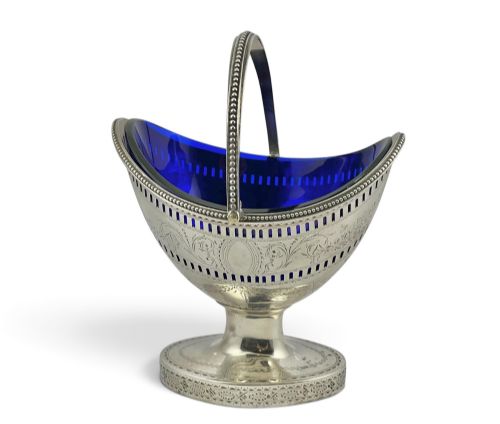
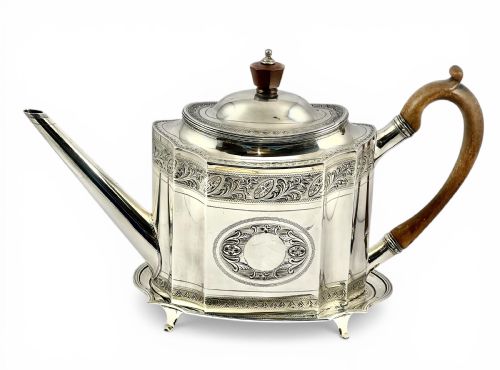
An 18th century silver vessel encompasses heavy drinking vessels, tea services, and dining table accessories from the Georgian era. Buyers seeking this category encounter sturdy tankards, lidded pots, and ewers originating from London, Edinburgh, and Newcastle smithies.
The selections span solid sterling silver and plated alternatives like Old Sheffield Plate, alongside occasional pewter and ceramic imports. Tankards and teapots dominate the current range, reflecting the domestic habits of 18th-century households.
How they were made
Silversmiths hammered solid sterling silver into substantial forms, often incorporating wooden handles or insulated mounts on chocolate and tea pots. Tankards and mugs display thick gauge metal, shaped and soldered to withstand heavy daily use.
Old Sheffield Plate pieces combine a thin layer of silver fused to a copper core, a technique requiring immense skill to prevent the base metal from showing through edges and wear points.
18th Century Silver Vessel Retail Price Guide 2026
Typical asking prices for 18th century silver vessel among the pieces listed under this phrase on Sellingantiques today, from the lower quarter to the upper quarter. They describe what is for sale here now, not the wider market.
Listings feature solid sterling silver alongside Old Sheffield Plate, copper, and pewter examples spanning the 17th and 18th centuries.
What varies in quality
Quality rests heavily on the crispness of maker's marks, hallmarks, and the preservation of original gauge thickness after centuries of polishing. Pieces by recorded makers command attention when their chased or engraved Neoclassical and George III details remain sharp.
In plated examples, the integrity of the silver fusion across high-relief handles and rims dictates the standard, separating workshop masterworks from utilitarian production pieces.
John Payne·William Grundy·Robert Hennell I·John Scofield·Walter Brind
The 18th Century Silver Vessel Glossary
- Tankard
- A tall drinking vessel with a single handle, frequently fitted with a hinged lid during the Georgian period. They were built for ale and beer.
- Old Sheffield Plate
- A composite material made by fusing a thin sheet of silver to a thicker copper ingot. This innovation preceded electroplating.
- Ewer
- A large pitcher with a flared spout and curved handle, historically used for pouring water or wine at the dining table.
- Porringer
- A small, two-handled bowl used for soups or porridges. Georgian iterations display balanced symmetry and sturdy construction.
- Argyll
- A covered gravy warmer featuring a central heating compartment. It kept sauces warm during long 18th-century meals.
18th Century Silver Vessel: Frequently Asked Questions
How do I clean an 18th century silver vessel?
Wash the metal gently with warm soapy water and a soft cloth to protect aged surfaces. Avoid abrasive dips that strip natural patination.
Dry thoroughly immediately after washing to prevent moisture spots on older sterling and plated finishes.
Can I use these vessels for daily drinks?
Solid sterling silver pieces remain entirely functional for serving beverages at the modern table. Ensure you check for any internal lining integrity before use.
Old Sheffield Plate requires more care due to potential copper show-through from centuries of cleaning.
How do I identify a Georgian tankard?
Look for crisp hallmarks indicating town offices like London, Edinburgh, or Newcastle alongside date letters. These stamps confirm the exact year of assay.
Form also guides attribution, with heavy scroll handles and stepped lidded profiles typifying mid-to-late 18th-century design.
What is Old Sheffield Plate?
Old Sheffield Plate is an early fusing technique sandwiching sterling silver over copper. It creates durable tableware with genuine silver content.
Look for subtle copper seams along edges to distinguish this method from later electroplated wares.