




18th Century Silhouette Art
These 18th century silhouette art pieces offer a direct glimpse into Georgian likenesses through delicate paper, glass, and pigment.
18th Century Silhouette Art
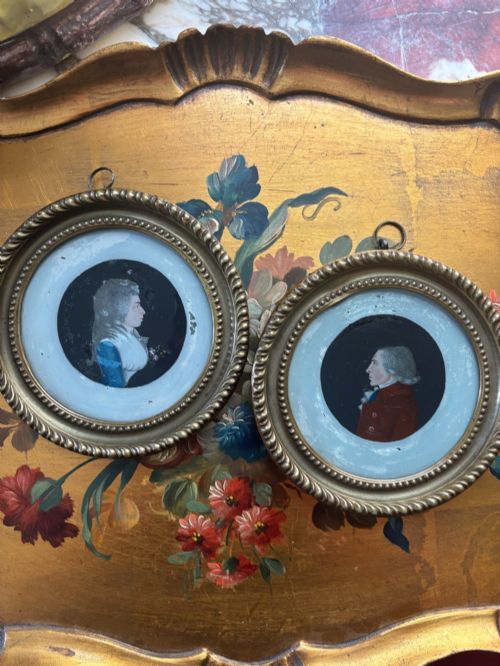
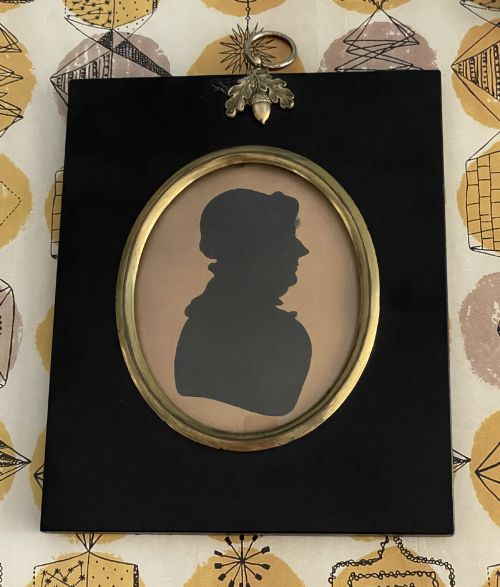
When you search for 18th century silhouette art, you are looking at profile portraits captured in shadow, often set within framed wall art or miniature formats. The selection here spans Georgian pieces alongside later Regency examples and revival works.
You will most frequently encounter portrait miniatures and silhouette portraits designed for wall hanging. These range from simple cut-out profiles to detailed works enhanced with watercolour and pigment.
Materials and Construction
The makers of these profiles relied on paper cut-outs, pigment, and watercolour applied directly to glass or plaster surfaces. These delicate materials required careful handling to preserve the crisp outlines of the sitters.
Frames are constructed from ebonised wood, often fitted with brass accents, gold leaf, or giltwood details. This combination protected the fragile interior image while providing a stark contrast to the dark profile.
18th Century Silhouette Art Retail Price Guide 2026
Typical asking prices for 18th century silhouette art among the pieces listed under this phrase on Sellingantiques today, from the lower quarter to the upper quarter. They describe what is for sale here now, not the wider market.
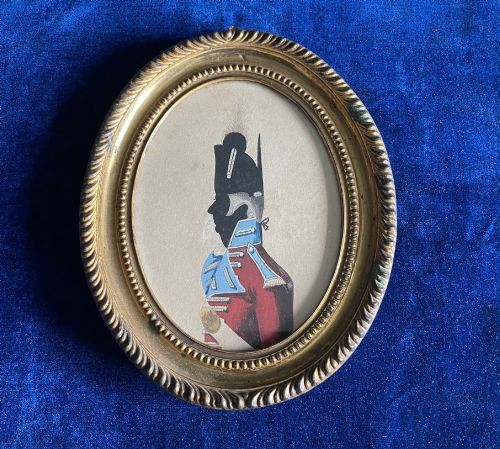
One listed profile immortalises an officer stationed at the Tower of London.
Factors of Quality
The precision of the cutting or painting defines the upper tier of these works, where the artist captures an unmistakable likeness through minimal lines. Lesser examples show stiff outlines with less attention to the subtle contours of the face.
The originality of the framing and mounting contributes significantly to the character of the piece. Period glass and ebonised wood frames that remain intact elevate the overall integrity of the artwork.
James Gillespie·John Miers·Nathaniel Bermingham
The 18th Century Silhouette Art Glossary
- Silhouette portrait
- A profile likeness filled in with a solid dark colour, typically black, against a lighter background. This form of portraiture gained immense popularity during the Georgian era before photography.
- Portrait miniature
- A small-scale painting or profile designed to be held or hung in a private space. These works demand immense precision from the artist due to their diminutive size.
- Ebonised wood
- Timber treated to resemble ebony, providing a deep black finish commonly used for frames. This material became a standard choice for highlighting the contrast of pale backgrounds.
- Giltwood
- Wood carved and covered with a thin layer of gold leaf or gold paint. It adds a warm metallic sheen to the framing of finer portraits.
18th Century Silhouette Art: Frequently Asked Questions
How do I identify genuine 18th century silhouettes?
Examine the materials used for the backing and the frame construction, as older pieces frequently utilise hand-blown glass and Georgian ebonised wood. Contemporary reproductions often lack the subtle irregularities found in period paper and plaster.
Look closely at the technique employed for the profile itself, whether cut paper or pigment on glass. Signatures or trade labels on the reverse also help confirm the origins of the piece.
Were these silhouettes meant for hanging or holding?
Most surviving examples functioned as wall art, displayed in domestic interiors within small, protective frames. Portrait miniatures were sometimes kept in private spaces or carried.
The inclusion of brass hanging loops on many frames indicates they were designed for display on panelled or plastered walls. Their compact size allowed them to be grouped together in arrangements known as gallery walls.
What is the difference between cut and painted profiles?
Cut profiles involve snipping black paper to form the likeness, which is then mounted onto a contrasting light background. This method relies entirely on the precision of the scissors or knife.
Painted profiles utilise dark pigment, watercolour, or bronze highlights applied directly onto glass, plaster, or card. This technique allowed artists to incorporate finer details such as lace collars or hair strands.
How should I care for antique silhouette art?
Keep framed pieces away from direct sunlight to prevent the fading of delicate watercolours, pigments, and old paper. Stable humidity levels protect the wood and glass components from degradation.
Avoid using liquid cleaners on the antique glass or frame surfaces, opting instead for a dry, soft cloth. Opening the sealed frames should be avoided to prevent dust and moisture from entering.