



18th Century Reverse Mezzotint
An 18th century reverse mezzotint brings incredible transparency and depth to your wall, combining printmaking and glass painting in a singular Georgian frame.
18th Century Reverse Mezzotint
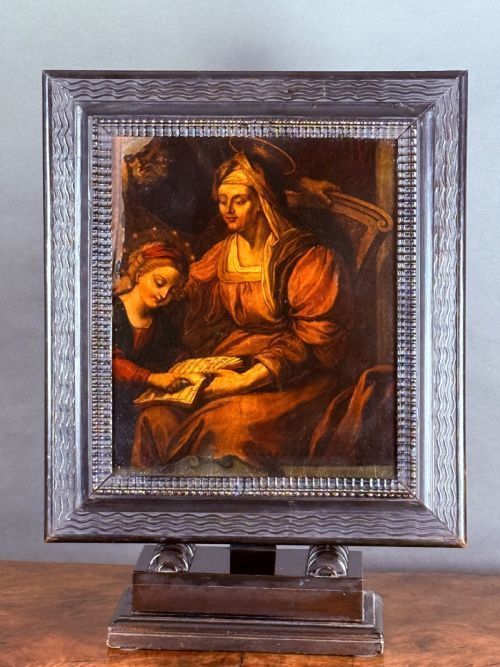
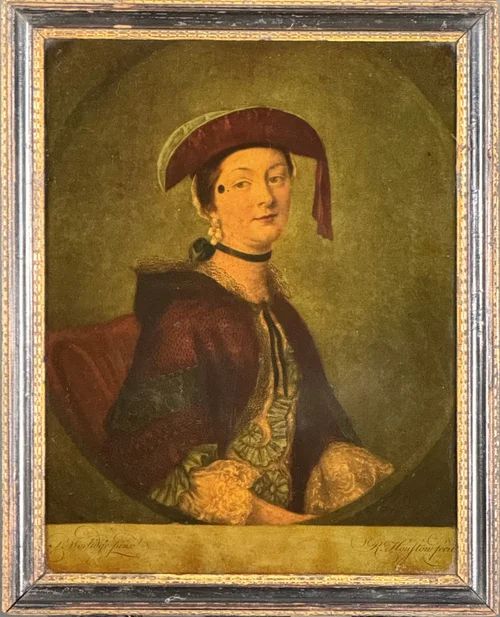
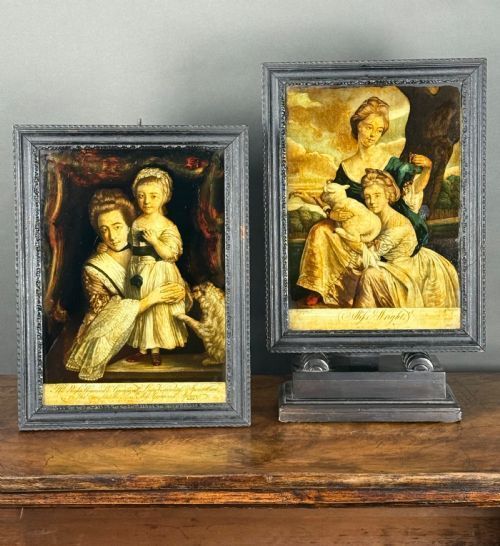
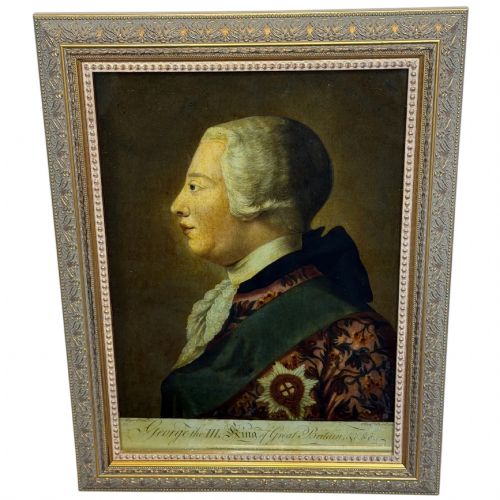
When you search for an 18th century reverse mezzotint, you are looking at delicate works where printed imagery is transferred and fixed directly onto glass before being hand-painted from behind. These pieces function primarily as wall art, capturing portraits of notable figures, allegorical seasons like spring and winter, and domestic or religious scenes. Most examples on this page date firmly to the Georgian era, though you will also find pieces spanning the seventeenth and nineteenth centuries.
The visual character of these items relies entirely on viewing the finished image through the glass substrate itself. This technique creates a luminous, enamel-like finish that sets them apart from standard paper engravings of the period. Portraiture dominates the subjects, featuring royals such as King George III and Queen Anne alongside society ladies like Mrs Brooks and Countess Spencer.
Materials and technique
Makers constructed these works using glass as the primary support medium, applying paper prints and oil paint directly to the rear surface. Artisans utilised oil pigment, paint, and gold leaf behind the glass to build up the luminous tones and highlights before sealing the backing with wood frames.
The process required transferring a mezzotint print face down onto the glass plate, carefully rubbing away the paper pulp to leave only the inked lines behind. Craftsmen then hand-coloured the reverse side using oil paint and pigments, ensuring that the finished picture appeared correctly oriented when viewed through the front of the glass.
Several ladies gaze out from their glass panels holding books or accompanied by a match boy, eternally frozen in Georgian ink.
Quality and execution
Preservation of the original glass and the integrity of the underlying paint layers dictate the overall standard of the piece. Works that retain their original wood framing and untouched oil pigment demonstrate greater authenticity and visual impact.
Charles Spooner·Richard Purcell·Sebastiaan Vrancx
The 18th Century Reverse Mezzotint Glossary
- Reverse mezzotint
- A method where a mezzotint print is applied face down to glass, the paper removed, and the remaining ink painted from behind. This creates a glossy, protected surface with a distinct optical depth.
- Mezzotint
- A printmaking process of the intaglio family where the plate is roughened to produce dark tones and scraped to produce light areas. It allows for subtle gradations of light and shade.
- Georgian
- The period spanning the reigns of the Hanoverian kings from seventeen fourteen to eighteen thirty. Works from this era often reflect neoclassical or baroque aesthetic influences.
- Oil pigment
- Ground colour mixed with drying oils used by artists to paint the reverse side of the glass. These materials provide rich saturation and longevity.
18th Century Reverse Mezzotint: Frequently Asked Questions
How do I hang a reverse glass print?
These delicate works require secure wall fixings and should hang away from direct sunlight and damp environments to protect the fragile paint layers behind the glass.
Ensure the original wood frame is structurally sound before mounting, as the weight of the glass places specific demands on old hanging cords.
Why are they called reverse prints?
The term arises because the print is applied face down to the back of the glass plate, reversing the composition during creation so it reads correctly from the front.
Painters then work on the reverse side of the glass, meaning background details go down first and foreground elements are applied last.
Are all pieces from the eighteenth century?
While the majority originate in the Georgian period, the technique spans multiple eras, including seventeenth-century examples and nineteenth-century continuations of the style.
Checking the framing materials, paper stock remnants, and pigment types helps determine the chronological placement of each individual work.
What subjects are most common?
Portraiture of royalty, nobility, and notable society figures forms the largest category, alongside allegorical representations of the seasons and narrative scenes.
Historical and religious subjects also appear, reflecting the popular visual culture and educational tastes of Georgian collectors.