



18th Century Pistol
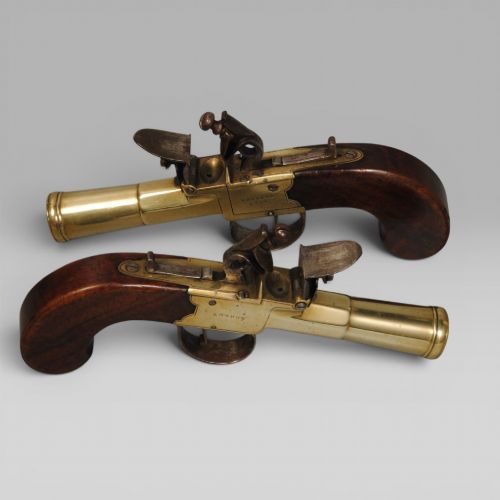
When collecting an 18th century pistol, you examine a mechanical firearm driven by flintlock, snaphaunce, or miquelet ignition systems.

18th Century Pistol
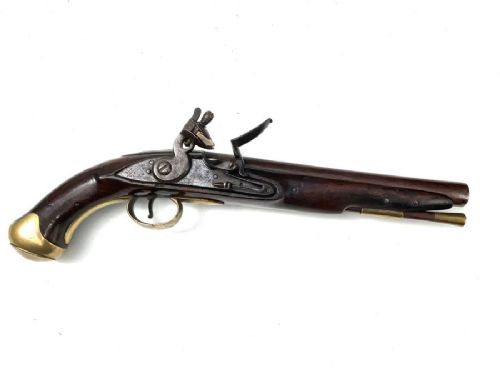
The category spans civilian pocket arms, military holster weapons, and heavily decorated regional variations produced across Europe and the Ottoman Empire. Domestic examples include pocket, turn-off, and overcoat pieces designed for personal defence, alongside robust military service arms issued to cavalry units.
Regional styles dominate the selection, ranging from British and Irish town-made flintlocks to Balkan, Ottoman, and Italian pieces characterised by distinct mountings and lock mechanisms. Buyers encounter everything from compact muff pistols with silver wire inlay to large dragoon holster arms bearing official proof marks.
Materials and Construction
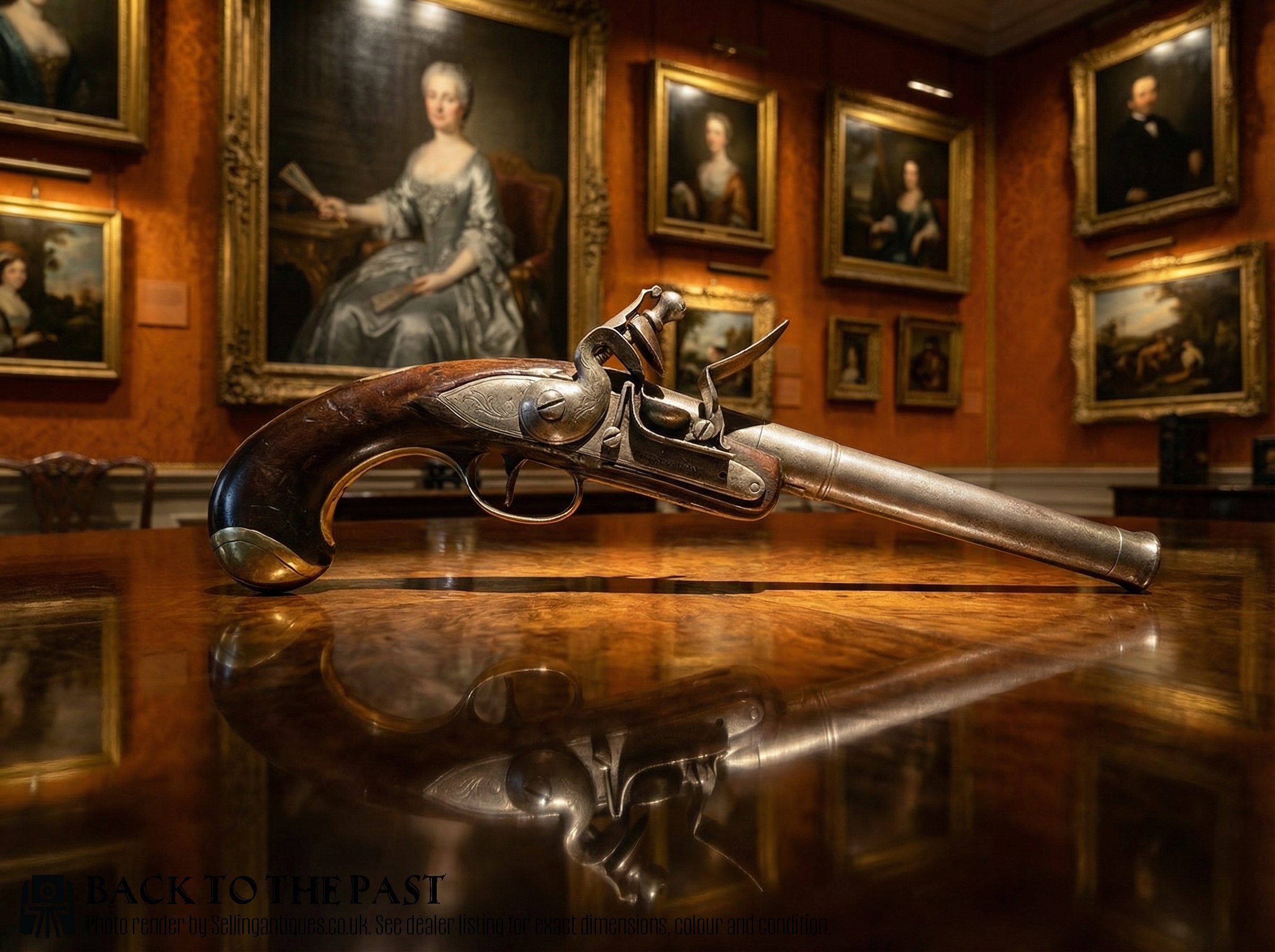
Stocks rely predominantly on figured walnut or local hardwoods, frequently shaped with scroll-butts or carved grips that accommodate metal furniture. Iron and steel provide the structural strength for barrels and lock plates, while brass appears widely for trigger guards, butt caps, and decorative side plates.
Makers integrated decorative wire inlay, cast brass fittings, and silver mounts into the woodwork. Barrels range from standard round or cannon profiles to swamped and blunderbuss flares, often combining steel components with engraved brass or silver overlay.
18th Century Pistol Retail Price Guide 2026
Typical asking prices for 18th century pistol among the pieces listed under this phrase on Sellingantiques today, from the lower quarter to the upper quarter. They describe what is for sale here now, not the wider market.
Surviving examples demonstrate conversion dates and proof marks spanning the 18th and early 19th centuries.
Factors of Quality
The standard of execution in the engraving and casting of metal mounts dictates the visual tier of an 18th century pistol. Master gunmakers applied crisp, legible signatures to lock plates and barrels, whereas provincial work displays simpler execution.
The integrity of the mechanism and the survival of original stock wood and wire inlay govern preservation levels. Pieces retaining untouched proof marks, functional lock actions, and complete metal furniture command greater appreciation among collectors.
Harrison of London·T. Potts·John Campbell of Doune·La Motte·James Barber·Thomas Henshaw·Timothy Hughes·Thomas Anelli·R. Willoughby·John Rimes·J. Robinson·Barber of Newark·Dutton·Wilson·Knubley·Trulo·Ketland and Co·Richards·Ezekiel Baker
The 18th Century Pistol Glossary
- Flintlock
- An ignition mechanism utilising a flint held in a cock to strike a steel frizzen and generate sparks into a priming pan. This system dominated firearms production throughout the Georgian era.
- Boxlock
- A pistol design where the lock mechanism is forged integrally with the breech, placing the frizzen and pan directly over the action. It provides a compact profile common in pocket and muff arms.
- Miquelet
- A snaplock ignition variant utilising an external mainspring and a combined frizzen and battery spring. It is characteristic of Mediterranean, Italian, and Ottoman firearms.
- Turn-off
- A barrel design that unscrews from the breech to facilitate loading from the front of the chamber. This configuration appears frequently on Queen Anne style pocket pistols.
- Bore
- The interior diameter of the barrel, measured either by the weight of a lead ball fitting it or by direct calibre. Smaller diameters designate pocket variants, while larger ones denote military horse pistols.
18th Century Pistol: Frequently Asked Questions
How were pocket pistols carried?
Civilians carried smaller pocket and muff variants within tailored coat pockets or travelling bags for immediate personal protection during journeys.
Larger overcoat pistols served travellers who needed heavier firepower against highwaymen along isolated rural routes.
What is a holster pistol?
Holster pistols were military and civilian horse pistols designed to slide directly into leather saddle holsters on either side of a horse's neck.
These weapons featured longer barrels and heavier bores to provide stopping power for cavalry units and mounted travellers.
How do I identify a military issue pistol?
Military arms often display government ownership stamps, such as crown inspection marks or Tower Arsenal markings on the lock plate and woodwork.
They lack the elaborate silver wire inlay or fine relief carving found on high-end civilian or presentation pieces.
What is the Queen Anne style?
The Queen Anne style defines a distinctive form featuring an action and trigger guard forged in one piece with the breech, combined with a turn-off barrel.
These pieces typically display a rounded or grotesque mask butt cap cast in brass or silver.