



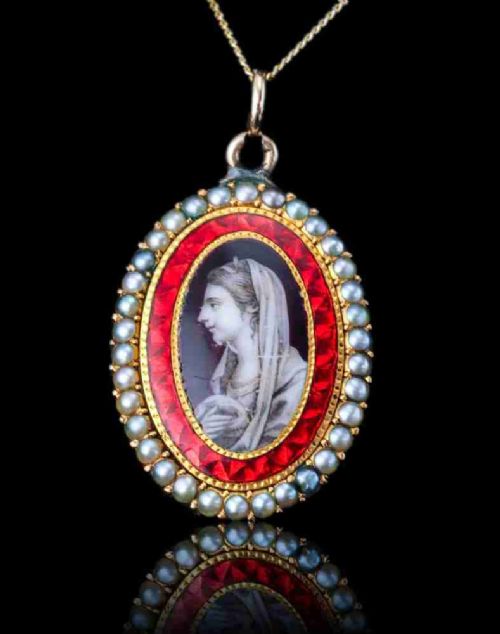




18th Century Pendant
An 18th century pendant holds miniature art and personal devotion close, offering wearable history from the Georgian era.
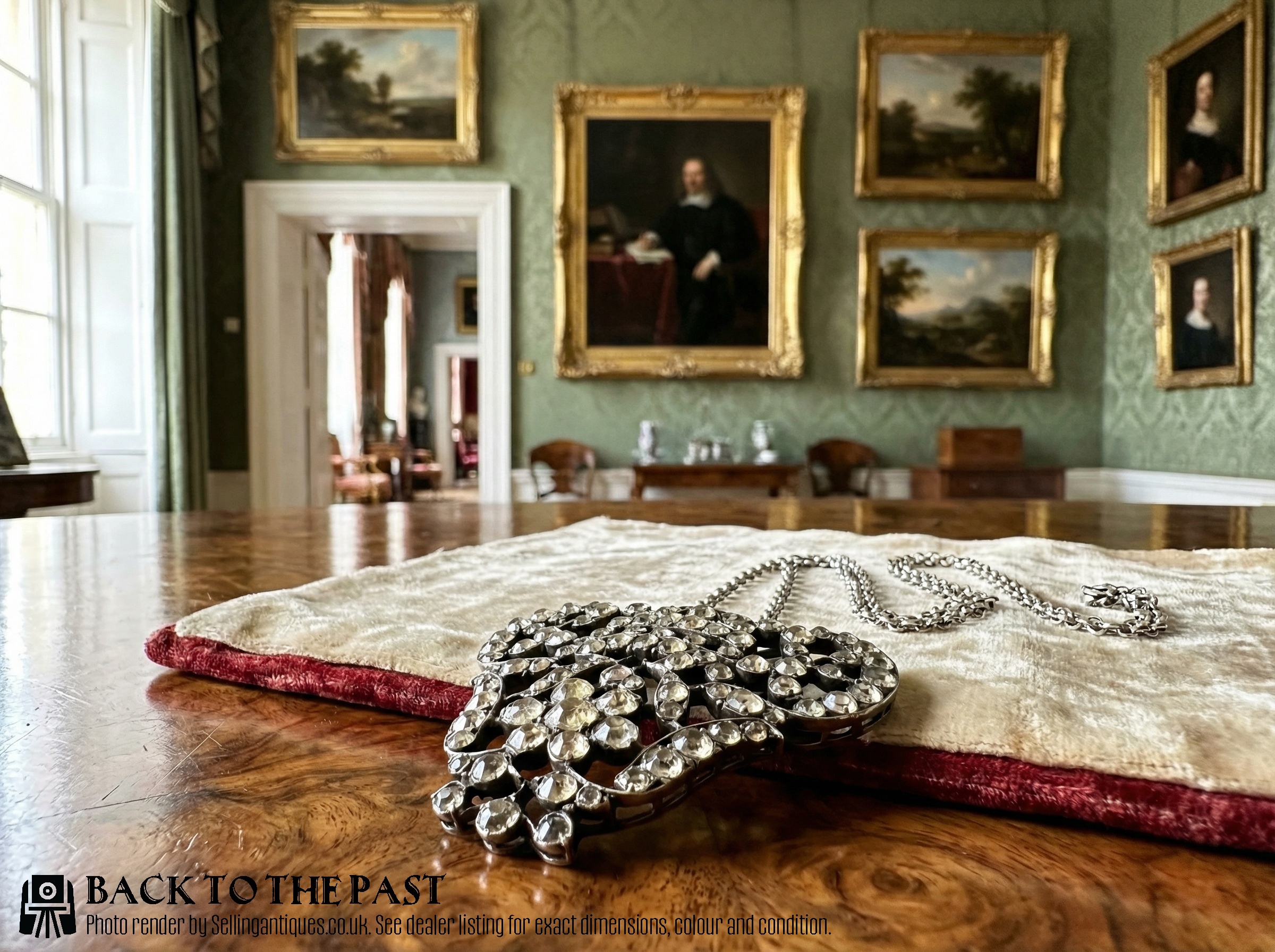
18th Century Pendant
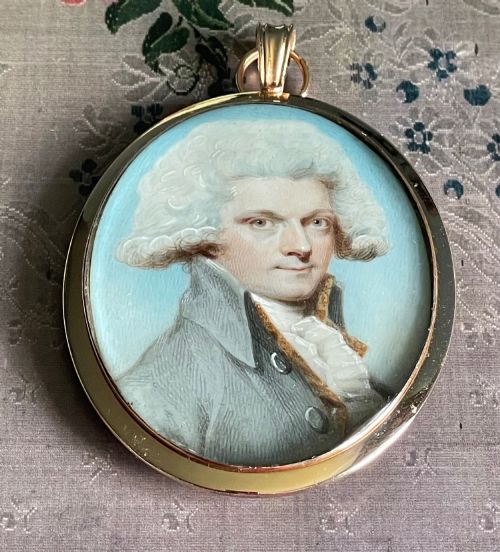
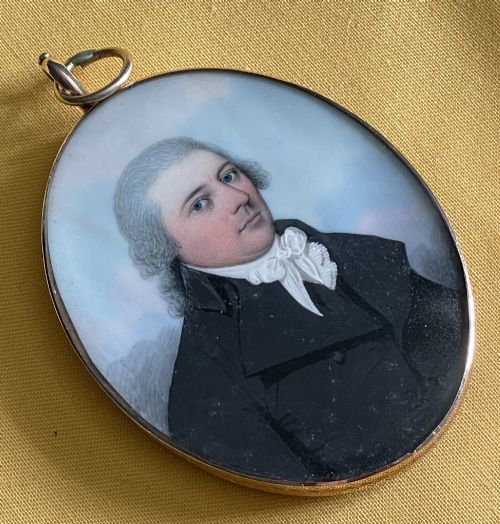
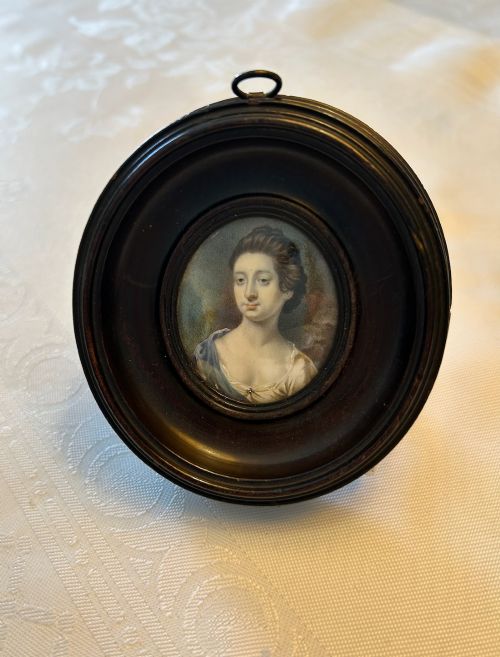
When you search for an 18th century pendant, you encounter delicate portrait miniatures, devotional jewels, and refined personal ornaments created during the Georgian period. These pieces frequently take the form of miniature portraits painted on ivory, glass, or vellum, housed within gold or silver frames designed to be worn near the heart.
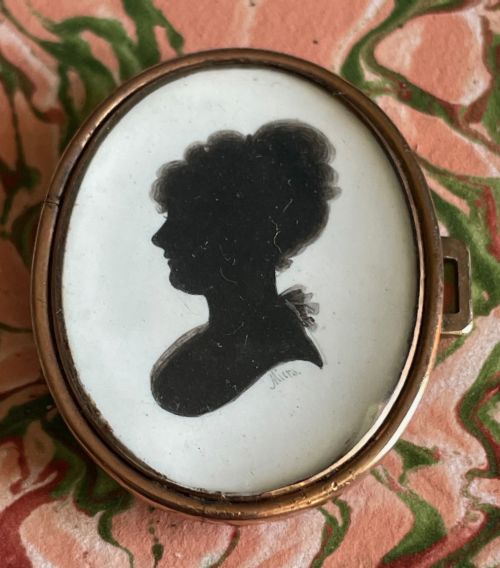
The selections available here lean heavily toward portrait miniatures and silhouette jewellery, alongside regional metalwork and devotional items. Collectors find subjects ranging from naval officers and named gentlemen to ladies in lace, often framed by period precious metals and pastes.
Materials and construction
Craftsmen utilised gold, silver, and gilt metal to house delicate imagery painted in watercolour, enamel, and pigment on substrates such as ivory, glass, and agate. Frames were cast, chased, and fabricated by hand, often incorporating hinged bezels or integrated suspension loops for ribbon and chain wear.
Detail work relied on the precise brushwork of skilled miniaturists, silversmiths, and goldsmiths working within established Georgian aesthetic traditions. The combination of organic painting grounds and durable precious metals ensures these miniature works of art survive across centuries.
Some pendants concealed woven locks of a loved one's hair beneath crystal backs, creating deeply personal tokens of affection worn daily.
Judging the work
The relationship between the miniature and its mount matters greatly, as original matched pairings command higher regard than later marriages of elements. Preservation of the painted surface, free from excessive fading or moisture damage, dictates the standing of each piece.
Henry Bone ARA·Charles Shirreff·John Miers·Frederick Buck·Charles Hayter·Christian Friedrich Zincke·William Naish·George Engleheart·James Ferguson·William Grimaldi·John Inigo Wright·Samuel Cotes·John Barry
The 18th Century Pendant Glossary
- Portrait miniature
- A small, highly detailed painting on ivory, vellum, or card, typically executed in watercolour or enamel. These intimate likenesses were commissioned to commemorate family members, military officers, or beloved figures.
- Silhouette
- A solid black profile likeness, usually cut from paper or painted on glass or plaster. In the Georgian period, silhouette artists achieved remarkable detail using ink and pigment within pendant frames.
- Paste
- Hand-cut lead glass used in Georgian jewellery to simulate gemstones such as diamonds, emeralds, or amethysts. Master lapidaries foiled the backs of these glass stones to enhance their brilliance under candlelight.
- Vinaigrette
- A small ornamental box or pendant containing a pierced grille, holding a sponge soaked in aromatic vinegar. These containers offered relief from unpleasant odours in crowded eighteenth-century urban environments.
18th Century Pendant: Frequently Asked Questions
What are 18th century pendants made of?
These pieces combine precious metals like gold and silver with painted elements on ivory, vellum, glass, and agate. Many incorporate enamel, foil-backed paste stones, or silhouette work.
Craftsmen housed these delicate artworks in bespoke frames designed to protect the fragile painted surfaces while allowing them to be worn.
How did people wear portrait pendants?
Wearers suspended these personal items from ribbons, cords, or precious metal chains around the neck, keeping the likeness close to the chest. Some designs functioned interchangeably as brooches or featured integrated hair compartments on the reverse.
This manner of display reflected deeply personal connections, memorialising absent family members, spouses, or respected public figures.
How do I identify Georgian portrait miniatures?
Authentic period examples exhibit eighteenth-century costume details, hairstyles, and painting techniques specific to miniaturists working before the nineteenth century. The reverse often reveals woven hairwork, cipher engravings, or period maker inscriptions.
Examining the construction of the metal frame and the backing material provides further clues to dating the object accurately.
Are these miniatures painted on ivory?
Many eighteenth-century portrait miniatures utilise thin slices of elephant ivory as the painting ground, which imparted a luminous, skin-like glow to the finished portrait. Other pieces employ vellum, card, or glass surfaces depending on the artist's preference.
The thin ivory sheet was typically laid onto card or metal backing within the pendant frame for structural support.