

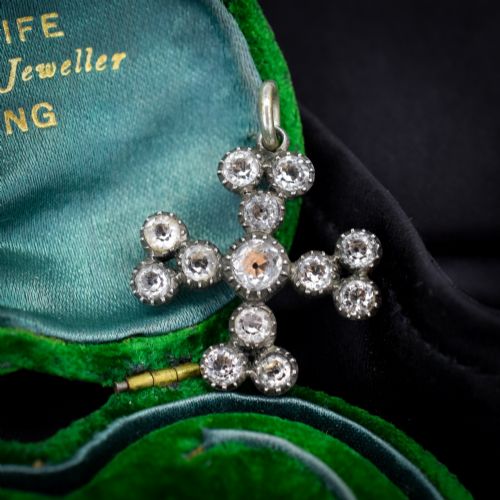
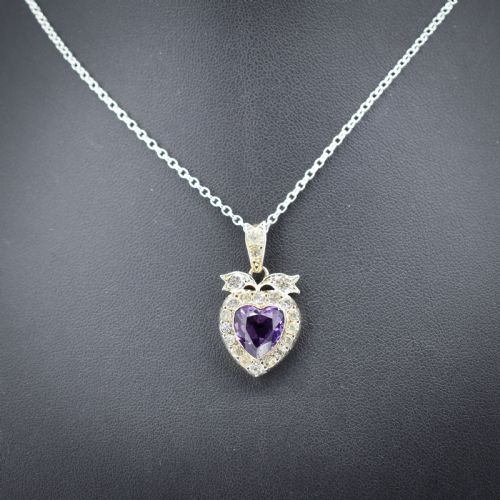
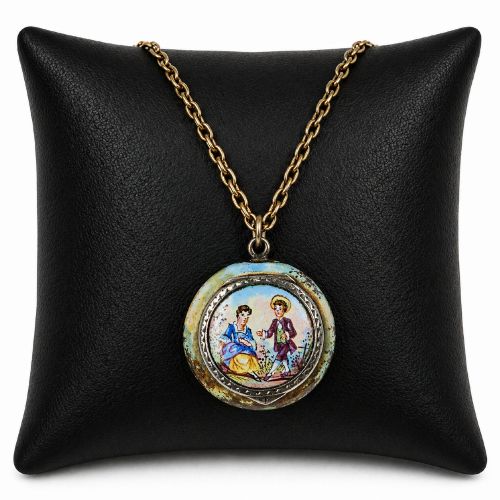


Georgian Silver Necklace
A georgian silver necklace brings centuries-old craftsmanship to your collarbone, offering sparkling paste stones and precious metals that catch the eye instantly.
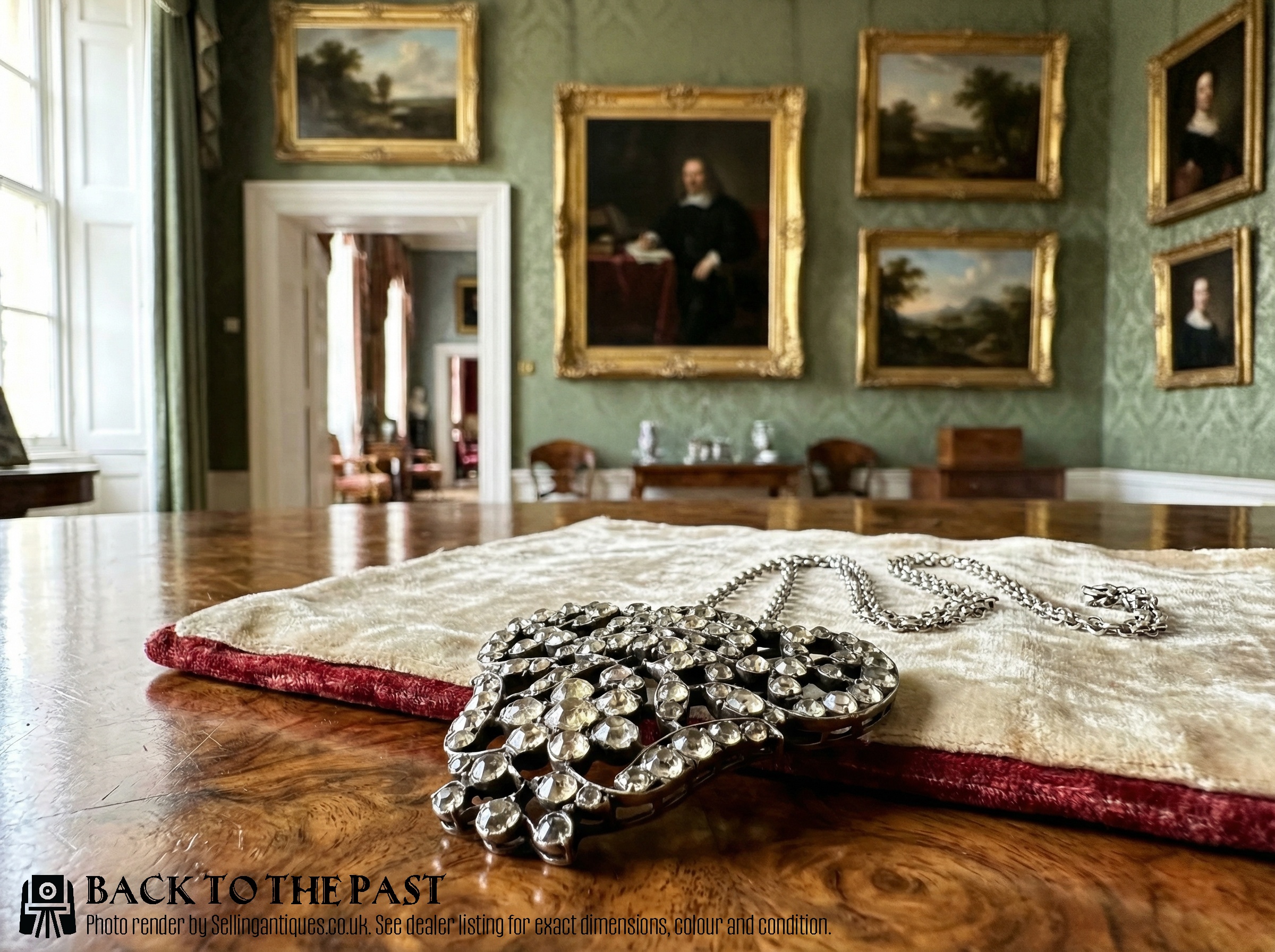
Georgian Silver Necklace
When you search for a georgian silver necklace, you are looking at early pieces of neck jewellery created during the Georgian era alongside related items from adjacent periods like the Victorian and Edwardian eras. These pieces include pendants, necklaces, lavaliers, cross pendants, and lockets.
The version you are most likely to meet on this page is the paste glass necklace or pendant, often featuring black dot paste, foiled amethyst, or pearls set in silver. You will also encounter cross pendants and multi-stone configurations such as rivière necklaces.
Origin and design span from domestic British work to continental items, notably 19th-century Viennese pieces incorporating enamel alongside silver structures. These jewels showcase varied forms from single drop pendants to linked chain arrangements.
Materials and construction
Makers constructed these items primarily in silver, frequently combining it with gold, pearls, enamel, and diamonds. Metalwork often supports intricate filigree or secure collet settings designed to hold precious and imitation stones alike.
Gems and substitutes include paste glass, diamond, turquoise, garnet, and pearl. Craftsmen utilised techniques like foiling behind coloured paste stones such as amethyst to enhance brilliance under candlelight.
Georgian Silver Necklace Retail Price Guide 2026
Typical asking prices for georgian silver necklace among the pieces listed under this phrase on Sellingantiques today, from the lower quarter to the upper quarter. They describe what is for sale here now, not the wider market.
Distinctions in quality
The standard of a piece rests on the precision of the stone-cutting, such as old cut paste or rose cut diamonds, and the integrity of the foil backing behind coloured glass. Superior items maintain crisp metalwork detail in the silver settings without blurring.
Design complexity also separates examples, distinguishing simple single pendants from elaborate multi-stone rivière necklaces, festoon swags, and double-sided enamelled lockets.
The Georgian Silver Necklace Glossary
- Paste glass
- Hand-cut lead glass used to imitate gemstones. It shines with distinct brilliance in antique jewellery.
- Black dot paste
- A specific type of antique paste featuring a tiny dark foil spot at the culet to mimic old mine-cut diamonds.
- Rivière necklace
- A continuous strand of graduated or matching gemstones linked individually. Each stone sits in its own closed-back or open setting.
- Lavalier
- A pendant necklace featuring a central gemstone drop suspended from a smaller motif or chain. This style gained popularity in the Edwardian period.
- Filigree
- Delicate openwork created by twisting fine metal threads into intricate patterns. It appears frequently in period silver chain designs.
Georgian Silver Necklace: Frequently Asked Questions
What periods do these necklaces come from?
The pieces span the Georgian era through to the Victorian, Edwardian, and early twentieth-century periods. Each era brings distinct stylistic touches to the silver work.
Craftsmanship evolved across these periods, moving from closed-back foiled stones to more varied gem combinations like turquoise and diamond.
How do I wear an antique necklace?
These items suit special occasions or everyday wear depending on the length and design of the chain or pendant. Pairing them with simple necklines allows the historic metalwork to stand out.
Careful handling ensures the fragile foils behind paste stones remain dry and protected from moisture.
What is black dot paste?
Black dot paste refers to a clever eighteenth-century trick where makers placed a tiny spot on the back of the glass. This imitated the natural culet of a real diamond.
Such details help authorities date pieces accurately to the Georgian era.