

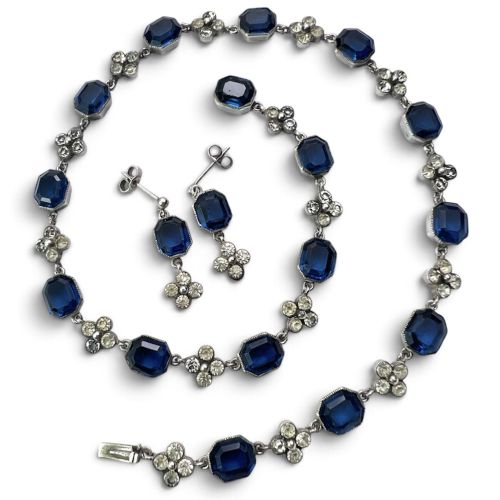
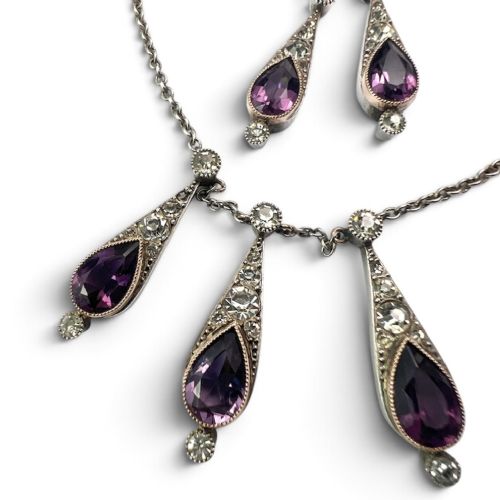
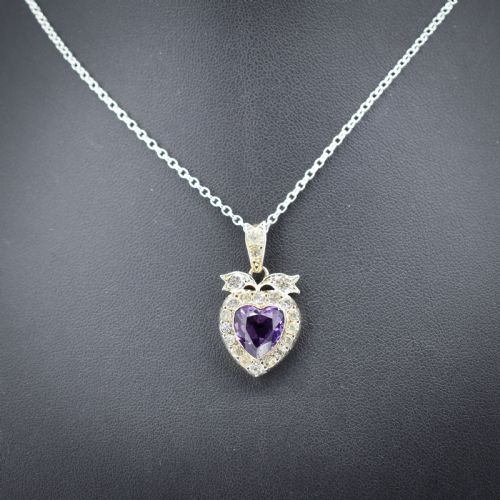


Vintage Silver Paste Necklace
These vintage silver paste necklace examples bring together old-world brilliance and hand-cut glass stones that catch the light like real gems.
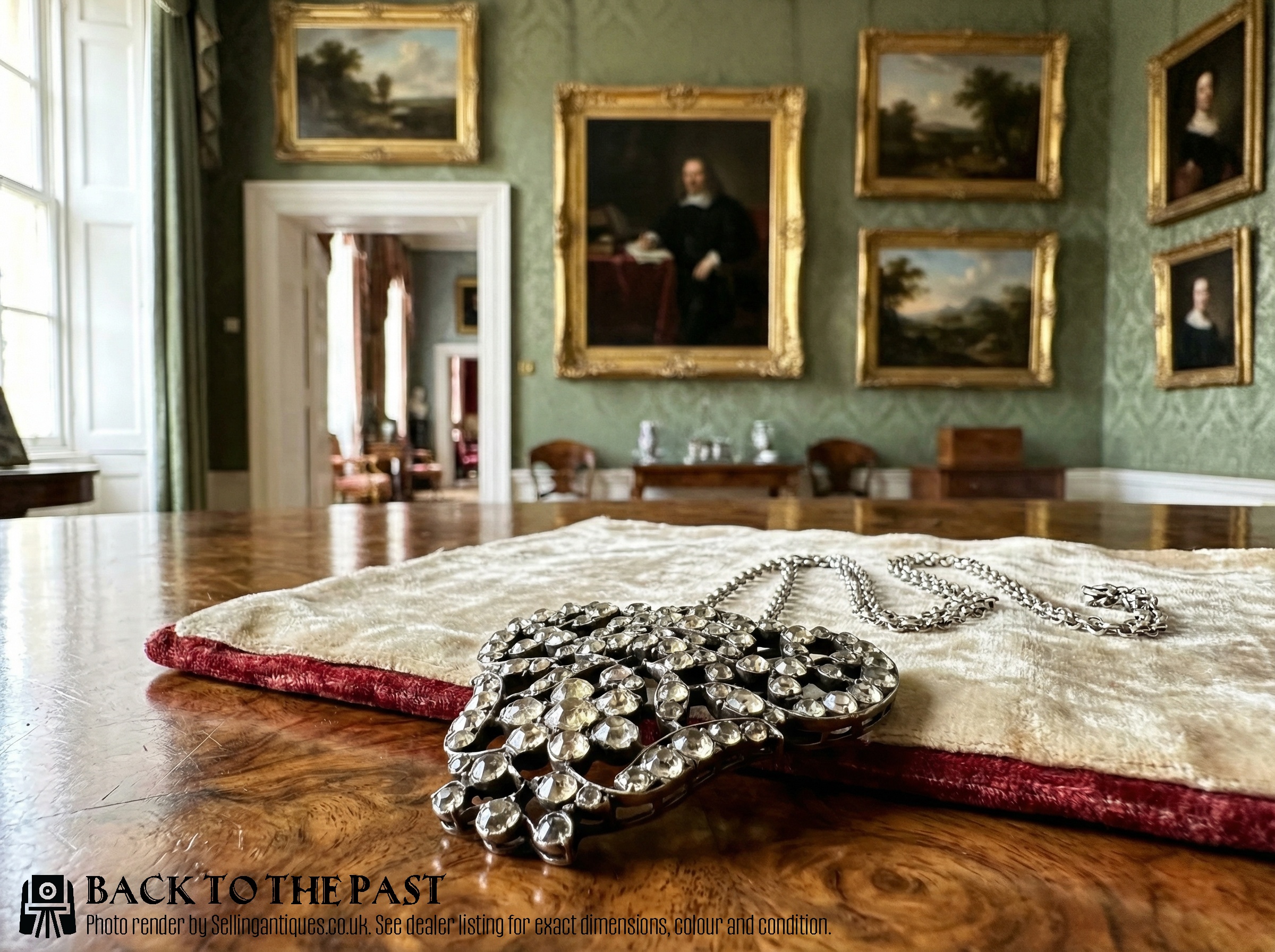
Vintage Silver Paste Necklace
When you search for a vintage silver paste necklace, you encounter pieces spanning from the Georgian and Victorian eras through to the Art Deco and Art Nouveau periods. These items range from delicate drop pendants and floral lavalier designs to complete jewellery sets and continuous rivière lines.
The most common variations on this page include silver settings paired with sparkling glass paste stones, often enhanced by pearls, amethysts, sapphires, or emeralds. Pieces from the 19th century tend to feature heavier silver work, whilst 1920s examples lean towards geometric Art Deco styling.
Makers and workshops of the past utilised these materials to create affordable luxury that mimicked high-end gemstone jewellery of the aristocracy. Today, collectors value these necklaces for their survival through various design movements, from early Victorian sentimentality to later modernist flapper aesthetics.
Materials and construction
The primary structural metal across these listings is silver, occasionally paired with gold accents or fashioned into intricate filigree and plique-à-jour enamel work. Settings are frequently hand-wrought to secure each individual stone by hand.
Paste glass serves as the central decorative element, expertly cut by hand in old styles to refract light similarly to mined diamonds and coloured gemstones. Additional details incorporate natural pearls, cultured pearls, seed pearls, and glass beads to complement the central paste stones.
Vintage Silver Paste Necklace Retail Price Guide 2026
Typical asking prices for vintage silver paste necklace among the pieces listed under this phrase on Sellingantiques today, from the lower quarter to the upper quarter. They describe what is for sale here now, not the wider market.
Swallow motifs fluttered into fashion during the Art Deco era, bringing winged fortune straight to your neckline.
Assessing quality in paste jewellery
Quality in a vintage silver paste necklace rests largely on the precision of the stone-cutting and the integrity of the silver mount. Hand-cut old stones with closed backs or black dot inclusions indicate careful historical workmanship.
The condition of the individual paste stones and the robustness of the chain or pendant setting dictate the overall standard. Pieces that retain all their original foiled or set glass without replacement stones stand at the higher end of the range.
Martin Mayer
The Vintage Silver Paste Necklace Glossary
- Paste
- Hand-cut and polished lead glass used to imitate gemstones. It was faceted and polished by hand in historical workshops.
- Rivière necklace
- A necklace composed of a continuous line of similarly sized or gradually graduating stones. Each stone is typically individually linked.
- Lavalier pendant
- A drop necklace featuring a central suspended ornament, popular during the Edwardian period. It often includes floral or symmetrical motifs.
- Plique-à-jour
- A vitreous enamelling technique where the enamel is applied within a network of metal cells without a backing, resembling stained glass.
- Old cut
- Faceting styles used on stones before the development of modern brilliant cutting in the early twentieth century. These cuts feature smaller tables and larger culets.
Vintage Silver Paste Necklace: Frequently Asked Questions
How do I clean a silver paste necklace?
Use a soft, dry cloth to gently wipe the silver metal and the paste stones. Avoid submerging historical paste jewellery in liquid cleaning solutions, as moisture can seep behind the stones and damage the foil backings.
Keep the necklace stored separately in a lined box to prevent the glass paste facets from scratching against other items in your collection.
Are paste stones made of plastic?
No, historical paste is a heavy, high-density glass that is hand-cut and faceted just like precious gemstones. It feels cool to the touch and has a distinct weight and refractive quality that modern plastics lack.
Craftsmen in the Georgian and Victorian eras spent considerable time shaping each glass piece to sit securely in custom silver bezels.
What is a black dot paste?
Black dot paste refers to an intentional dark spot placed on the culet or pavilion of a glass stone to mimic the open culet or natural inclusions of an old-mine cut diamond. This technique was common in Georgian jewellery.
Finding this feature helps specialists date a piece to the 18th or early 19th century, marking a distinct period of craftsmanship.
Can I wear these necklaces every day?
Whilst these silver necklaces were made to be worn, their age means they require thoughtful care during daily activities. It is best to put your jewellery on last after applying perfumes or lotions.
Remove your necklace before swimming, sleeping, or engaging in strenuous physical work to protect the delicate silver links and stone settings.