


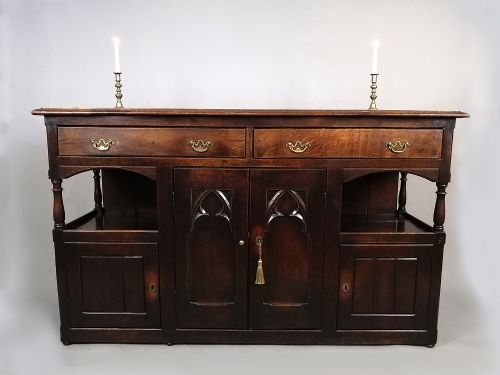
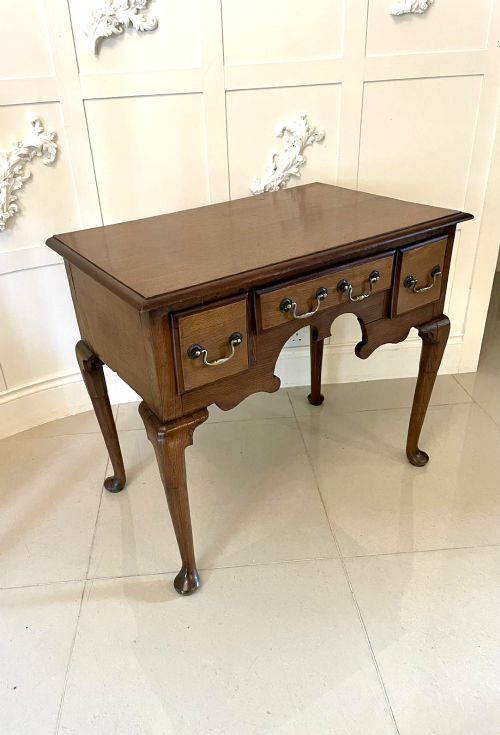
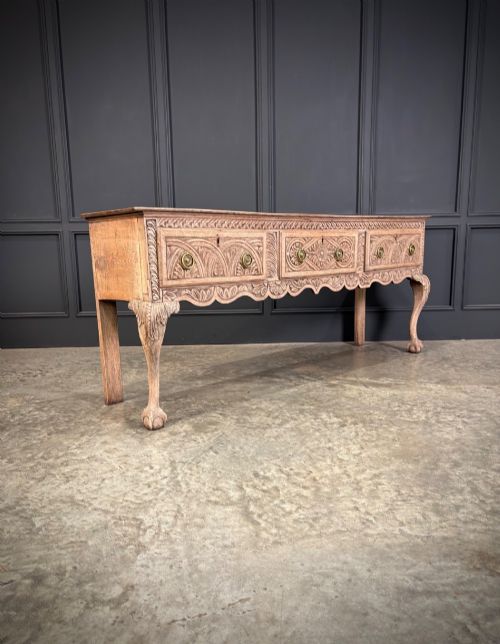
18th Century Oak Server
An 18th century oak server provides sturdy utility and rich grain for dining rooms and hallways, offering a practical surface with deep historical character.
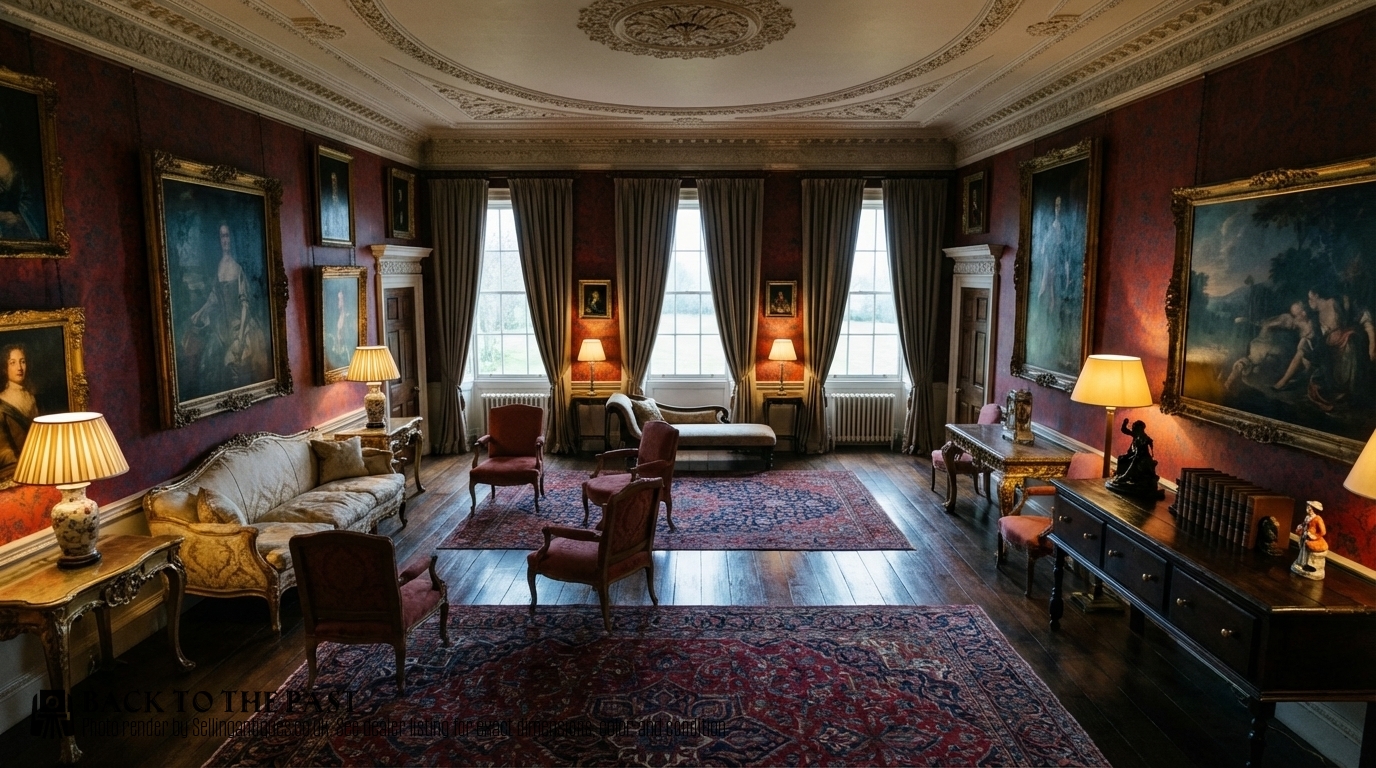
18th Century Oak Server
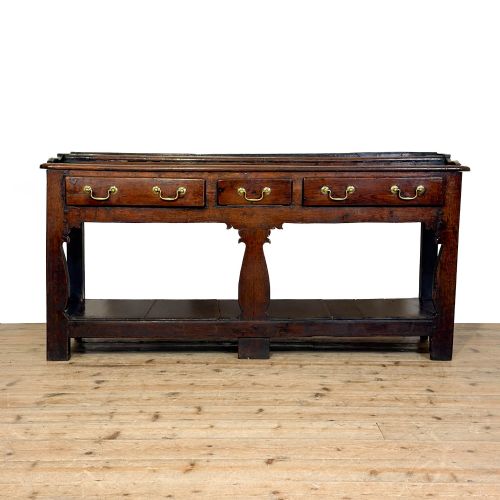
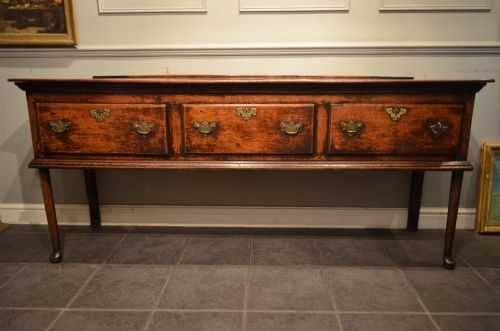
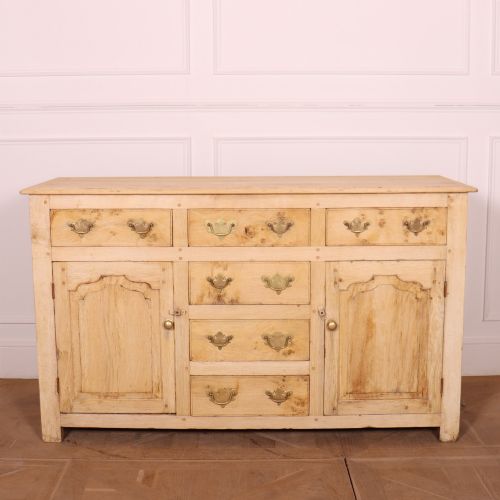
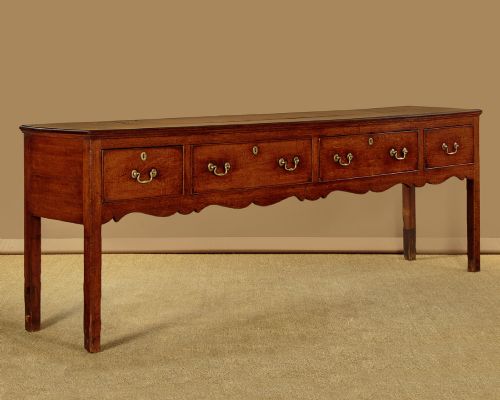
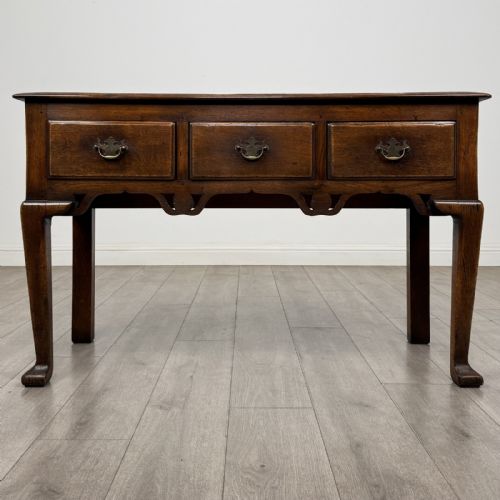
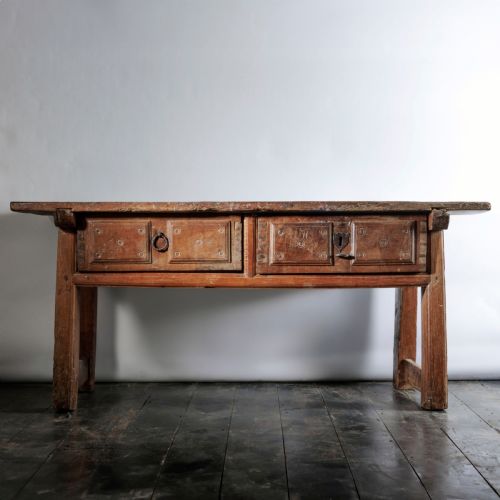
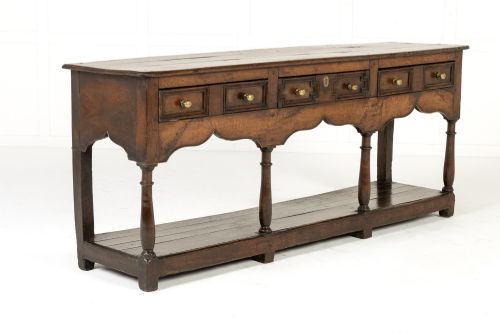
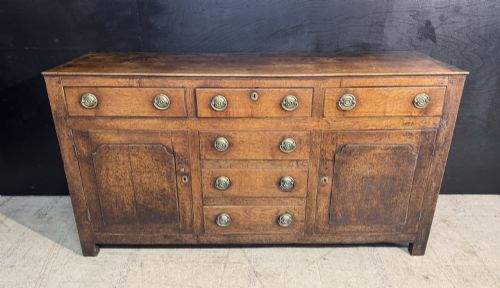
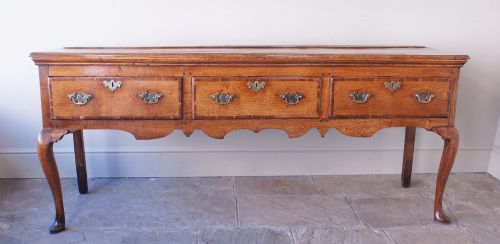
When you search for an 18th century oak server, you encounter robust foundational furniture pieces designed for serving food and storing household provisions. These pieces appear primarily as dresser bases, lowboys, and side tables originating from the Georgian period and English country workshops.
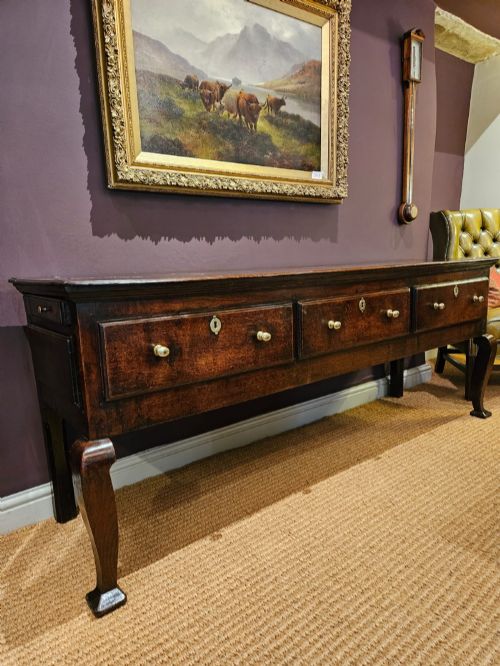
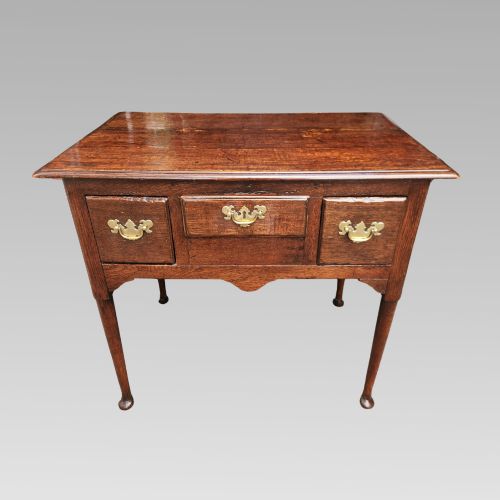
The most common formats on this page include potboard dresser bases with open lower shelves, multi-drawer lowboys standing on cabriole or straight legs, and serving tables. Makers built these forms for daily domestic life in provincial and urban settings.
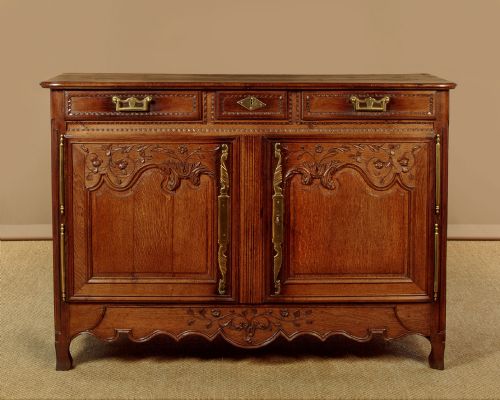
Regional variations span English country vernacular, Welsh pieces, and occasional continental examples such as Dutch pieces. The materials lean heavily on native timber, occasionally incorporating fruitwood or elm details alongside the primary oak construction.
How they were made
Craftsmen built an 18th century oak server using solid timber boards joined with mortise and tenon construction, frequently pairing oak with secondary woods like elm or fruitwood for drawer linings and structural elements. Surfaces often display hand-planed tool marks and pegged joints rather than modern metal fixings.
Hardware consists of brass drop handles and drawer pulls, sometimes original to the piece, mounted on fielded panels and geometric mouldings. Certain examples feature applied paint finishes or subtle inlay work to accent the structural drawer fronts and tabletops.
18th Century Oak Server Retail Price Guide 2026
Typical asking prices for 18th century oak server among the pieces listed under this phrase on Sellingantiques today, from the lower quarter to the upper quarter. They describe what is for sale here now, not the wider market.
Several pieces include old painted surfaces, reminding us that early owners frequently repainted their furniture to match changing interior fashions.
What varies in quality
The distinction between tiers of quality rests upon the preservation of original timber surfaces, patination, and structural integrity. Pieces retaining their original brass hardware, unclipped feet, and untouched potboards stand at the upper end of the scale.
Proportion and decorative restraint dictate the desirability of a piece. Cleanly moulded drawer fronts, well-proportioned cabriole legs, and crisp geometric mouldings separate provincial utilitarian items from finer cabinetwork.
The 18th Century Oak Server Glossary
- Potboard
- A lower open shelf built between the legs of a dresser base or server, originally intended for storing earthenware pots and heavy dishes.
- Lowboy
- A small low table with drawers, typically standing on four legs, used historically as a dressing table or a serving side table.
- Dresser base
- The lower cabinet portion of a traditional dresser, featuring drawers and cupboards without the upper plate rack.
- Cabriole leg
- A furniture leg that curves outward at the knee and tapers inward toward the ankle, ending in a simple foot.
- Fielded panel
- A wooden panel with bevelled edges set into a frame, adding depth and visual interest to cupboard doors or sides.
18th Century Oak Server: Frequently Asked Questions
How do I use a server today?
These tables function well in dining rooms as a surface for serving food or in hallways as a console table for keys and post.
The deep drawers provide practical storage for table linen and flatware while maintaining a narrow footprint against a wall.
How do I tell a lowboy from a server?
A lowboy is typically smaller and lower, designed with one or more rows of drawers specifically for personal use or as a side table.
Servers and dresser bases offer broader surfaces and greater storage capacity, built primarily for dining and food preparation tasks.
How do I care for antique oak?
Maintain the timber by keeping it away from direct heat sources and sudden humidity changes that cause the wood to split.
Apply a traditional beeswax polish occasionally to nourish the surface and preserve the natural grain and deep patination.