





18th Century Meissen Figures
These 18th century meissen figures are porcelain sculptures of human figures, pairs, and groups modelled in hard-paste porcelain.
18th Century Meissen Figures
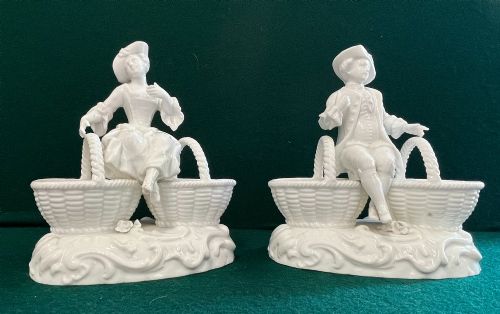
When you examine 18th century meissen figures, you encounter hard-paste porcelain figurines, groups, sweetmeat dishes, and candelabra. These works depict street traders, musicians, gardeners, dancers, and allegorical subjects such as Cupid in disguise.
The objects stem predominantly from the 18th century, including specific dates like 1750 and 1775, though the selection also contains later interpretations and mounts from the Edwardian period, 1880, 1890, and 1920. Figures frequently appear in pairs, such as gardeners, lovers, and musicians.
Formations range from single figures like the bagpiper or grape harvester to complex groups involving animals, such as the rhesus monkey and child or children with dogs. Some pieces incorporate gilt bronze or ormolu mounts, uniting porcelain sculpture with decorative metalwork.
What varies in quality
The integration of secondary materials like ormolu mounts also alters the character of the object. Pieces incorporating cast and gilt bronze bases or candelabra frames reflect a higher level of decorative ambition.
18th Century Meissen Figures Retail Price Guide 2026
Typical asking prices for 18th century meissen figures among the pieces listed under this phrase on Sellingantiques today, from the lower quarter to the upper quarter. They describe what is for sale here now, not the wider market.
A porcelain rhesus monkey holds a child while assorted cherubs juggle tricorne hats and musical instruments.
Johann Joachim Kändler
The 18th Century Meissen Figures Glossary
- Hard-Paste Porcelain
- A ceramic composition made from kaolin and petuntse, fired at high temperatures to produce a durable, vitrified body. This material forms the solid foundation of eighteenth-century figures.
- Ormolu
- Gilt bronze used as a decorative mount or stand for porcelain figures. It frames the ceramic components in polished metal.
- Sweetmeat Dish
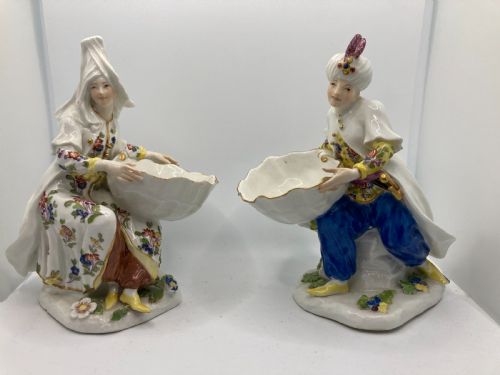
- A small vessel designed for serving confections, often held by figures in decorative table settings. These bowls appear integrated into Turkish pairs and figural baskets.
18th Century Meissen Figures: Frequently Asked Questions
What subjects do these figures show?
The pieces depict human subjects engaged in everyday activities, music, and performance. Examples include grape harvesters, street traders, hurdy-gurdy players, and dancers.
Other representations draw on theatrical or exotic themes, such as harlequin and columbine figures, Turkish pairs, and allegorical characters like Cupid.
How were these porcelain pieces used?
Many objects served as decorative table ornaments for dining rooms and salons. Sweetmeat dishes and salt bowls held confections during formal meals.
Other configurations, such as figures mounted in ormolu candelabra, functioned as functional lighting fixtures combined with sculptural art.
How do I identify 18th century pieces?
Dating relies on stylistic markers, modelling quality, and recorded production periods such as the Marcolini era around 1775. Eighteenth-century examples exhibit sharper anatomical detail and crisper enamel application.
Later Victorian, Edwardian, and twentieth-century interpretations often show variations in paste texture and painting style that distinguish them from original eighteenth-century output.
Do these figures come in pairs?
Yes, many listings comprise matched pairs of figures, including gardeners, musicians, and lovers. These dual sets were modelled to balance each other symmetrically on display.
Single figures also appear independently, representing individual characters like the bagpiper or specific animal groups.