
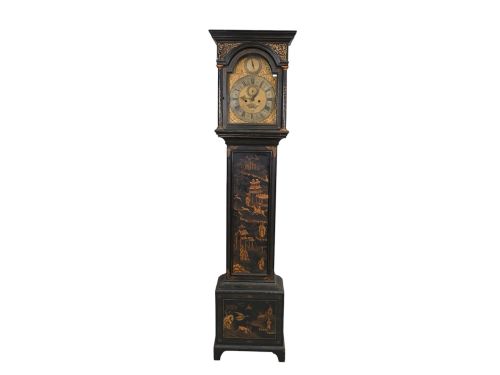


18th Century Japanned Clock
An 18th century japanned clock brings the layered depth of simulated oriental lacquer and brass dial work directly into a room.
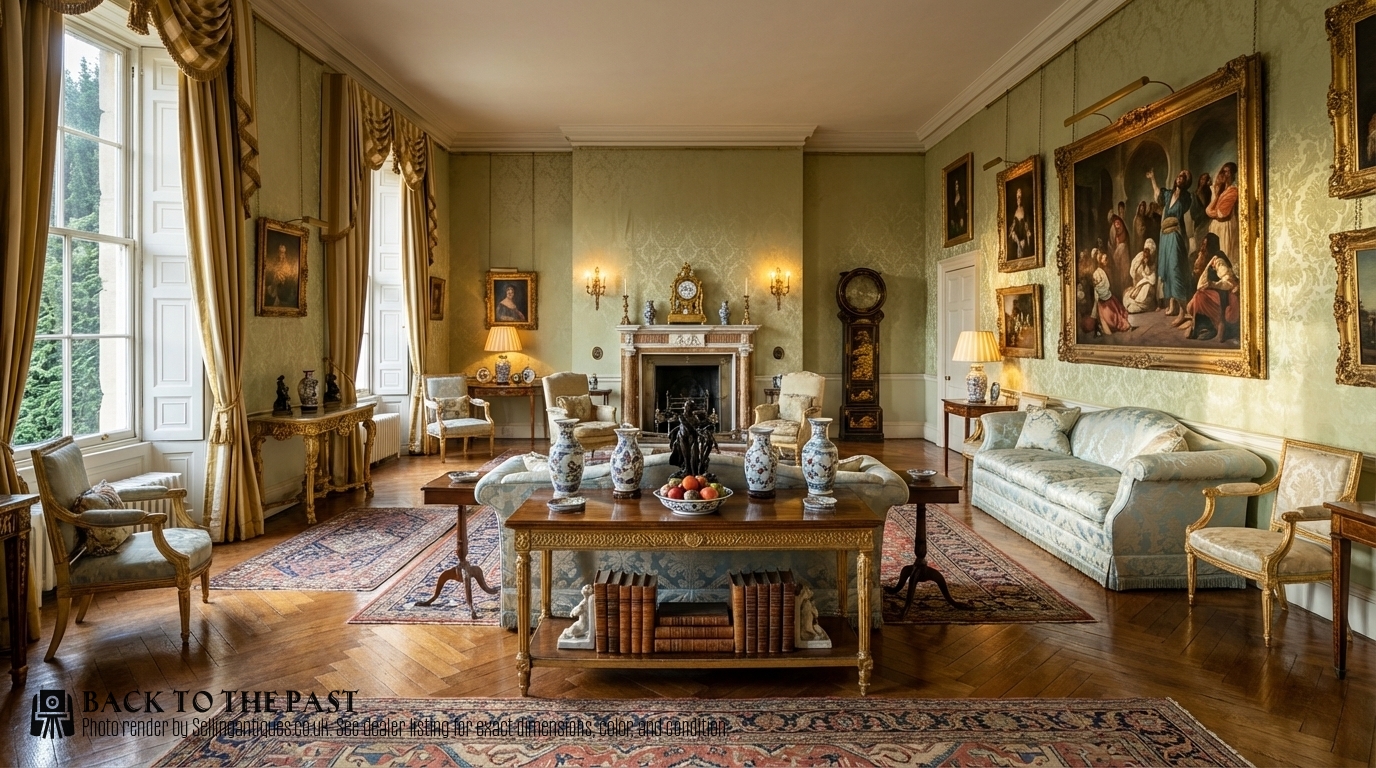
18th Century Japanned Clock
An 18th century japanned clock typically takes the form of a tall longcase or grandfather clock, alongside occasional bracket clocks designed for a table or shelf. These pieces originate from the Georgian period, spanning eras such as George I and George III, with provincial and London examples recorded.
The most common version met on this page is the longcase clock, featuring a tall wooden trunk housing the pendulum and weights beneath a glazed dial door. Makers from London, Reading, Yarmouth and Edinburgh produced these timepieces, employing distinct regional variations in case proportions and dial layout.
Materials and construction
Makers built the foundational carcass from wood, applying layers of lacquer to create a smooth canvas for oriental-inspired motifs in gold, green or dark tones. Gilt details and raised decoration were built up using gesso before painting and varnishing, creating the distinctive surface texture associated with japanning.
What separates examples
The sophistication of the chinoiserie decoration determines much of the distinction between pieces, ranging from flat painted silhouettes to deeply raised and gilded figures, pavilions and landscapes. The clarity of the brass dial engraving and the signature of the maker on the face further indicate the standing of the clock.
Originality of the lacquered surface and the state of preservation of the painted details dictate the character of the piece. Clocks retaining their early painted finishes and untouched movement components hold greater integrity than those with extensive later overpainting or replacement parts.
William Kipling London·Wise of Reading·Thomas Utting·Gardner of London·Chater And Son·Robert Berry
The 18th Century Japanned Clock Glossary
- Japanning
- European imitation of East Asian lacquerwork, created by building up layers of varnish and metallic dust on wood. This technique produced glossy dark surfaces decorated with raised gilt motifs.
- Chinoiserie
- European artistic style reflecting Chinese and East Asian motifs, popular in furniture and clock decoration. It depicts imaginary landscapes, figures, and pagodas in gold against painted backgrounds.
- Longcase clock
- Tall freestanding weight-driven clock enclosed in a wooden case, commonly known as a grandfather clock. It protects the pendulum and weights while displaying the dial at eye level.
- Bracket clock
- Portable spring-driven clock designed to sit on a bracket, table or shelf. These smaller domestic timepieces often feature striking mechanisms and carrying handles.
- Chapter ring
- The metal ring on a clock dial bearing the hours and minutes. On these clocks, it is frequently fashioned from silvered brass.
18th Century Japanned Clock: Frequently Asked Questions
What is an 18th century japanned clock?
An 18th century japanned clock is a tallcase or bracket timekeeper finished with simulated oriental lacquerwork and gilt decoration. These pieces combine mechanical brass movements with decorative painted wooden cases.
Craftsmen produced them during the Georgian era, incorporating elaborate chinoiserie scenes of figures, birds and landscapes across the trunk and hood.
Where were these clocks made?
Production occurred across both metropolitan workshops in London and provincial centres such as Reading, Yarmouth and Edinburgh. City makers often signed elaborate longcase and bracket clocks with detailed brass dials.
Regional makers adapted these urban styles to suit local tastes, utilising similar lacquering techniques and imported movement components.
How do I live with a longcase clock?
Living with a longcase clock involves placing it on a stable, level floor away from direct heat sources and sunlight to protect the lacquered wood. Regular winding and periodic professional maintenance keep the brass and steel movement functioning correctly.
The tall proportions require adequate ceiling clearance, while the striking mechanism provides an audible daily rhythm to the room.