




18th Century Glass Collector
These pieces for the 18th century glass collector bring eighteenth-century drinking vessels and display cabinets directly into your home.
18th Century Glass Collector
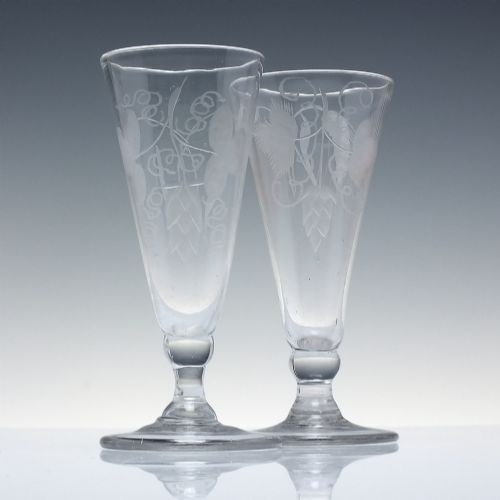
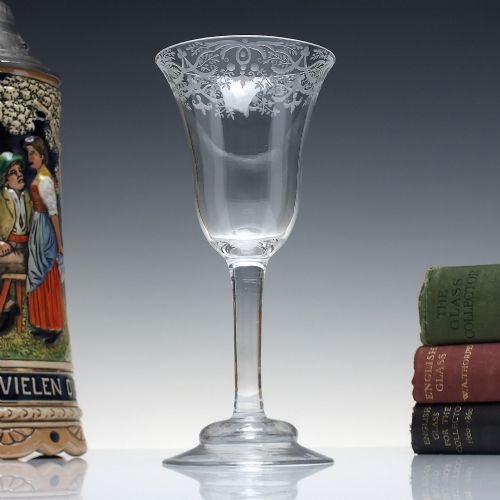
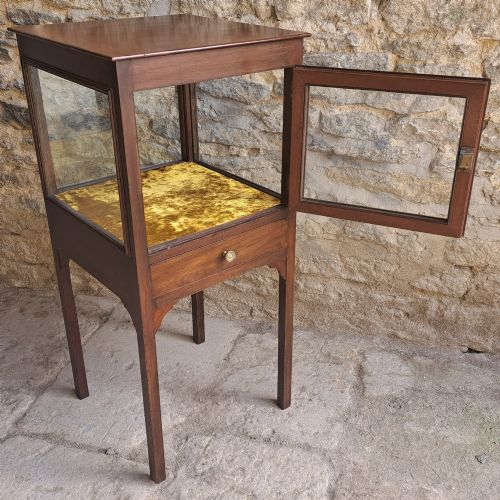
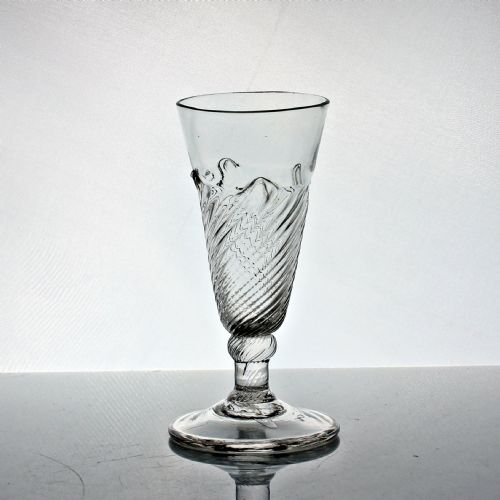
When you search for an 18th century glass collector, you encounter drinking glasses, wine glasses, and display cabinets from the Georgian period. The drinking vessels include wine glasses, ale glasses, goblets, cordial glasses, and ratafia glasses dating from around 1730 to 1780. Alongside these glass vessels, mahogany display cabinets provide the traditional housing required for a collection.
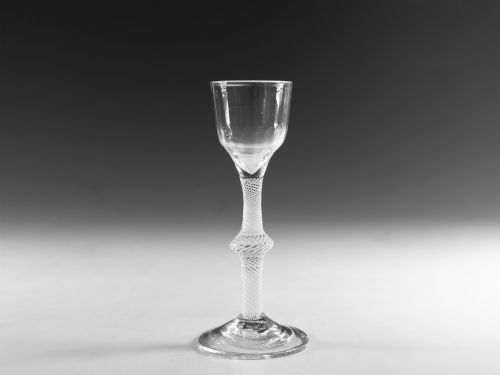
The glassware spans plain stem, air twist, opaque twist, and balustroid forms, often featuring engraved or flute-moulded bowls. Makers and craftsmen of this era utilised lead glass, lead crystal, clear glass, white enamel, and green glass. These items represent the drinking culture and interior furnishings of eighteenth-century England.
How they were made
Glassware from this period relies on hand-blown techniques utilising lead glass, flint glass, and clear glass. The introduction of lead oxide created heavy, brilliant crystal suitable for intricate stem formations.
Stems were shaped into air twists, multi-spiral opaque twists, and composite structures using specialised drawing and twisting methods. Bowls frequently received surface decoration through wheel engraving or flute-moulding while the metal remained workable.
Materials across the selection include lead glass, flint glass, white enamel, and green glass.
What varies in quality
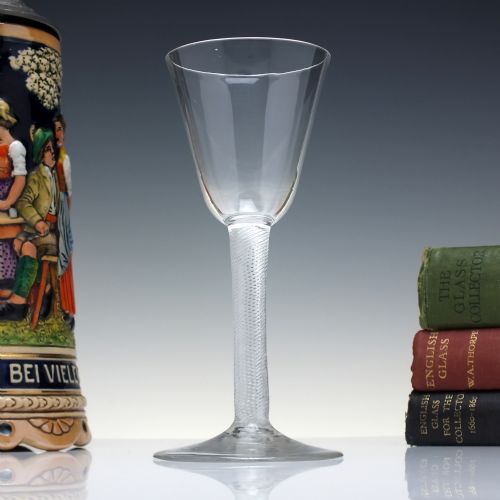
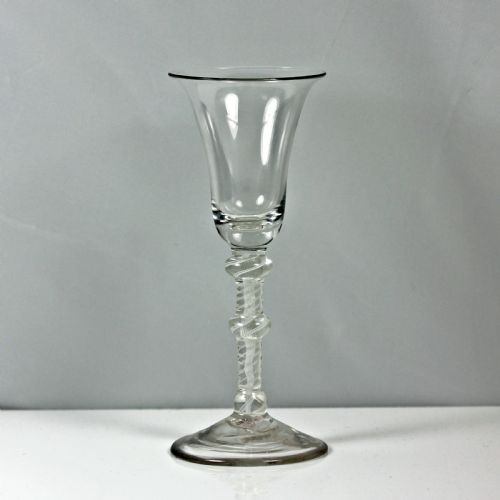
Quality in these drinking glasses rests upon the clarity of the metal and the precision of the stem twist. Air twists and double series opaque twists require high technical skill to maintain uniform spirals without distortion.
Engraving depth and clarity distinguish superior vessels, alongside the proportion between bowl, stem, and foot. In display cabinets, timber selection, particularly mahogany, and the joinery of the structure determine the standard of the piece.
The 18th Century Glass Collector Glossary
- Opaque twist
- A stem form containing white enamel threads twisted within the clear glass. These threads create complex single or double series patterns.
- Air twist
- A stem containing elongated bubbles or threads of air drawn into spirals during formation. This technique creates a lighter visual effect inside the clear metal.
- Baluster
- A heavy, swelling stem form derived from architectural pillars. This style dominates earlier eighteenth-century drinking vessels.
- Ratafia glass
- A tall, narrow drinking vessel designed for sweet fruit liqueurs. The slender bowl sits atop a sturdy stem and foot.
- Flute-moulded
- A bowl decorated with vertical hollows or ribs pressed into the glass. This technique adds texture and light reflection to the vessel.
18th Century Glass Collector: Frequently Asked Questions
What is an opaque twist?
An opaque twist is a glass stem containing fine white enamel threads pulled into a spiral pattern. These decorative twists became popular during the mid-eighteenth century.
Collectors prize these stems for the geometric precision of the internal threads, which contrast sharply with the surrounding clear lead glass.
How do I date a Georgian wine glass?
Dating relies on the evolution of stem forms, bowl shapes, and foot construction. Baluster and plain stems generally precede the air twist and opaque twist styles of the mid-to-late eighteenth century.
Foot characteristics also provide clues, as folded feet appear more frequently on earlier pieces to add rim strength.
What are display cabinets used for?
Mahogany display cabinets provide enclosed storage and shelving specifically designed to showcase fragile drinking glasses. Glazed doors protect the collection from dust while allowing full visibility.
These eighteenth-century furniture pieces complement the glassware by reflecting the period craftsmanship of the collection.
How were 18th-century wine glasses used?
These vessels served alcoholic beverages such as wine, ale, cordials, and liqueurs at dining tables and social gatherings. Their smaller capacities reflect the potency and value of the drinks served.
Unlike modern stemware, many of these glasses were designed to hold a single toast before being refilled or passed.