


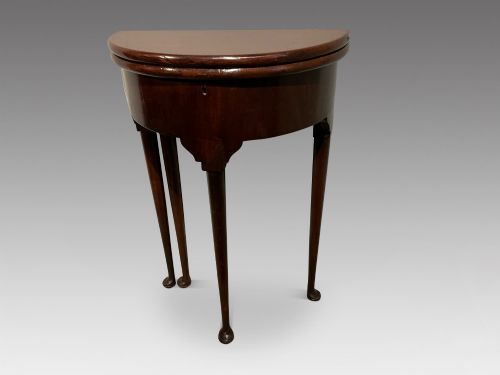
18th Century Fold Over Table
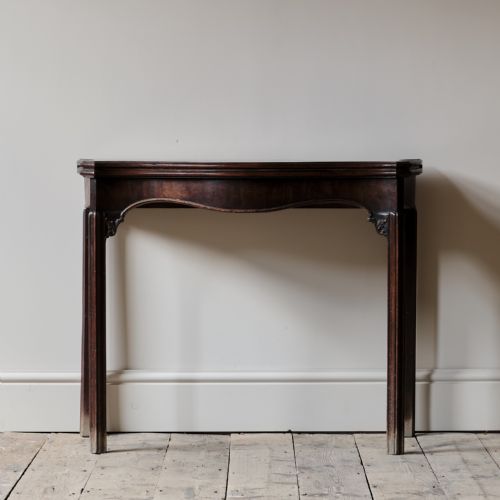
An 18th century fold over table provides a dual surface for tea or card playing while occupying minimal space against a wall.
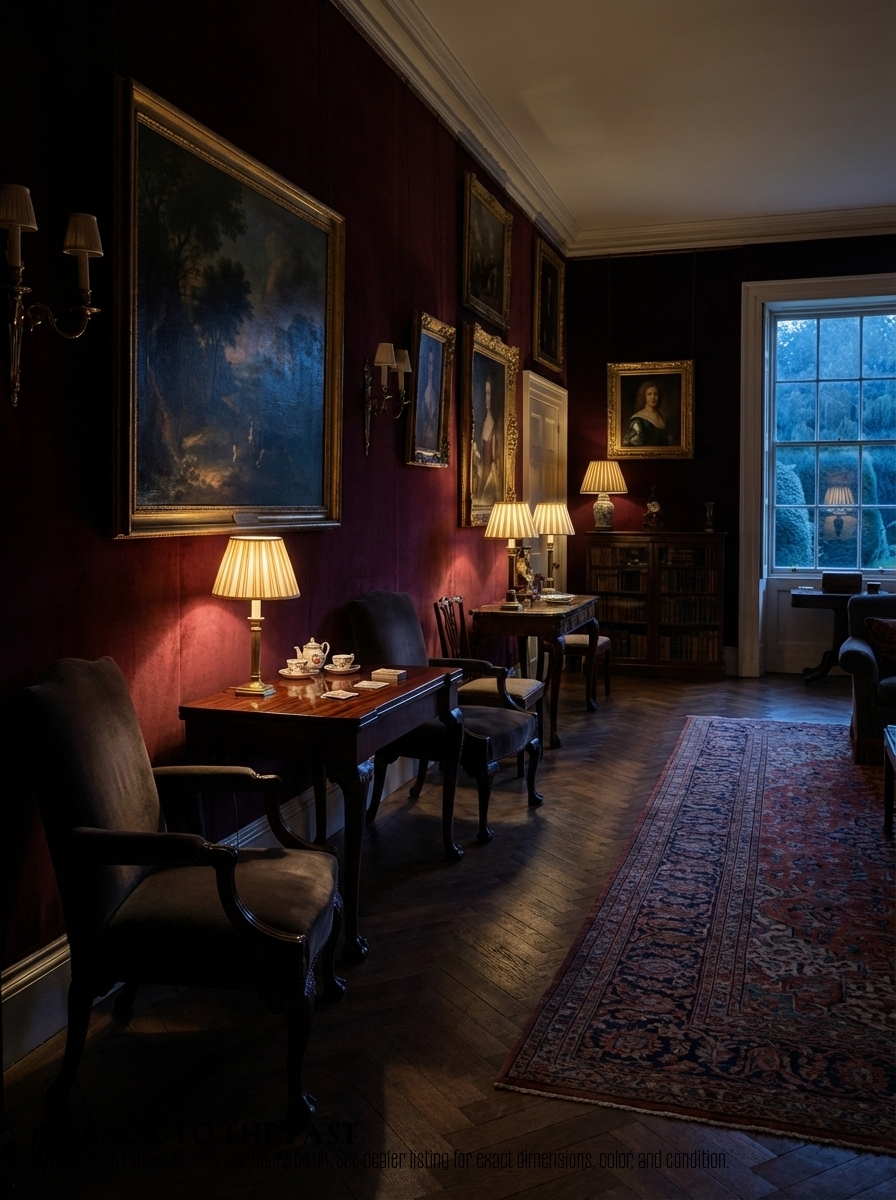
18th Century Fold Over Table
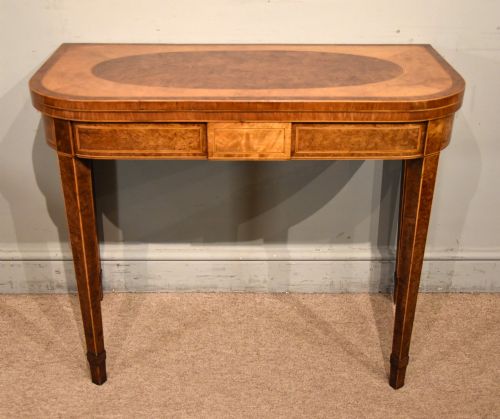
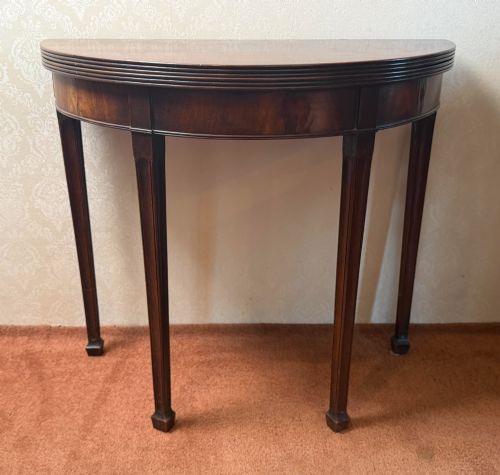
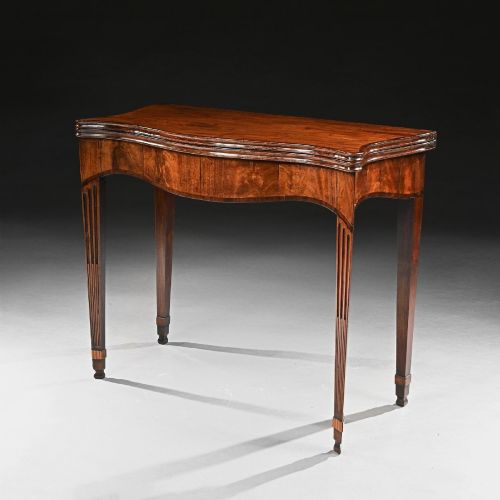
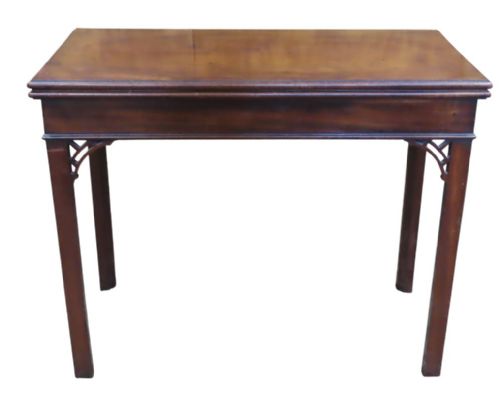
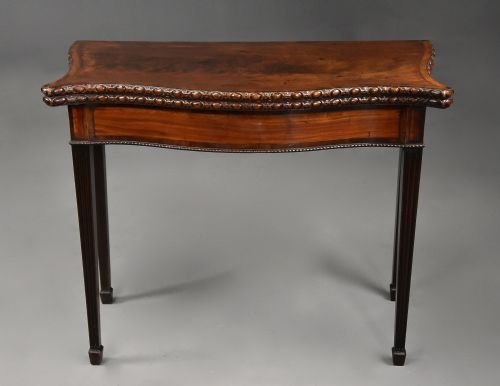
Mahogany forms the primary timber encountered on this page, frequently accompanied by walnut, satinwood, rosewood, and exotic crossbanding. Makers shaped these items into demi-lune, serpentine, and rectangular forms, often resting on cabriole or straight legs.
English and French workshops dominate the origins, alongside examples from Scottish and Irish makers. Buyers find both concertina action mechanisms and swing-leg supports that hold the heavy folding top securely in place.
How they were made
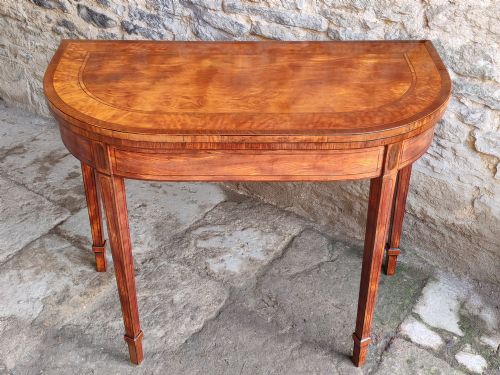
Joiners constructed these items using solid mahogany, walnut, and regional timbers for structural frames, applying fine veneers of satinwood, kingwood, burr yew, and tulipwood to the top surfaces. Crossbanding and inlay in boxwood and ebony defined the borders, while brass hinges secured the folding leaves.
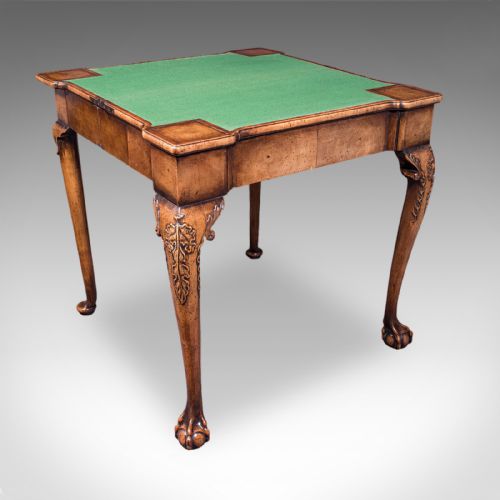
Carvers shaped cabriole legs with ball and claw feet or ornamented straight legs with blind fretwork during the Chippendale and Hepplewhite phases. Interior wells were lined with baize for card playing, and timber frames relied on mortise and tenon joints.
Listings feature timbers including mahogany, walnut, satinwood, rosewood, burr yew, and kingwood across the 18th century and Georgian periods.
What varies in quality
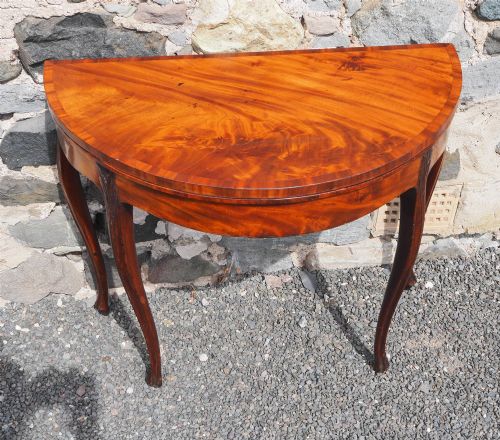
The distinction between ordinary and superior pieces rests on the choice of timber and the precision of the cabinetwork. Flame mahogany and figured burr yew command attention through deep natural figuring and warm patination accumulated over centuries.
Complexity of movement and decoration separate standard tables from exceptional ones, such as concertina actions that allow all four legs to move outward synchronously. Crisp hand-carving on the knees and frame margins indicates skilled workshop execution.
The 18th Century Fold Over Table Glossary
- Demi-lune
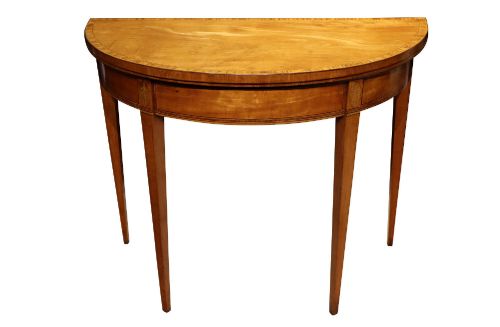
- A half-moon shape popular for console and card tables placed flat against a wall. This profile allowed tables to occupy small hallways before opening into a full circle.
- Concertina action
- A table frame construction where the rear legs pull outward on an extending wooden frame to support the folding top. This mechanism keeps corners aligned evenly.
- Crossbanding
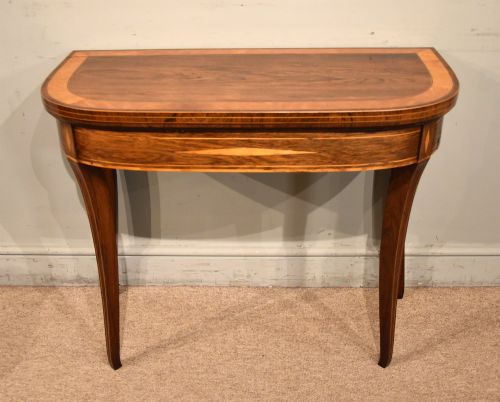
- A narrow strip of veneer laid around the border of a tabletop with the grain running perpendicular to the centre panel. It frames the primary wood figure.
- Baize
- A coarse woollen fabric used to line the playing surface of card and games tables. It provided a soft texture for dealing cards and placing counters.
- Serpentine
- A curved edge design featuring a convex centre flanked by concave curves. This undulating outline required careful hand-shaping by the cabinetmaker.
18th Century Fold Over Table: Frequently Asked Questions
How did people use fold over tables?
Households positioned these items against drawing room walls as slim console or side tables holding decorative objects when closed. Upon opening the hinged leaf, the surface served guests during afternoon tea or hosted evening card games.
The interior compartments often stored playing cards, counters, and small gaming accessories. This adaptability suited domestic interiors where rooms served multiple daily functions.
How do I distinguish George II from George III tables?
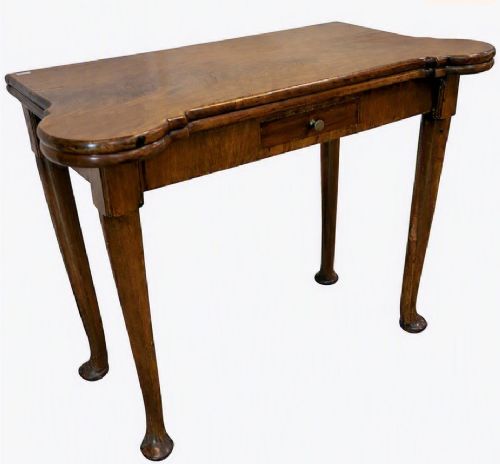
George II tables from earlier decades frequently display robust cabriole legs with pad or claw and ball feet, often utilising dark walnut or heavy mahogany. Proportions tend to be thick and sturdy.
George III pieces shift toward lighter classical lines influenced by Neoclassical tastes, featuring straight tapered legs, delicate satinwood inlay, and serpentine fronts. Proportions become more slender and refined as the century progresses.
What woods were used in these tables?
Mahogany served as the foundational timber for the vast majority of British workshop production, offering strength and stability for folding mechanisms. Walnut appeared frequently in earlier periods before mahogany took precedence.
Cabinetmakers embellished primary surfaces with decorative veneers including satinwood, rosewood, kingwood, burr yew, and tulipwood. Boxwood and ebony provided contrasting stringing lines for geometric borders.
How should I care for an antique wood surface?
Protect the timber from direct sunlight and steady heat sources to prevent the underlying veneers from lifting or drying out. Regular dusting with a soft, dry cloth preserves the finish without chemical buildup.
Apply traditional beeswax sparingly when the wood appears dry, buffing gently to maintain the natural patina. Avoid placing wet or hot items directly onto the polished surface.