
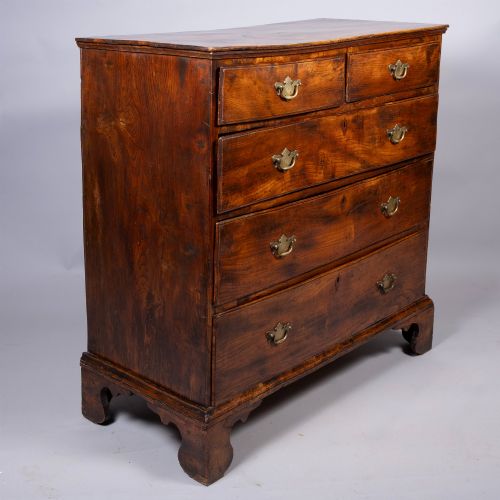

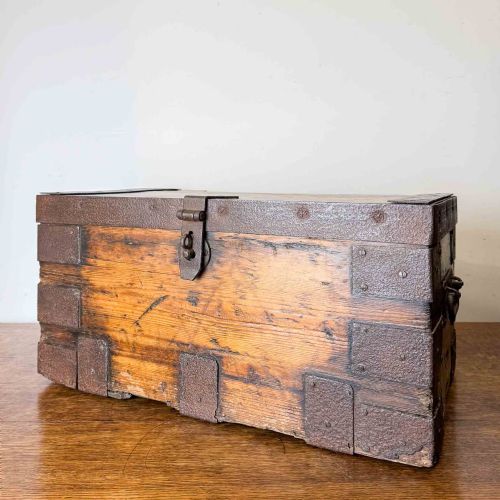


18th Century Elm Chest
An 18th century elm chest brings honest country warmth and rich figuring into a room.
18th Century Elm Chest
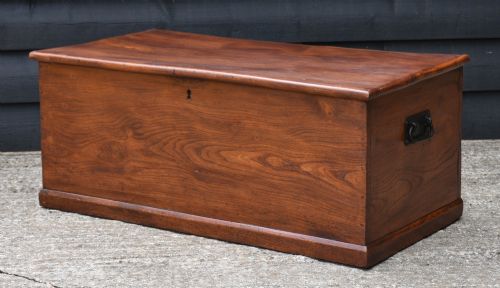
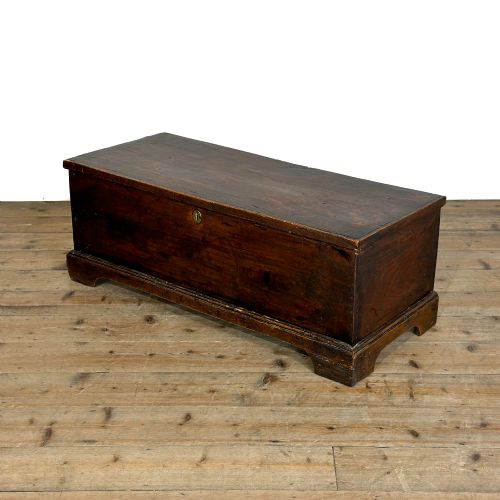
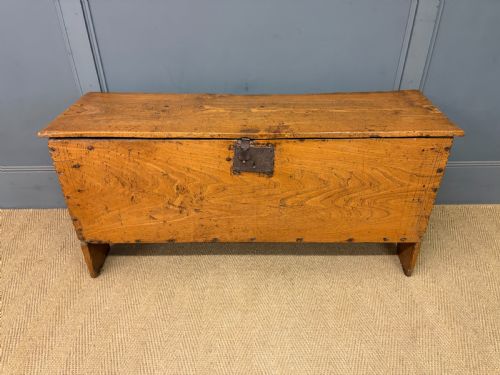
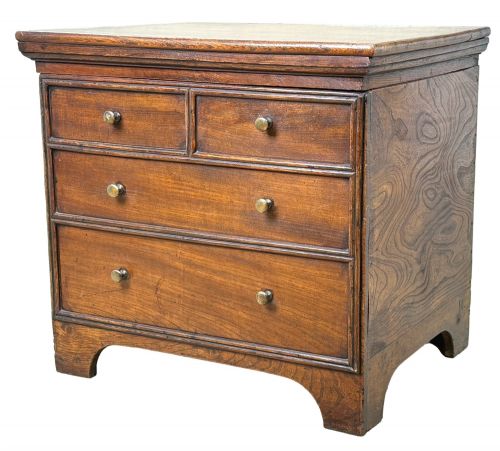
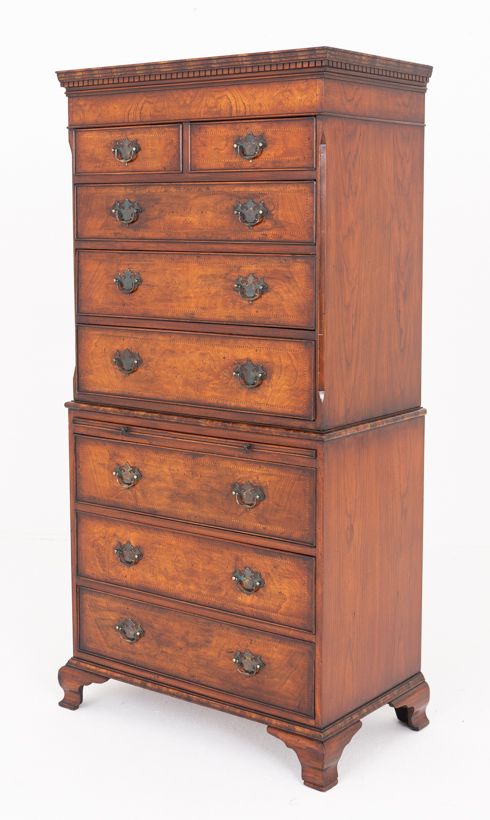
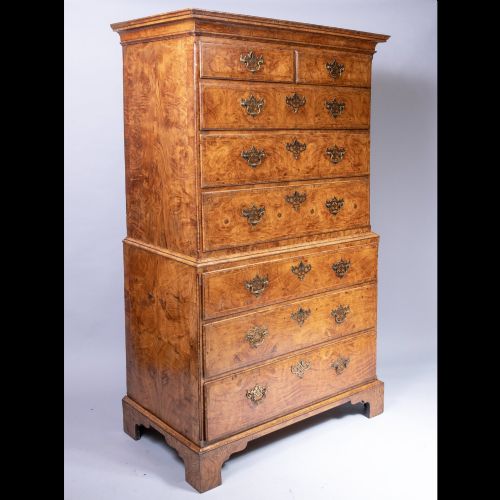
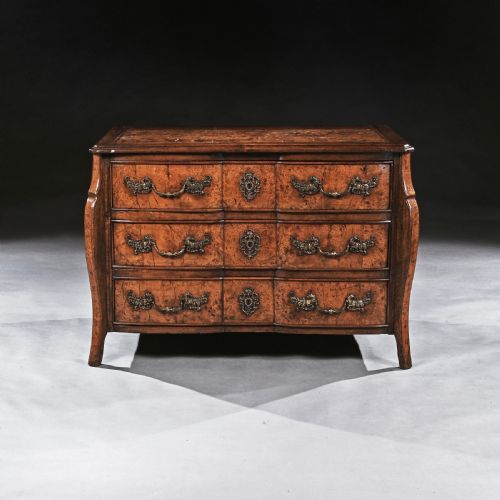
When you search for an 18th century elm chest, you meet domestic storage pieces built for everyday use in country houses and provincial homes. The forms range widely across the selection, appearing as simple six plank coffers, mule chests with lower drawers, tallboys, and chests of drawers.
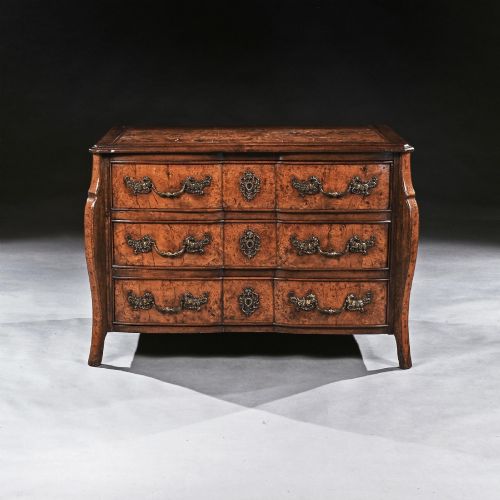
You are most likely to encounter Georgian blanket boxes and plank chests alongside refined burr elm bureaux and commodes. The pieces bridge the gap between humble utilitarian storage and high style regional cabinetmaking.
How they were made
Cabinetmakers built these pieces using solid elm boards supplemented by secondary timbers such as oak, pine, and walnut. Elm timber resists splitting due to its interlocking grain, making it ideal for durable plank chests and heavy mule chests.
Workshops utilised figured burr timber on primary facades for decorative impact, applying traditional dovetail joints and iron or brass hardware to secure the construction.
The listings show materials spanning solid elm, burr elm, oak, walnut, pine, iron, brass, and bronze across Georgian and continental styles.
What varies in quality
The distinction between a standard utility box and a superior piece lies in the choice of timber and the complexity of the form. Plain plank construction sits at one end, while heavily figured burr elm veneers and shaped Dutch fronts occupy the other.
Proportion and surface finish dictate the standing of a piece. Examples retaining a deep, untouched patina and crisp carving command greater appreciation than altered or heavily stripped items.
The 18th Century Elm Chest Glossary
- Elm
- A dense, tough native timber known for its twisted grain and rich brown colour. It is prone to warping if not selected with care.
- Burr Elm
- A knotty outgrowth on an elm tree that produces swirling, highly decorative grain patterns when sliced into veneer. Cabinetmakers prized this for drawer fronts and primary panels.
- Mule Chest
- A chest featuring one or more drawers beneath the main lift-top compartment. It combines the storage of a blanket box with the organisation of a chest of drawers.
- Six Plank Chest
- A primitive form of coffer constructed from six individual boards joined simply at the corners. It represents some of the earliest domestic storage surviving today.
- Commode
- A low French or continental style chest of drawers with decorative mounts. Examples in the record frequently feature shaped fronts and marble tops.
18th Century Elm Chest: Frequently Asked Questions
What is an 18th century elm chest used for?
These pieces served originally for storing household textiles, blankets, clothing, or valuables. Today they function practically as living room coffee tables, hallway blanket boxes, or bedroom storage.
Their robust construction allows them to handle daily modern use while adding historical character to an interior.
How do I tell a mule chest from a standard coffer?
A standard coffer opens only from the top lid to reveal a single deep compartment. A mule chest includes one or more drawers built into the base beneath the main well.
This addition allowed access to smaller items without lifting the heavy lid or disturbing objects stacked on top.
Why is burr elm used on some pieces?
Burr timber forms from irregular tree growths, creating intricate, swirling patterns that catch the eye. Cabinetmakers used these decorative veneers on drawer fronts and primary surfaces to display wealth and skill.
Plain timber remained standard for structural carcases and hidden panels.
How do I date an 18th century elm chest?
Dating relies on examining construction methods, timber choices, and hardware styles. Hand-cut dovetails, original brasses or iron strap hinges, and the specific proportions of the mouldings point to particular decades.
Some pieces also carry contemporary carved initials or dates directly into the wood.