

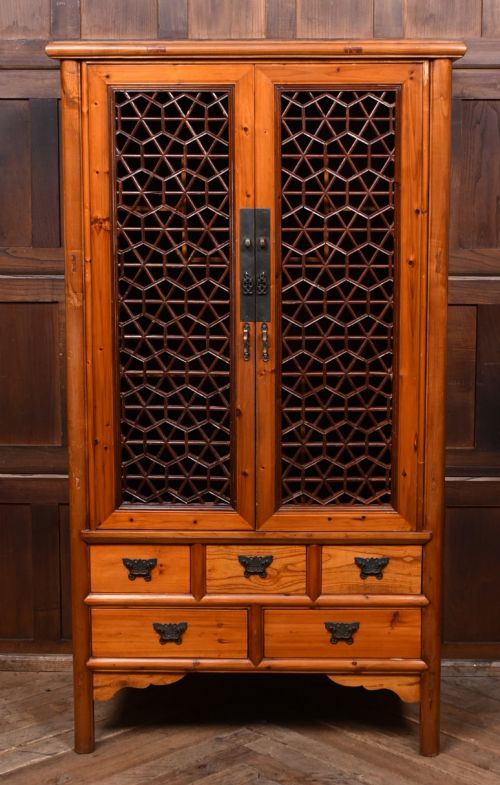
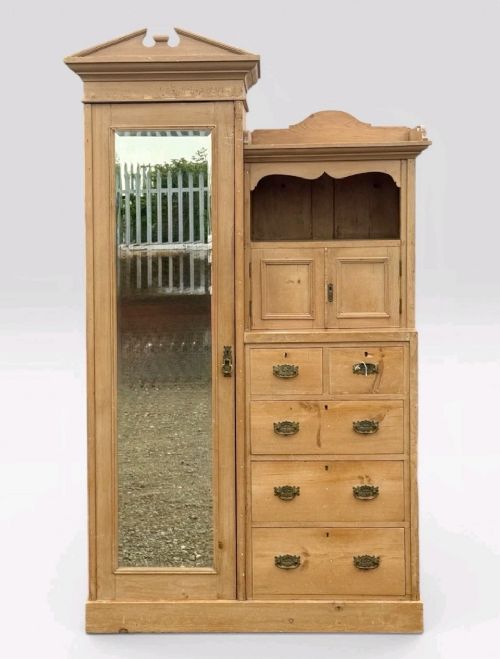


Natural Wood Chest
A natural wood chest brings warmth and unpretentious utility to a room through visible grain and honest construction.
Natural Wood Chest
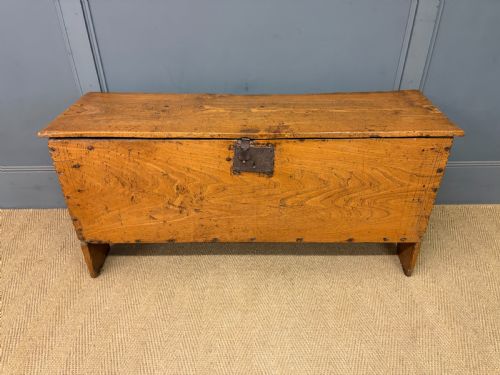
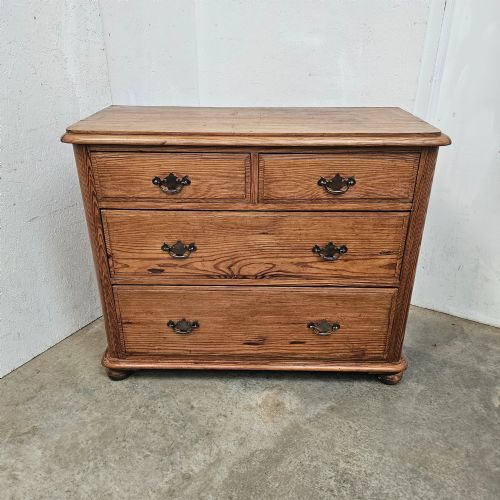
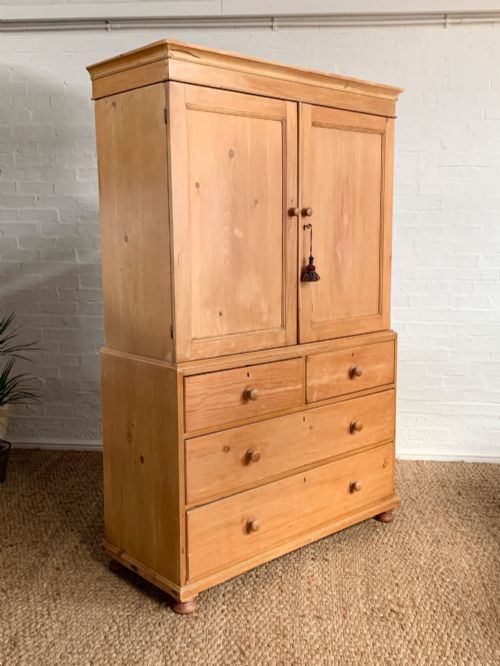
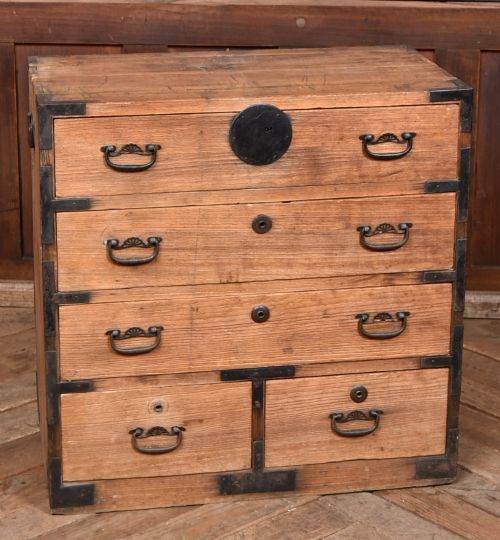
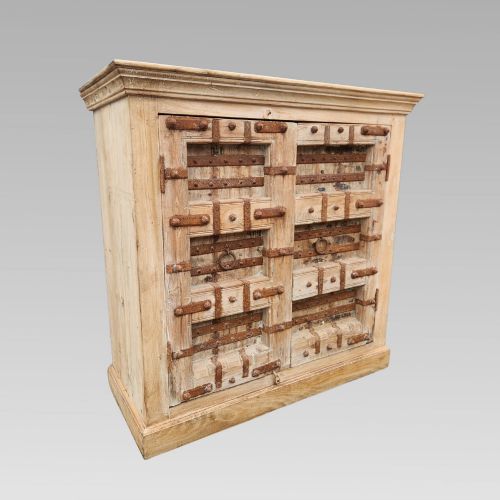
A natural wood chest encompasses diverse forms designed for storage, from nineteenth-century pine chests of drawers and eighteenth-century elm coffers to Japanese tansu cabinets and Indian teak trunks. These pieces emerge from periods spanning the eighteenth century through the Edwardian era, reflecting both British vernacular traditions and international cabinet-making.
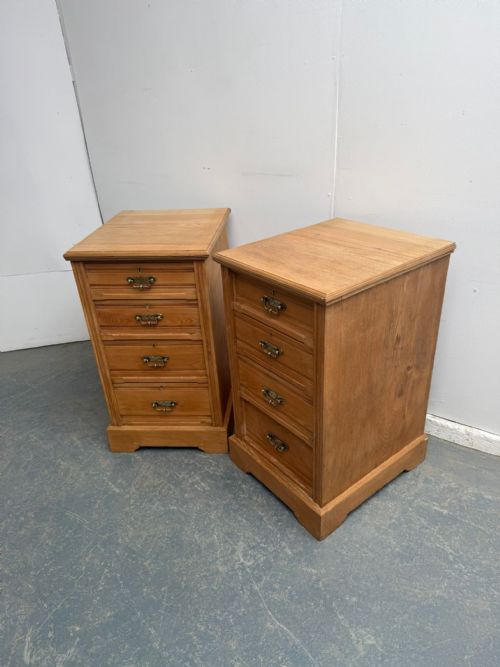
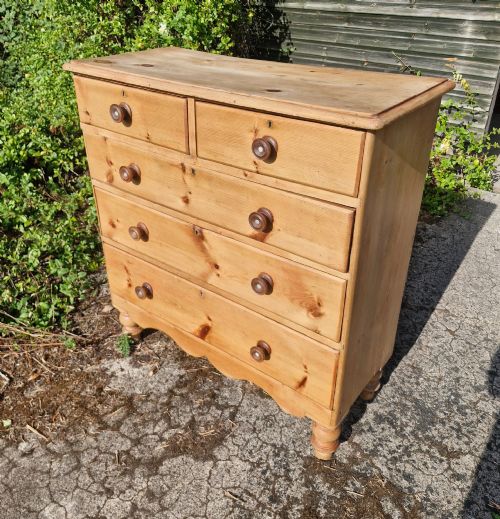
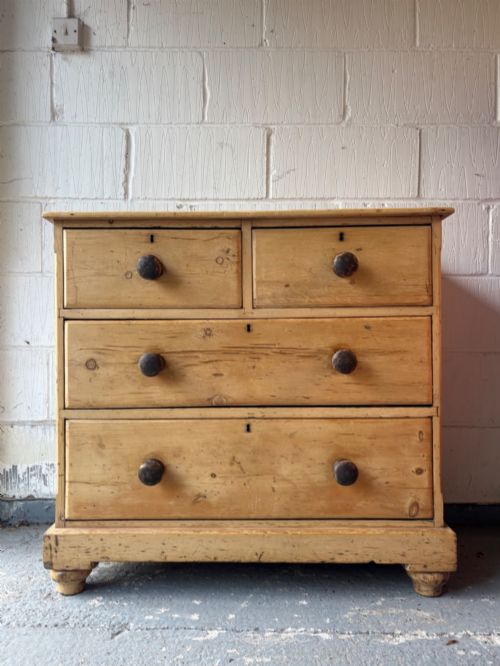
The version most commonly encountered on this page is the Victorian pine chest of drawers, often scrubbed, stripped, or waxed to display the grain. Alongside these, buyers find bedside cabinets in solid ash, blanket boxes, and specialised storage such as collectors' cabinets in mahogany and oak.
Regional styles vary widely, incorporating French provincial designs, Georgian vernacular pieces, and Arts and Crafts bedside cabinets. Each object prioritizes functional storage while maintaining the distinct character of its primary timber.
How they were made
Construction relies heavily on domestic and imported timbers, predominantly pine, elm, ash, mahogany, oak, and teak. Cabinet-makers utilised solid wood planks joined with traditional methods, often incorporating secondary woods for drawer linings and internal dividers.
Metal hardware plays an essential functional and decorative role, with brass handles, iron banding, and specific closure mechanisms appearing across nineteenth-century merchant chests and Japanese tansu. Finishes range from wax and scrubbed surfaces to retained natural textures that expose the underlying grain.
Some nineteenth-century collectors cabinets retain up to forty tiny drawers once dedicated to sorting eggs or specimens.
What varies in quality
Quality in these pieces is dictated by the selection of timber, the integrity of the joinery, and the retention of original surfaces. Uniformity of grain, substantial drawer construction using dovetail joints, and well-fitted backs separate standard utility pieces from finer examples.
The presence of original hardware, such as brass bun handles or iron strapwork, adds significantly to the integrity of an item. Furthermore, the balance between functional proportion and decorative restraint defines the hierarchy from simple country workshops to refined urban cabinet-makers.
The Natural Wood Chest Glossary
- Cofer
- A large traditional storage chest, usually constructed from solid timber such as elm or oak. These early pieces pre-date standardised drawer units and served for household storage.
- Tansu
- A traditional Japanese mobile storage chest built from wood with distinct metal fittings. They were designed for specific domestic uses, including kitchen storage and clothing organisation.
- Chifferobe
- A hybrid wardrobe and chest of drawers providing mixed storage capacity. It combines vertical hanging space with multiple smaller drawers.
- Scrubbed pine
- A finish achieved by vigorously washing softwood furniture to remove old paint or dark varnish. This process leaves a pale, matte surface revealing the natural grain.
- Dovetail
- A traditional interlocking joint used in drawer construction to ensure durable corners. Its precision indicates the skill of the maker.
Natural Wood Chest: Frequently Asked Questions
How do I date an old pine chest?
Dating relies on examining construction techniques, drawer dovetailing, and hardware styles. Hand-cut joints and original backboards typically indicate nineteenth-century or earlier origins.
Secondary indicators include the type of handles and the wear patterns around the key escutcheons and drawer edges.
What is a tansu chest?
A tansu is a traditional Japanese storage cabinet featuring exposed timber and specialised iron hardware. They were built for mobility and specific domestic functions within the home.
These pieces range from kitchen units to multi-section clothing chests.
Are these chests made of solid wood?
The pieces listed utilise solid timbers such as pine, elm, ash, mahogany, and teak. Construction prioritizes natural planks rather than modern veneers or manufactured boards.
Internal components like drawer bases may occasionally use secondary timbers appropriate to the period.
How should I care for a waxed wood surface?
Maintenance requires occasional application of traditional beeswax to nourish the timber and protect the grain. Avoid placing pieces near direct heat sources to prevent wood splitting.
Regular dusting with a dry cloth preserves the matte finish without building up residue.