



18th Century Drop Leaf Desk
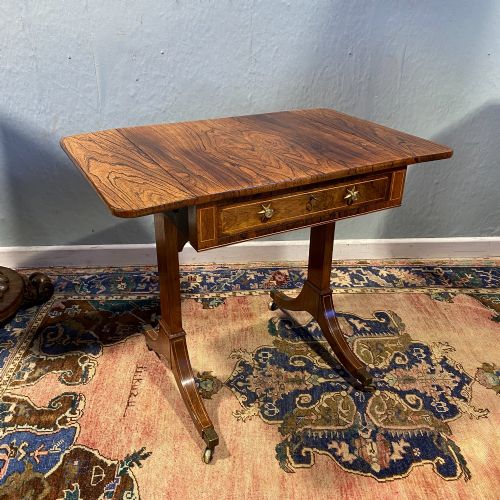
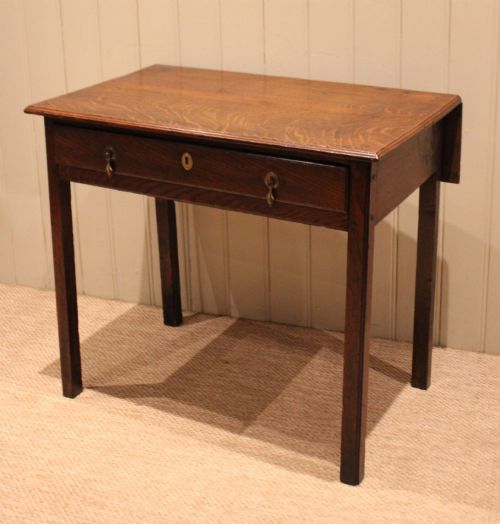
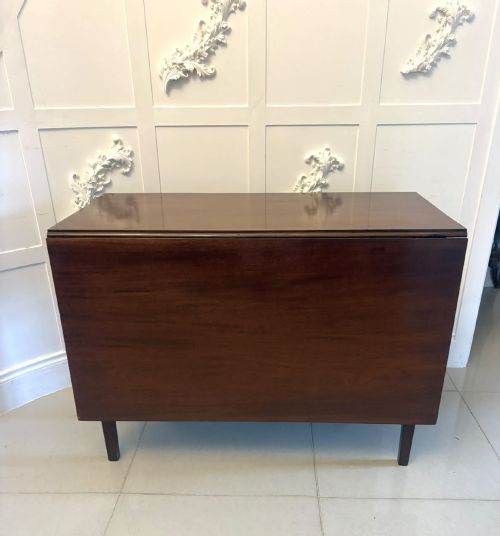
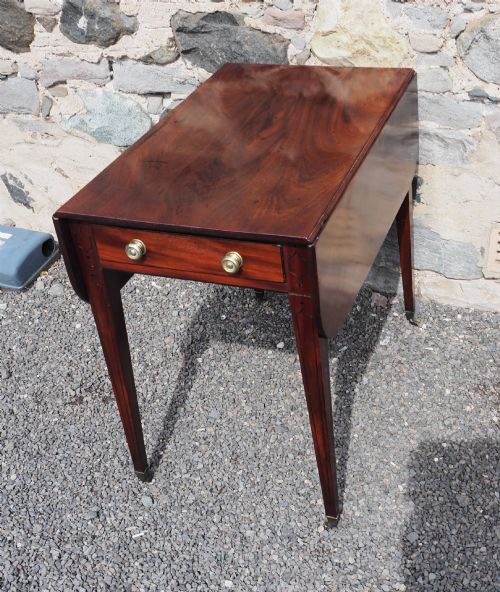
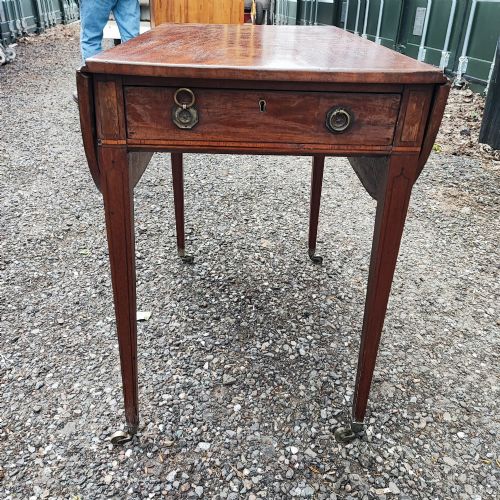
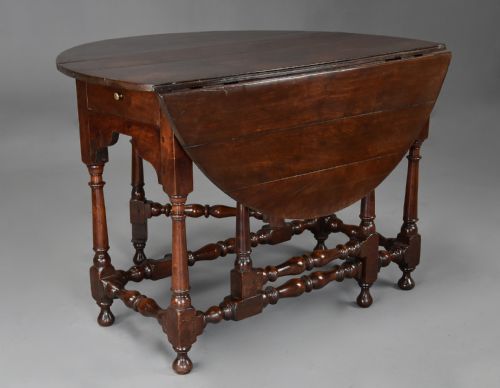
These 18th century drop leaf desk forms are primarily represented here by Pembroke and sofa tables with writing or drop leaf functions from the Georgian period.
18th Century Drop Leaf Desk
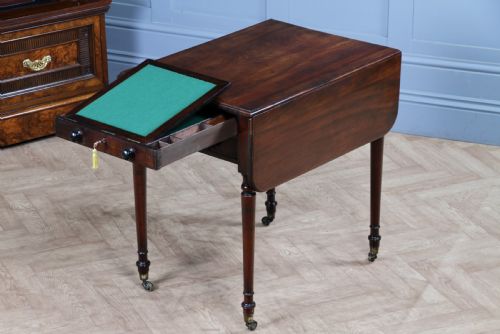
When searching for an 18th century drop leaf desk, a buyer actually encounters a variety of Pembroke, sofa, and drop-leaf tables originating from the 1700s, 1750, and the George III era. These multi-purpose tables often incorporate fitted drawers, games surfaces, or writing compartments alongside folding leaves.
The versions most commonly met on this page span the Georgian and Chippendale styles, constructed predominantly from mahogany with occasional satinwood, walnut, and rosewood elements. Such pieces combine compact drop-leaf utility with the refined aesthetic of eighteenth-century cabinet making.
Materials and construction methods
The pieces on this page rely heavily on solid mahogany and mahogany veneers, frequently enhanced with satinwood, boxwood, and brass hardware. Cabinet makers utilised cross-banding and fine inlay to decorate the timber surfaces of Pembroke and sofa tables.
Structural integrity relies on traditional gateleg and drop-flap mechanisms that allow the leaves to fold down neatly. Interior compartments frequently feature fitted drawers lined for specific domestic uses, constructed with period joinery.
18th Century Drop Leaf Desk Retail Price Guide 2026
Typical asking prices for 18th century drop leaf desk among the pieces listed under this phrase on Sellingantiques today, from the lower quarter to the upper quarter. They describe what is for sale here now, not the wider market.
The listings span the 18th century, Georgian, and George III periods, featuring mahogany, satinwood, walnut, and rosewood.
Markers of quality
Quality in these tables is determined by the selection of figured mahogany veneers and the crispness of any cross-banding or inlay work. Finer examples display superior timber selection for the top and leaves, matched across the grain.
Construction detail in the drawers, the smoothness of the drop-leaf folding mechanism, and the retention of original brass fittings distinguish higher-grade pieces. The presence of sophisticated fitted interiors or metamorphic elements also elevates the standing of a table.
The 18th Century Drop Leaf Desk Glossary
- Pembroke table
- A small, rectangular table with two hinged drop leaves, usually featuring one or more drawers. These versatile tables date frequently to the Georgian period.
- Sofa table
- A type of drop-leaf table designed to stand in front of a sofa, typically longer and lower than a Pembroke table and supported on trestle feet.
- Cross-banding
- A decorative border of veneer laid around the perimeter of a table top or drawer front so that the grain runs at right angles to the central panel.
- Gateleg table
- A table with hinged legs that swing out from the centre frame to support the drop leaves when raised.
- Baize
- A coarse woolen material resembling felt, historically used to line the writing or gaming surfaces found inside fitted drawers and folding tops.
18th Century Drop Leaf Desk: Frequently Asked Questions
What is an 18th century drop leaf desk?
An 18th century drop leaf desk generally refers to versatile tables from the Georgian period that feature folding leaves and writing or storage capabilities.
Buyers searching for this form commonly find Pembroke tables, sofa tables, and games tables equipped with fitted drawers and drop flaps.
How were these tables used originally?
These tables served multiple functions in domestic rooms, acting as writing surfaces, occasional tables, or dining furniture when the leaves were raised.
Fitted drawers often held writing materials, whilst folding leaves allowed the furniture to be tucked away when not in use.
How do I identify a Georgian piece?
Georgian pieces are identified by specific stylistic markers such as Chippendale influences, mahogany construction, and period inlay techniques.
Hardware, dovetailing methods, and timber grain also assist in confirming an eighteenth-century origin.
Are these tables suitable for daily use?
These antique tables can be lived with and used daily provided they are treated with appropriate care regarding moisture and heat.
Their compact proportions and folding leaves make them particularly adaptable to modern rooms.