

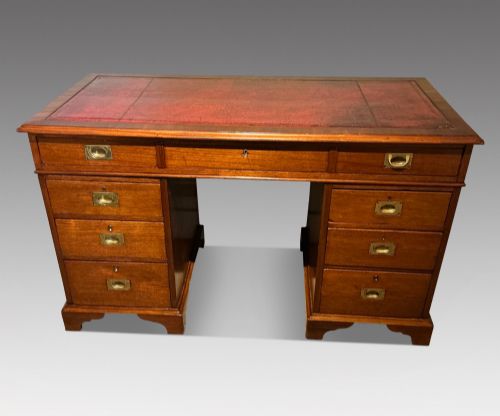

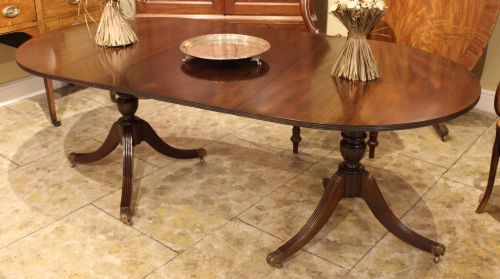
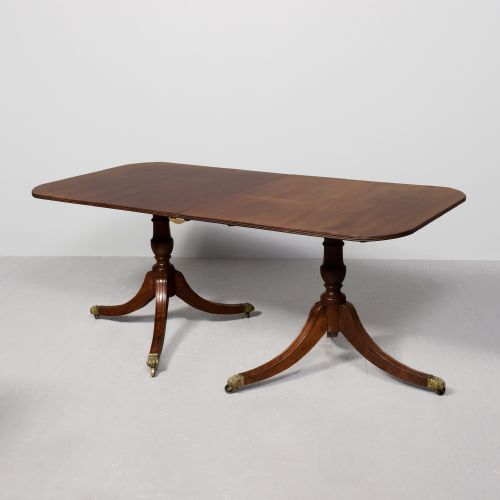


Georgian Twin Pedestal Table
A georgian twin pedestal table gives a dining room or library real stature, built from rich timbers designed to host large gatherings or quiet study.
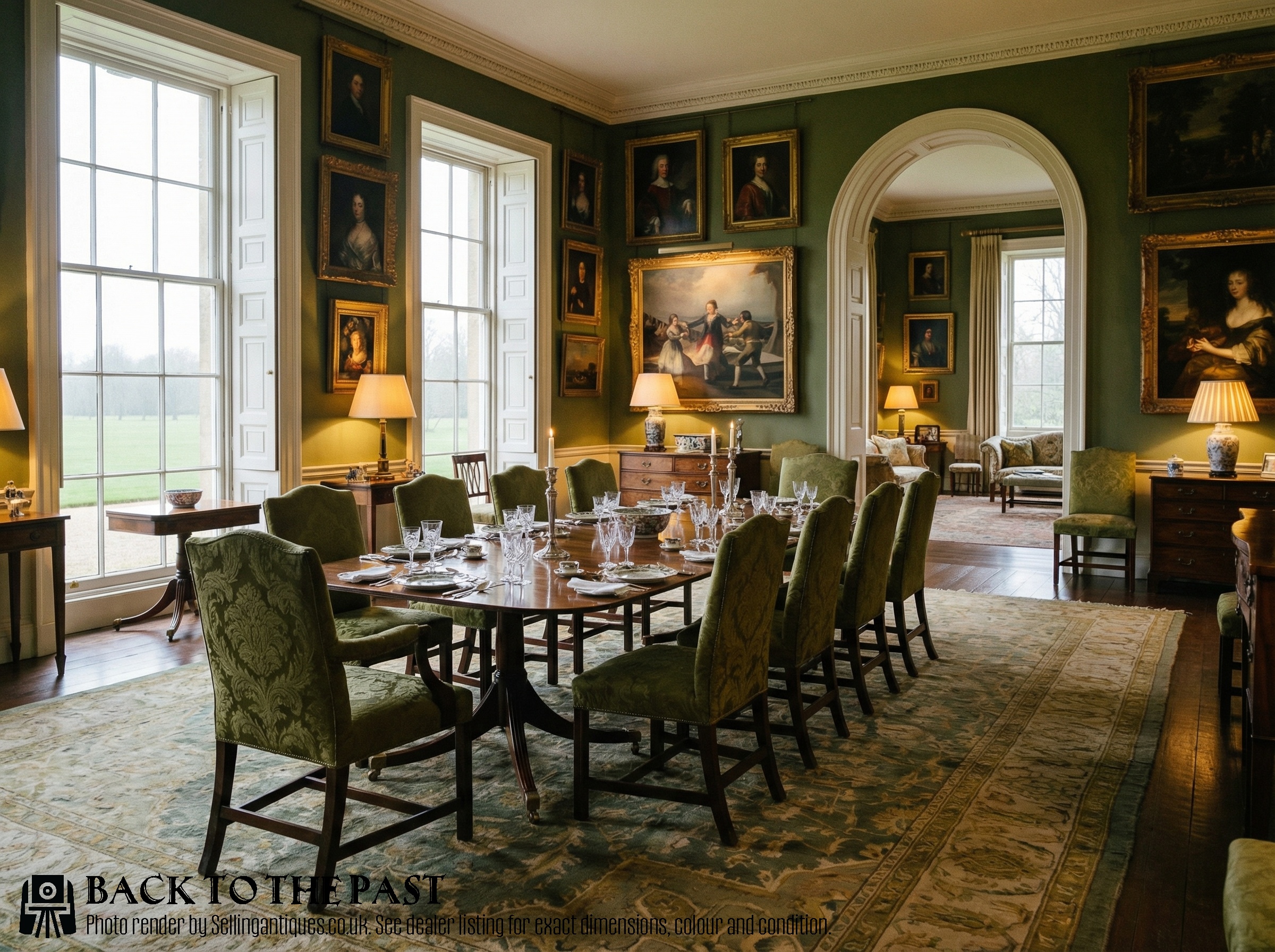
Identifying a georgian twin pedestal table
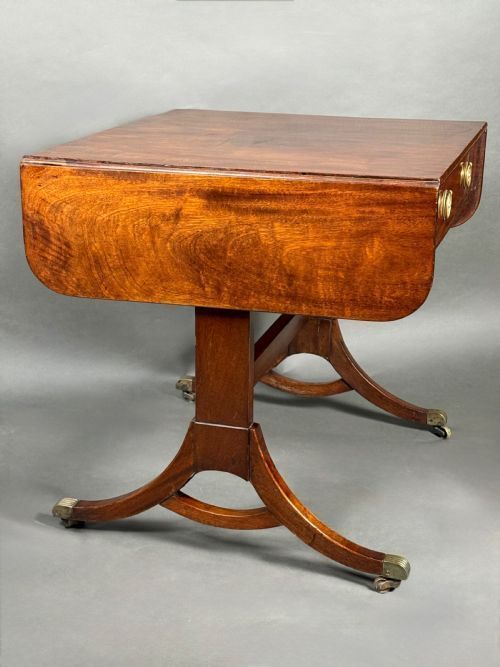
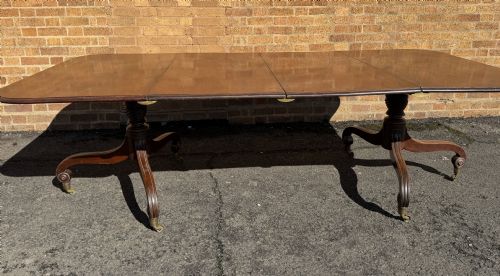
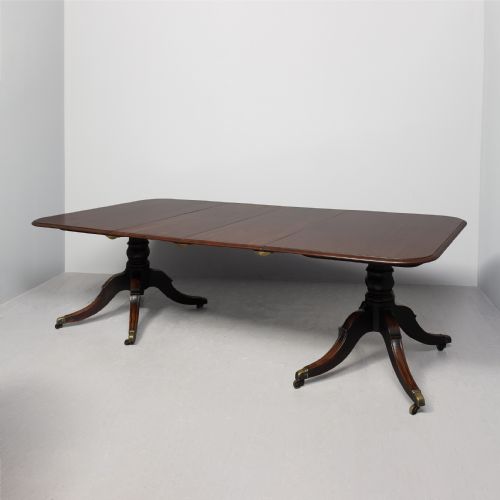
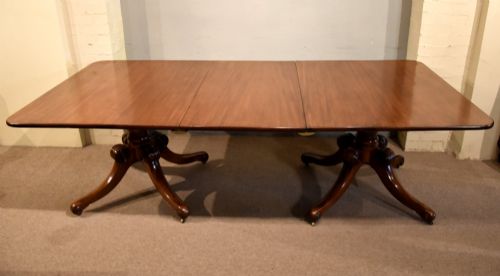
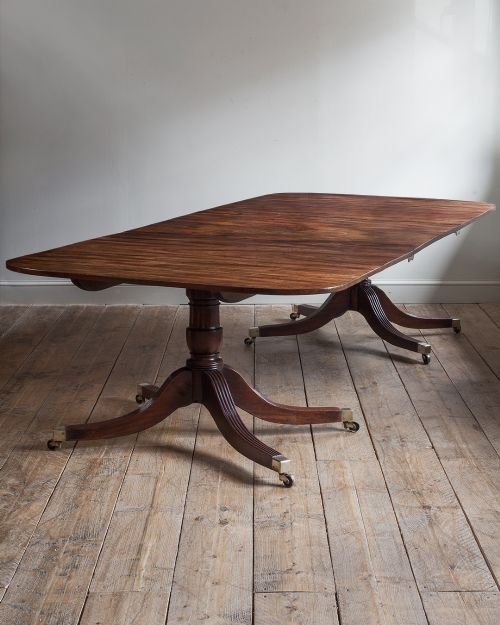
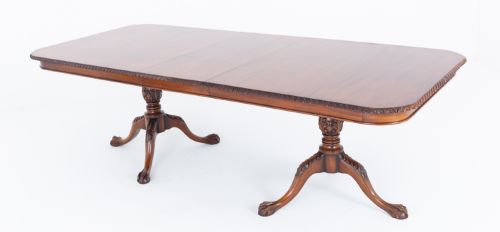
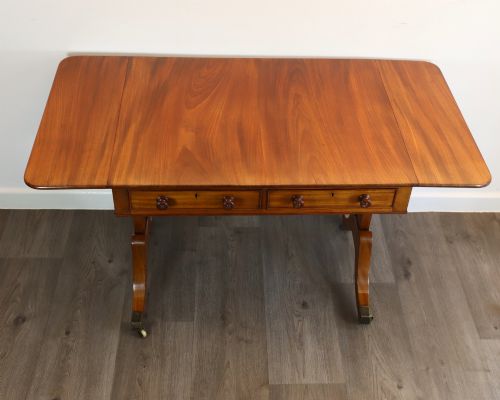
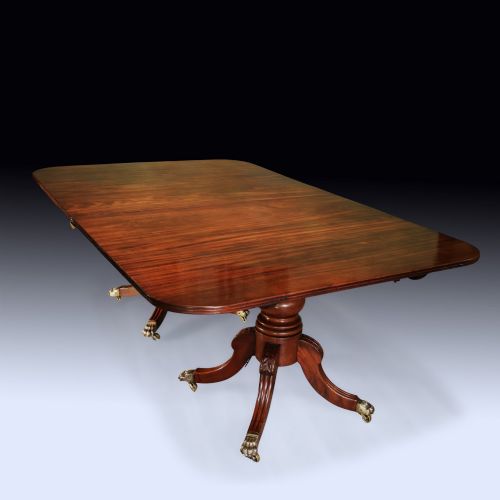
A georgian twin pedestal table is a substantial form designed primarily as a dining table, library table, or sofa table, originating from the Georgian and Regency periods. These pieces feature two distinct vertical supports carrying a long timber top, often equipped with extra leaves for extension.
You are most likely to encounter mahogany dining tables with two pillars, alongside occasional smaller sofa tables and library centre tables. The forms span the late eighteenth century into the early nineteenth century, reflecting the classic architectural proportions of the era.
Construction and Materials
Makers built these tables predominantly from solid and veneered mahogany, selected for its deep grain and durability. Metal elements such as brass appear in castors and fittings, while occasional pieces incorporate glass details.
The construction relies on sturdy central pillars supporting wide timber tops, sometimes engineered with leaves to allow the table to extend for banqueting. Cabinetmakers turned timber on lathes to form the central columns and shaped the surrounding wood by hand.
Retail Price Guide 2026
Typical UK retail prices for georgian twin pedestal table, calculated from the Sellingantiques database of over a million retail prices indexed since 2003. This retail price guide relies exclusively on Sellingantiques data; no external sources or auction records are used, so the figures do not describe the wider market.
Assessing Quality
Quality rests in the choice of timber and the crispness of the turning on the pedestals, where finer tables display deeply figured mahogany grain and balanced proportions. The presence of original brass castors and well-fitted extension leaves also distinguishes superior examples.
Tables with documented workshop origins or sophisticated pillar designs sit at the top of the range, while simpler vernacular versions offer utilitarian charm without the elaborate carving or hardware of high-end metropolitan work.
Gillows of Lancaster
The Georgian Twin Pedestal Table Glossary
- Pedestal
- The central vertical support of a table, typically turned from solid timber. Multiple pedestals distribute weight across long tabletops.
- Library Table
- A large freestanding table designed for scholarly rooms, often fitted with drawers or finished on all sides for central placement. These serve utilitarian work rather than formal dining.
- Sofa Table
- A smaller rectangular table originally designed to stand in front of a sofa, featuring drop leaves at either end. They date predominantly to the Regency and late Georgian eras.
- Gun Barrel
- A descriptive term for a slender, tapering pedestal column shaped like a historic firearm barrel. This profile is typical of finer nineteenth-century supports.
Frequently Asked Questions
How do I seat guests comfortably around a pedestal table?
The twin pedestal design places vertical supports beneath the ends of the tabletop rather than at the corners. This arrangement leaves ample legroom for diners seated along the sides.
Adding extra leaves allows the table to expand for larger dinner parties. Ensure the pedestals remain balanced when the table is fully extended.
Can I use a library table for dining?
Library tables and centre tables were originally built for writing and reading rather than formal meals. Their proportions and occasional drawers make them versatile for daily use.
Protecting the mahogany surface with appropriate pads helps prevent marks from plates and glassware during meals. Many owners repurpose these large surfaces as everyday dining desks.
How do I distinguish between an 18th-century and Regency table?
Eighteenth-century examples often display restrained lines and classic proportions associated with George III designs. Regency pieces tend toward bolder pedestal turnings and brass details.
Examining the construction methods underneath the top reveals clues about the period of manufacture. Tool marks and timber ageing help confirm whether a table dates to the seventeen-nineties or eighteen-tens.
What is a sofa table used for today?
Sofa tables were historically placed against the backs of sofas or used as small writing desks. Their drop leaves allow them to fit into compact spaces.
In modern rooms, they function well as hallway consoles or behind low seating arrangements. The smaller scale makes them adaptable for rooms lacking space for a full dining table.