
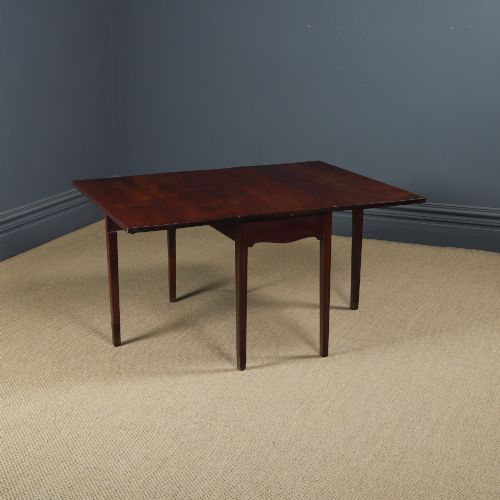
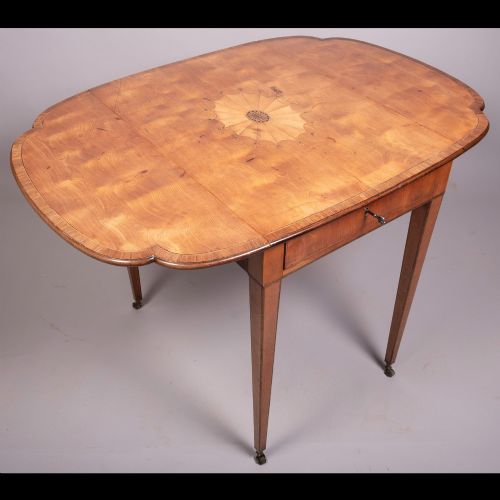
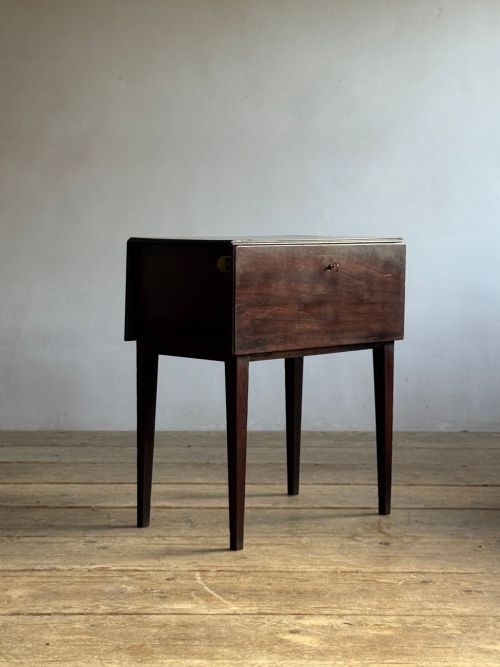
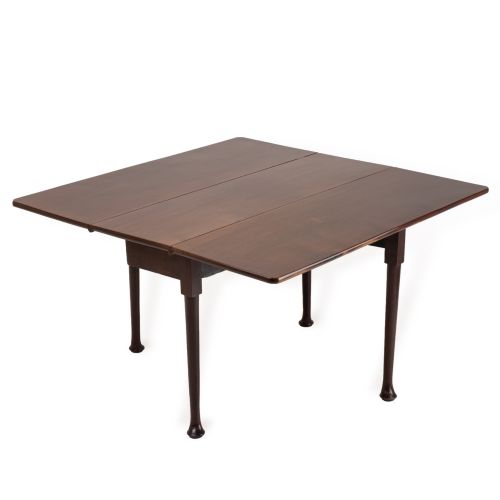


18th Century Drop Flap Table
These pieces combine clever folding engineering with domestic timber, offering an 18th century drop flap table to save floor space when not in use.
18th Century Drop Flap Table
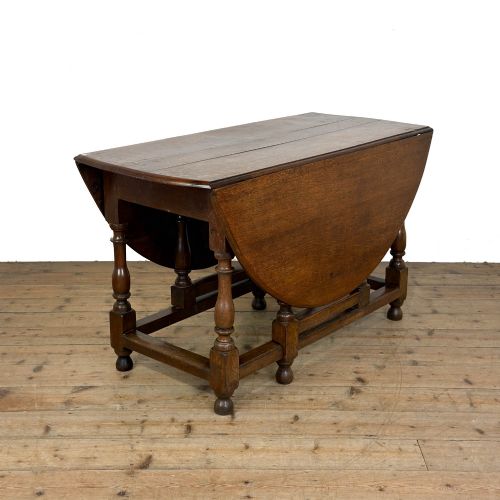
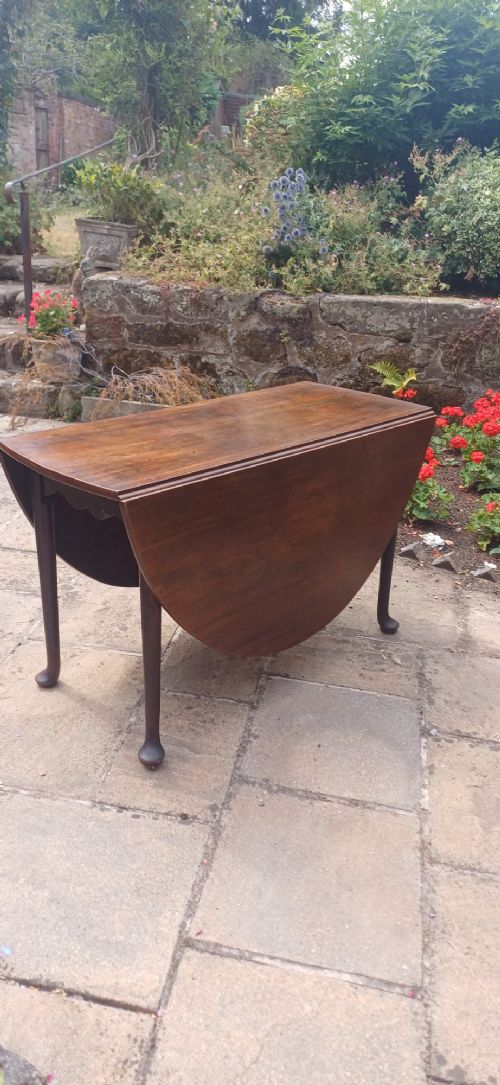
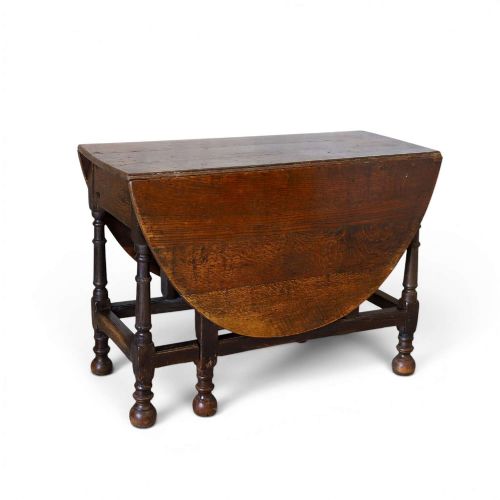
An 18th century drop flap table is a folding timber furniture piece designed to expand its surface area using hinged leaves supported by swing legs or gates. Buyers seeking this phrase encounter formats ranging from compact Pembroke tables and occasional pieces to large gateleg dining tables.
The selections span the 17th century through the Georgian era and into the 19th century, with significant representation from the reigns of George II and George III. Oak and mahogany dominate the offerings, supplemented by walnut, elm, satinwood, and boxwood.
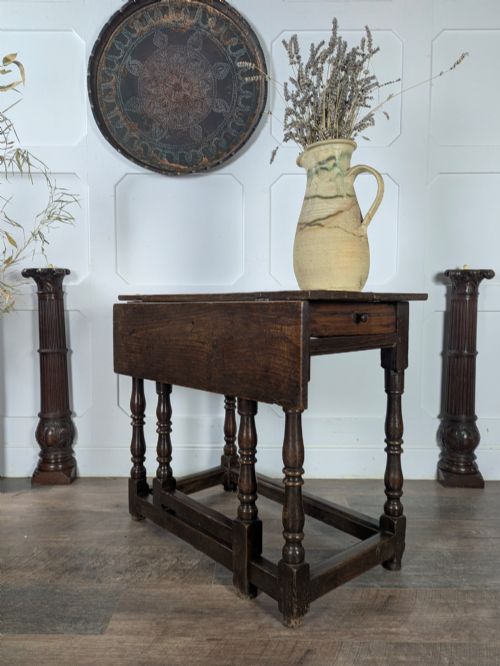
Dining and side tables appear alongside gateleg and Pembroke variations, reflecting how households adapted rooms for dining, writing, or serving. Original hinges and structural timber show the domestic utility required of these folding designs.
How They Were Made
Cabinetmakers utilised solid timbers such as oak, walnut, and Cuban mahogany, often selecting dense woods that could bear the strain of moving flaps and hinged supports. Grain selection mattered for tops, where polished mahogany or figured walnut provided a smooth surface for daily use.
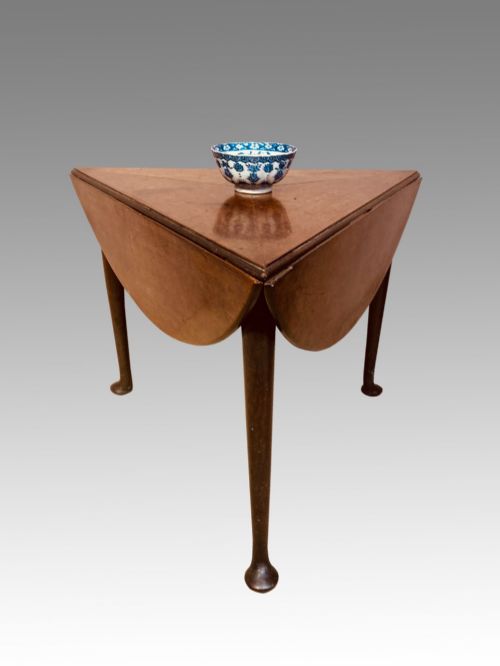
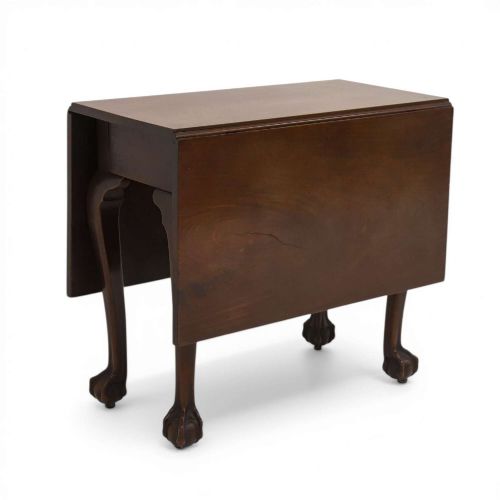
Joinery relied on sturdy leg assemblies like gatelegs, spider legs, and cabriole legs ending in pad feet or claw-and-ball feet. Brass hardware and iron fittings secured the hinges and drawer mechanisms, while satinwood and marquetry added inlaid decoration to select surfaces.
What Varies in Quality
Quality rests in the selection of timber and the integrity of the structural frame, particularly how well the drop leaves align with the central top when extended. Tables fashioned from Cuban mahogany or finely grained walnut with original brass hardware command attention for their substantial scale and proportions.
The sophistication of the leg joinery and foot carving separates utilitarian country pieces from high-style Georgian examples. Tables retaining warm patination and undisturbed original hinges demonstrate careful preservation through centuries of household service.
The 18th Century Drop Flap Table Glossary
- Gateleg table
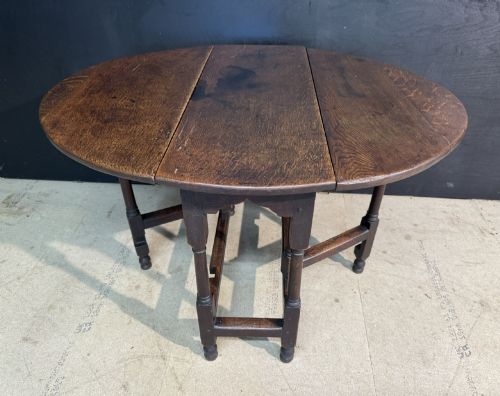
- A table with hinged flaps supported by legs that swing outward like a gate to hold the leaves aloft.
- Pembroke table
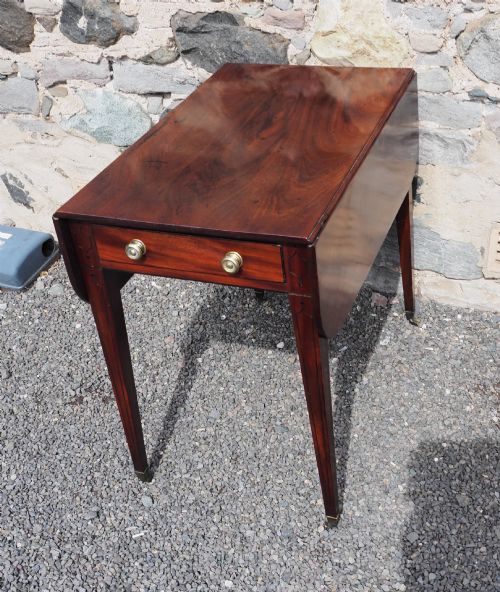
- A small rectangular table featuring two hinged drop flaps on opposite sides and frequently incorporating one or two drawers.
- Cabriole leg
- A furniture leg that curves outward at the knee and tapers inward toward the ankle, typical of Georgian design.
- Patina
- The surface sheen and colour developed on timber over decades of handling, polishing, and natural ageing.
- Marquetry
- Decorative patterns formed by inserting thin veneers of different coloured woods into a prepared wooden surface.
18th Century Drop Flap Table: Frequently Asked Questions
How did people use drop flap tables historically?
Households deployed these tables against walls or in corners with the leaves dropped to maximise open floor space in smaller rooms. When meals, writing, or entertaining required a larger surface, the flaps raised easily on their folding supports.
Dining rooms and parlours utilised gateleg and Pembroke versions interchangeably depending on the daily domestic routine. Drawers integrated into certain models held paperwork, cutlery, or small household items close to hand.
How do I care for an antique wooden table?
Keep wooden furniture away from direct heat sources and rapid humidity shifts to prevent the timber from splitting or warping. Regular dusting with a soft dry cloth protects the polished surface without building up chemical residues.
Apply a traditional beeswax polish sparingly to nourish older timber and maintain its natural lustre. Avoid placing damp items directly onto antique table tops to protect the finish.
What is the difference between a gateleg and a pembroke table?
Gateleg tables feature hinged leaves supported by entire leg assemblies that swing outward on pivots to bear the weight of the extended top. They often seat multiple people for dining when fully opened.
Pembroke tables are smaller occasional pieces with narrower drop flaps supported by hinged wooden brackets rather than swinging legs. They frequently include a drawer and served as writing or Pembroke side tables.
How can I tell a George II table from George III?
George II pieces often display heavier proportions, robust oak or walnut construction, and cabriole legs terminating in pad feet or detailed claw-and-ball feet. Mahogany grew in prominence during this period alongside dark, rich patination.
George III designs frequently introduce lighter woods like satinwood, alongside straight tapered legs, delicate spade feet, or slender spider legs. Proportions became refined as cabinetmakers embraced neoclassical elegance toward the end of the century.