
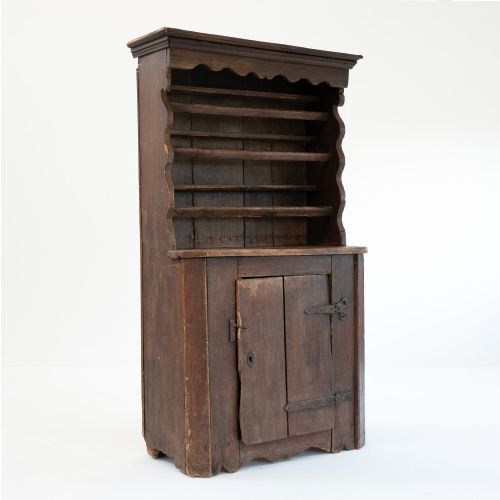
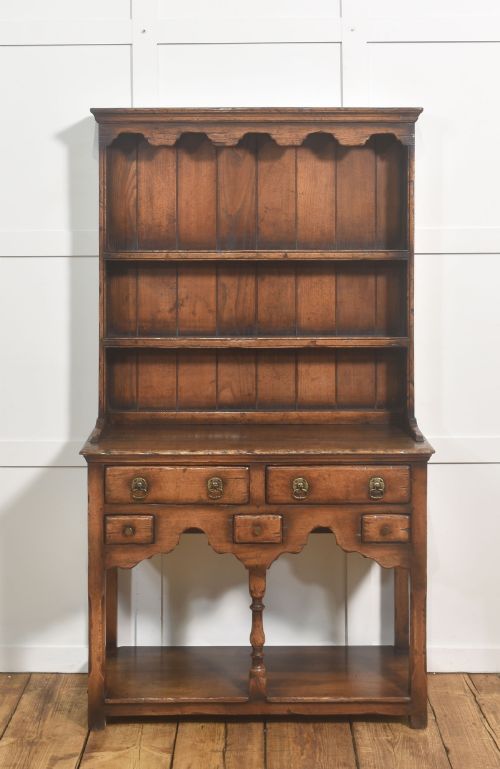
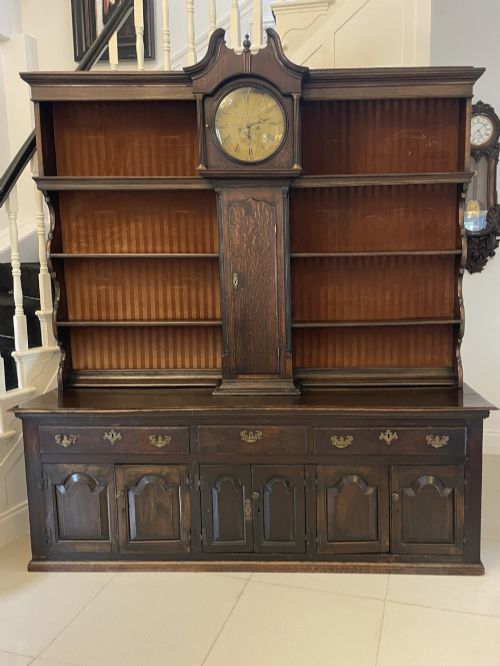
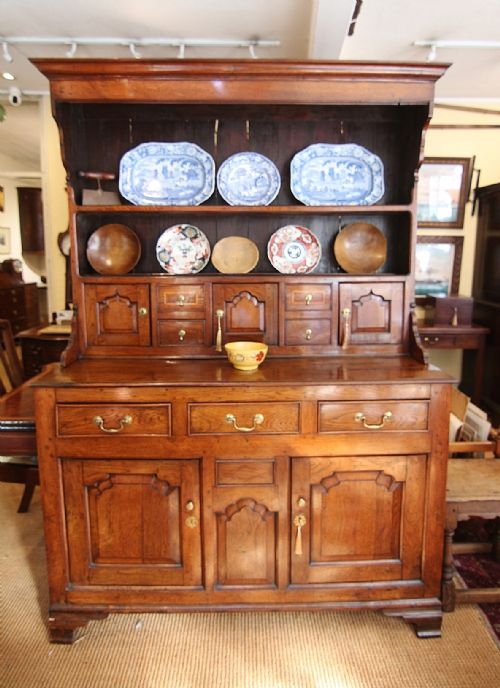
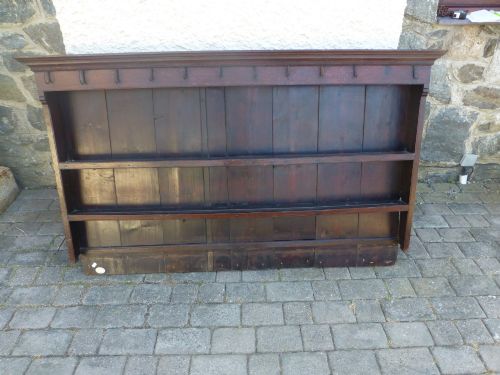
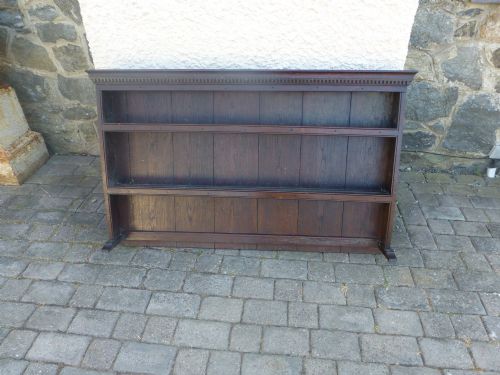
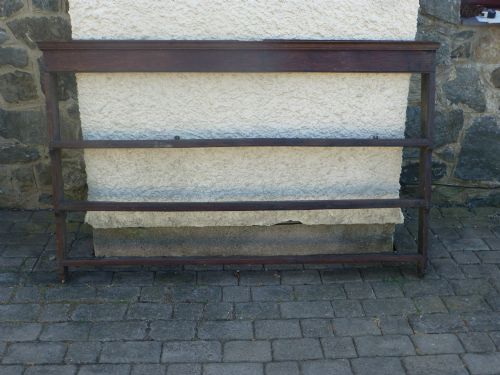
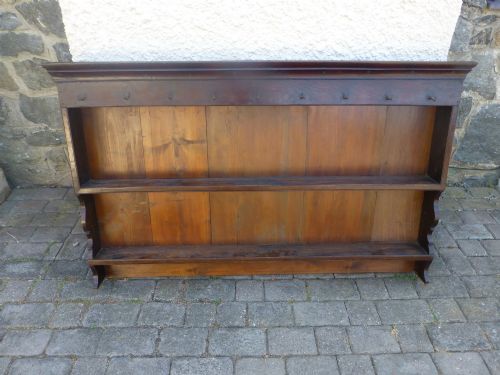

18th Century Dresser Rack
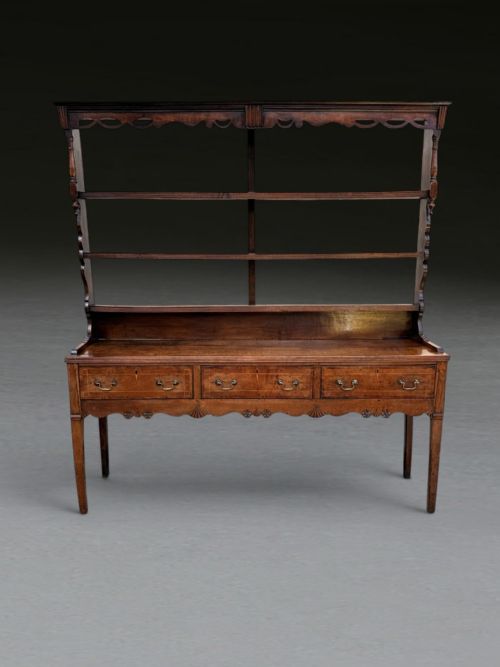
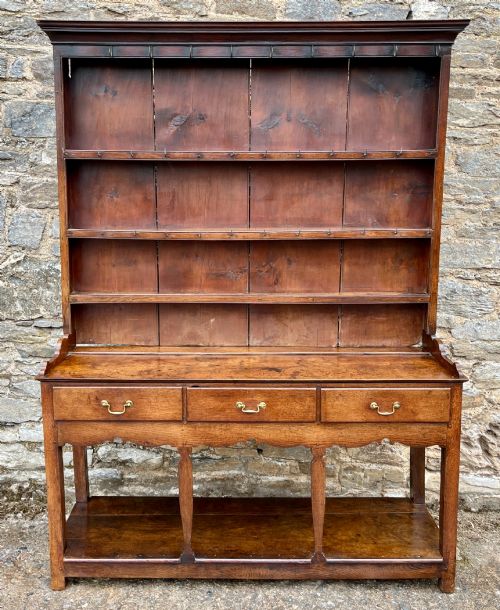
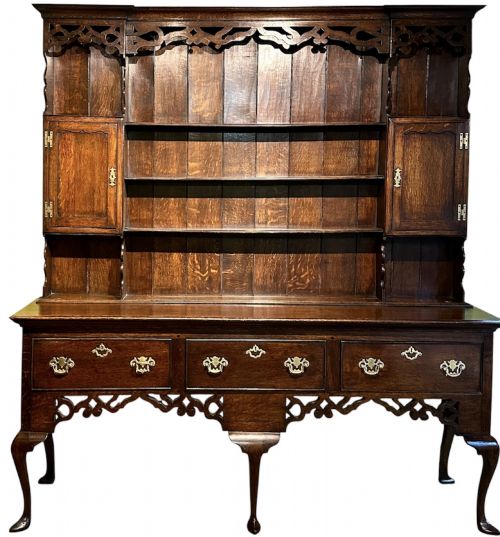
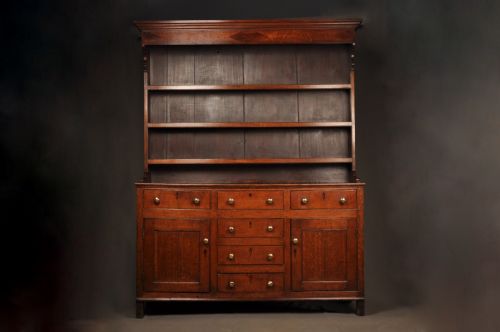
An 18th century dresser rack provides practical kitchen storage and period character, designed to display ceramic plates and serving dishes.
18th Century Dresser Rack
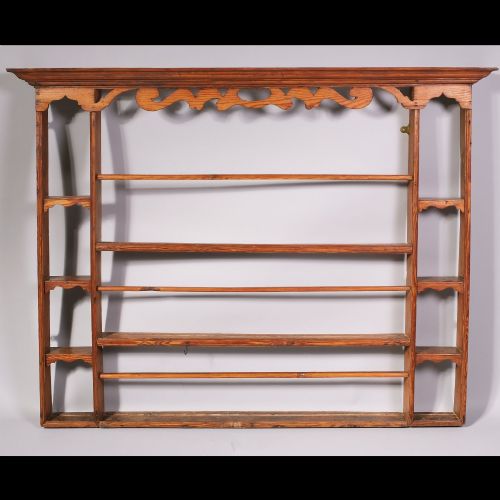
An 18th century dresser rack is a wall-mounted or base-supported shelving unit created to hold tableware in domestic kitchens and dining spaces.
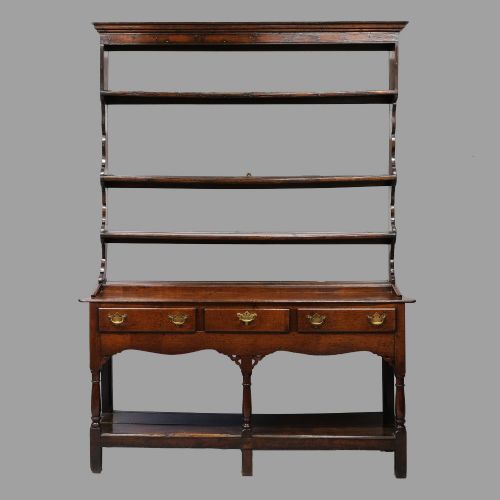
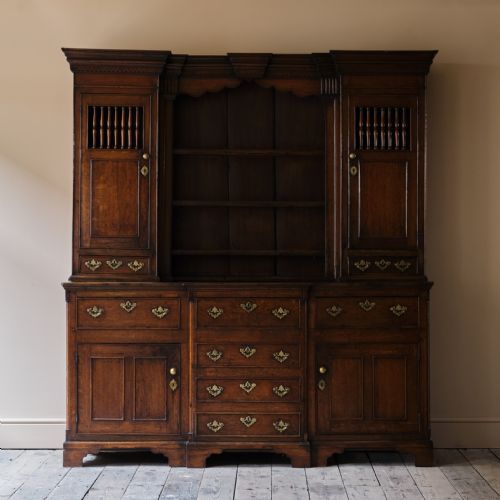
The versions met on this page include open-backed plate racks paired with potboard dresser bases, originating from English and Welsh country workshops.
These pieces combine utility and display, reflecting the vernacular domestic architecture of Georgian rural homes.
How they were made
Cabinet makers utilised native timbers such as oak, pine, and elm, often combining them with wrought iron and brass hardware for structural support and hanging hooks.
Construction involved pegged mortise and tenon joints for the framework, alongside hand-planed boards for the open shelves and backboards.
Detailing includes subtle inlay wood work, moulded cornices, and shaped friezes seen on regional Welsh and English country examples.
18th Century Dresser Rack Retail Price Guide 2026
Typical asking prices for 18th century dresser rack among the pieces listed under this phrase on Sellingantiques today, from the lower quarter to the upper quarter. They describe what is for sale here now, not the wider market.
Some shelves retain generations of historic plate-rail wear grooves, quietly recording centuries of Sunday roast preparations.
What varies in quality
The integration between the top shelving and the lower base separates standard pieces from those that survive as a unified, original pairing.
Proportion and timber selection dictate distinction, where dense grain figures and clean regional carving elevate an everyday utility item into notable vernacular furniture.
Original surface patination, minimal timber replacement, and untouched hardware determine the overall integrity of the piece.
The 18th Century Dresser Rack Glossary
- Plate rack
- A set of open shelves featuring grooved plate rails and vertical slats designed to hold ceramic platters upright.
- Potboard
- A low open shelf beneath a dresser base traditionally utilised for storing heavy pots and pans.
- Welsh dresser
- A regional cabinet form combining a lower storage base with an upper plate rack, typically fashioned from native oak.
- Vernacular furniture
- Domestic pieces built by local regional craftsmen using traditional methods and native materials rather than adhering to formal metropolitan designs.
- Belly rack
- A regional dresser variant featuring a pronounced shaped or bowed lower section to the plate rack board.
18th Century Dresser Rack: Frequently Asked Questions
Were these racks always attached to dressers?
Many racks were built alongside specific dresser bases as unified units from the beginning. Others functioned as separate wall-hanging plate shelves designed to sit above tables or sideboards.
Over centuries, pieces often became separated and reunited, making the survival of an original matching pair a notable characteristic for collectors.
How are regional styles identified?
Regional origins appear through specific timber choices, local construction habits, and distinct decorative detailing like shaped friezes or inlaid woodwork. Welsh examples often display distinct cornice mouldings and proportions compared to pieces from Shropshire or general English country workshops.
These local variations tell the story of the rural cabinet makers who built them for specific domestic demands.
How do you care for oak plate racks?
Maintaining these timbers requires stable indoor humidity away from direct heat sources to prevent timber movement and splitting. Regular dusting with a dry cloth preserves the historic surface patination without stripping natural oils.
Avoid modern liquid polishes, relying instead on traditional wax applied sparingly if the surface appears dry.
What is delftware display?
Delftware display refers to the historic practice of standing tin-glazed earthenware plates upright along the grooved shelves of the rack. The deep shelves and front retaining rails kept heavy ceramics secure during daily kitchen activities.
Today, these shelves continue to serve the exact function they were designed for over two centuries ago.