




18th Century Bilston Box
An 18th century bilston box is a small enamelled copper container from the Georgian era, prized for its painted lids and miniature scale.
18th Century Bilston Box
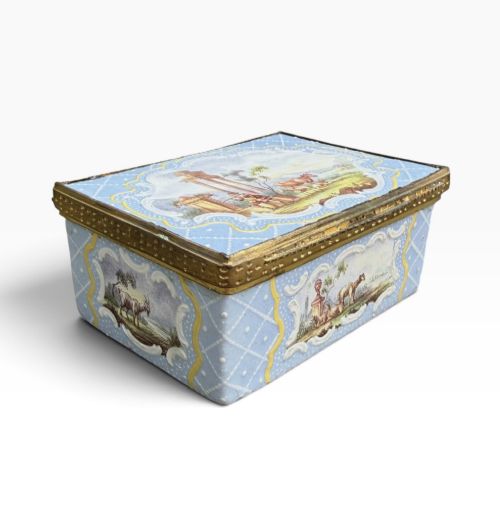
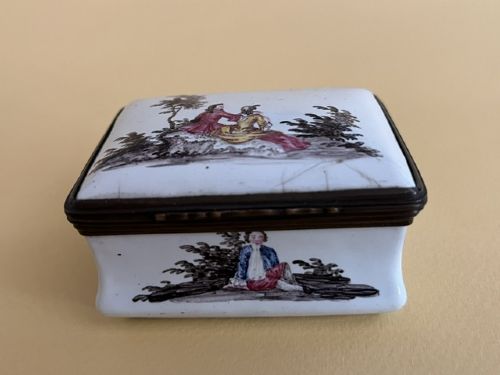
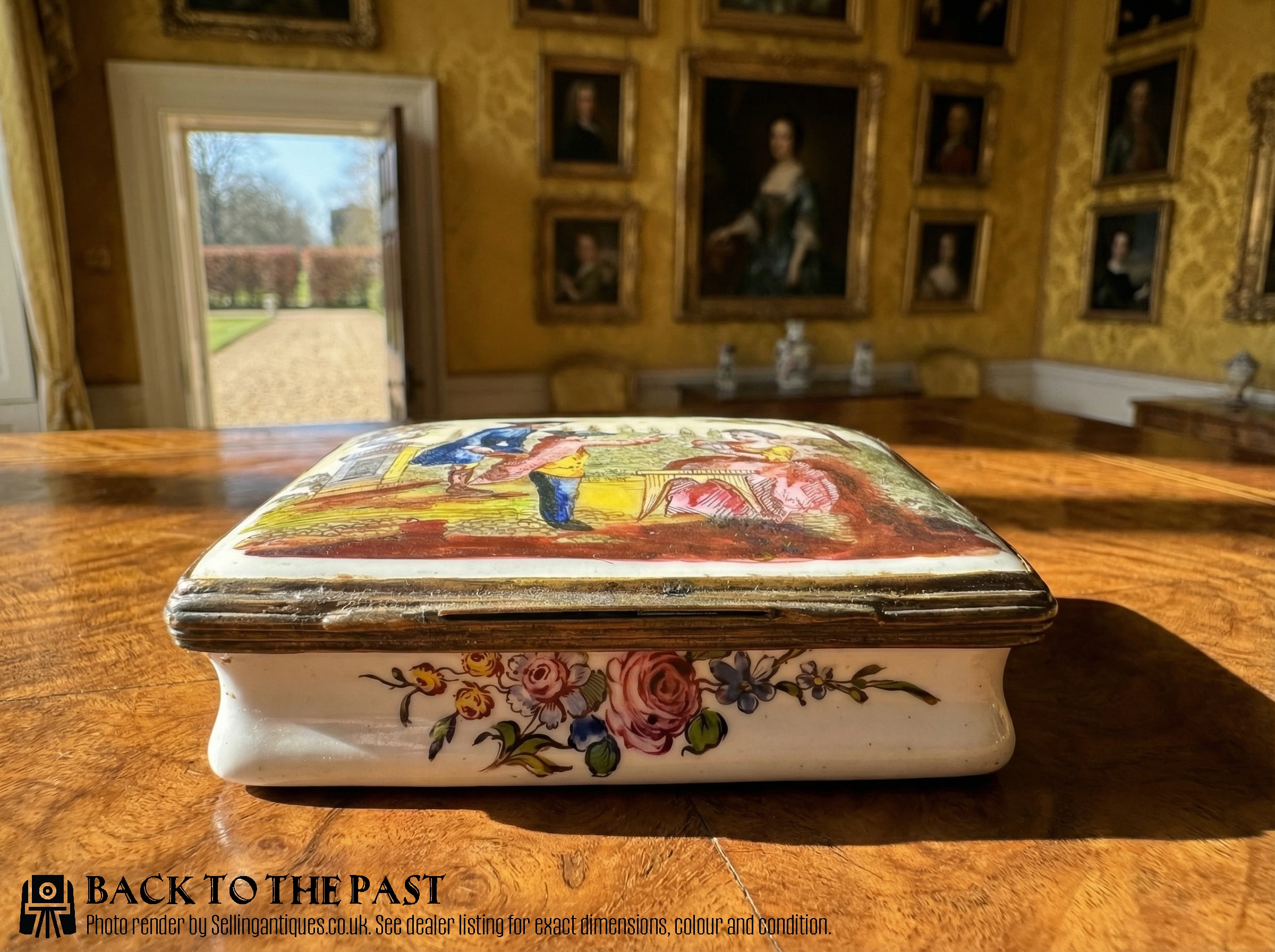
When you search for an 18th century bilston box, you encounter small decorative containers produced in Georgian England, predominantly in Staffordshire. The pieces on this page span the eighteenth century and around 1800, appearing in forms such as patch boxes, snuff boxes, trinket boxes, pill boxes, and decorative plaques.
The most frequent form met here is the patch box, often oval or rectangular, alongside dedicated snuff boxes and novelty shapes like birds. Many feature specific painted lids depicting parkland musicians, floral sprays, scenic views such as Cheltenham Wells, or sentimental inscriptions like a token of esteem.
These items originate from the Georgian period, with dates clustering around the second half of the eighteenth century and the turn into the nineteenth century. They combine utility with miniature artistry, serving historically as pocket companions for snuff or cosmetic patches.
Materials and construction
Makers formed these containers primarily from copper, shaping the body and lid before coating the metal in opaque white or coloured enamel. The enamel surface provided a smooth ground for hand-painted decoration, often applied in soft pastel hues like powder pink.
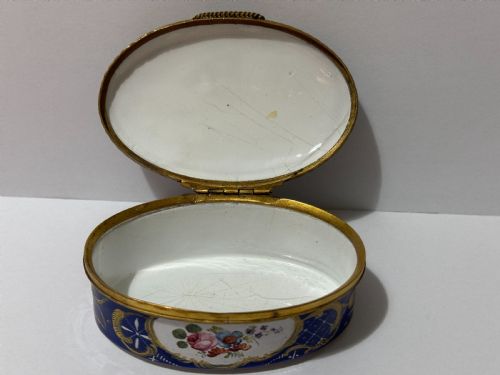
Mounts and hinges typically utilise brass, gilt metal, or copper gilt, securing the lid to the base with small pins or double-hinged mechanisms. Some examples incorporate internal mirrors set into the lid, adding an extra layer of craftsmanship to the interior.
Listings demonstrate forms spanning standard rectangular and oval patch boxes to pill boxes, bird-shaped novelties, and mirrored interiors.
Judging quality and execution
Quality in these enamels rests upon the precision and detail of the hand-painted scene on the lid, where fine brushwork and well-composed figures elevate an object above standard production. The smoothness of the enamel glaze and the crispness of the copper shaping also distinguish finer specimens.
The sophistication of the metal mounts, whether plain brass or rich gilt metal, contributes to the overall distinction of the piece. Preservation of the painted surface without extensive cracking or crazing marks the difference between a well-preserved survivor and a heavily damaged box.
The 18th Century Bilston Box Glossary
- Bilston
- A town in Staffordshire associated with the production of enamelled copper boxes during the eighteenth century. Items attributed here often share stylistic traits with broader South Staffordshire manufacturing.
- Patch box
- A small pocket container designed to hold cosmetic patches made of silk or velvet. These boxes frequently include a fitted mirror inside the lid.
- Snuff box
- A small container utilised for holding powdered tobacco. They appear in rectangular, oval, and navette shapes across the Georgian period.
- Navette-shaped
- A pointed, boat-like oval form popular in late eighteenth-century decorative arts. This silhouette appears frequently among surviving enamelled patch boxes.
- Enamel
- A glassy substance fused to a metal base through kiln firing. It provides a durable, smooth surface suitable for miniature painting.
18th Century Bilston Box: Frequently Asked Questions
What did people keep inside an 18th century bilston box?
These containers held small personal items required during the Georgian day, including scented snuff, cosmetic patches, or small pills. Patch boxes often included a tiny interior mirror to assist with placing silk patches on the face.
Their miniature scale allowed them to slip easily into a pocket or reticule, serving as both functional accessories and decorative conversation pieces.
How can I tell a patch box from a snuff box?
Patch boxes are typically shallower and frequently house an internal mirror fitted inside the lid for adjusting facial patches. Snuff boxes tend to have deeper bodies to accommodate loose tobacco powder rather than thin textile shapes.
Both forms share similar enamel and copper construction techniques, meaning the distinction relies primarily on internal fittings and depth.
Are these boxes made of solid enamel?
No, the body consists of a copper foundation that has been coated in vitreous enamel and fired in a kiln. The metal base provides structural rigidity while the enamel offers a smooth white or coloured ground for painted decoration.
Brass or gilt metal mounts reinforce the rims and form the hinge connecting the lid to the base.
How do I date an 18th century bilston box?
Dating relies on stylistic clues, including the shape of the box, the palette of the enamel colours, and the subject matter of the painted lid. Pieces from the middle of the eighteenth century often display rococo influences, while later examples toward 1800 adopt different geometries like navette outlines.
Inscriptions and topographical scenes can also provide a narrow timeframe corresponding to historical events or spa town popularity.