




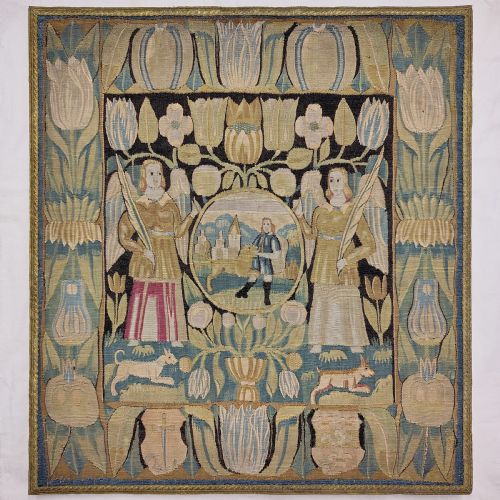


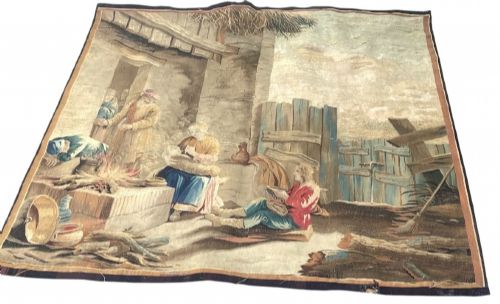

17th Century Woven Panel
These 17th century woven panel pieces bring the rich texture of historical textiles into a room, offering authentic fragments and wall hangings for interiors.
17th Century Woven Panel
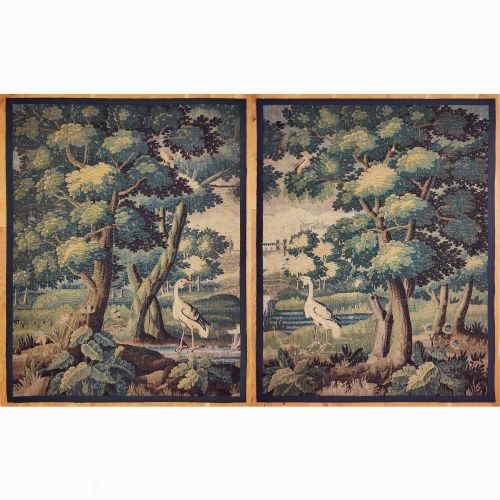
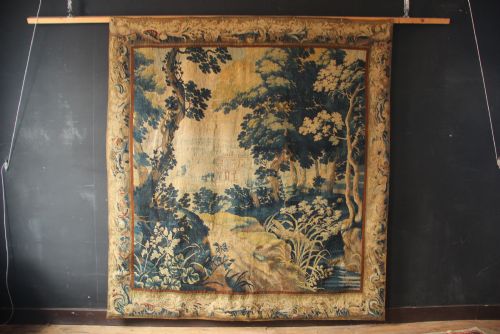
A 17th century woven panel typically takes the form of wall hangings, tapestries, tapestry fragments, or cushion covers created during the seventeenth century and adjacent periods. Buyers will frequently encounter Flemish verdure tapestries, French and Brussels works, and North German pieces alongside later revivals.
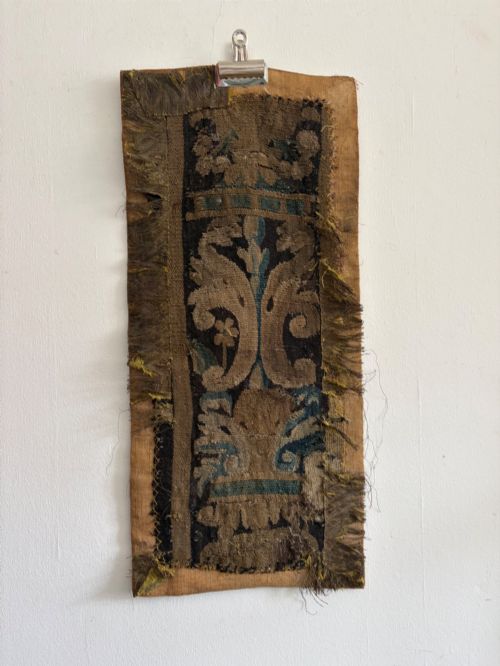
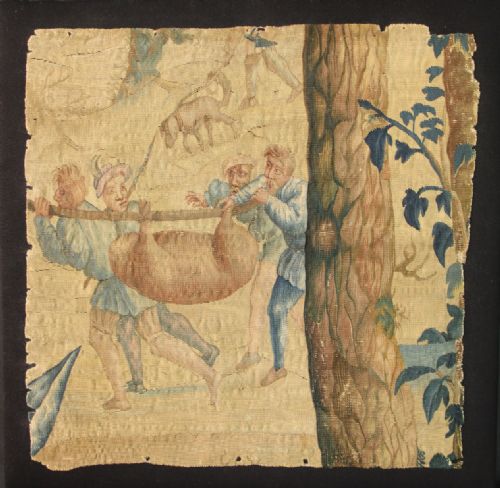
The selections range from large wall tapestries and narrow verdure borders to smaller fragments mounted to linen and functional cushion covers. These textiles record centuries of domestic and decorative history through woven scenes of foliage, landscapes, and figural compositions.
Originating across European centres like Flanders, France, and Germany, these panels reflect the Baroque and Renaissance tastes of their era. They survive as grand room-sized statements or intimate fragments adapted for modern display.
What varies in quality
The visual impact of a panel depends on the density of the weave and the complexity of the narrative or verdure landscape. Finer execution in wool and silk yields sharper botanical details and more nuanced colour gradation across foliage and figures.
Condition and integrity define the distinction between whole panels, matched pairs, and mounted fragments. Original borders, intact dimensions, and the stability of the textile backing heavily influence the character of each piece.
Listings feature periods spanning the 16th, 17th, and 18th centuries, alongside 19th-century revivals.
The 17th Century Woven Panel Glossary
- Verdure tapestry
- A wall hanging featuring a predominant design of plants, trees, foliage, and often birds or animals. These landscape scenes were immensely popular across European weaving centres.
- Tapestry fragment
- A surviving section of a larger wall hanging that has been separated from its original context. These pieces are often mounted on linen for display.
- Warp and weft
- The foundational vertical threads and the horizontal interlaced threads that together form the fabric of a woven panel. The weft creates the visible pictorial design.
- Baroque
- The dominant artistic style of the seventeenth century characterised by drama, rich detail, and grand proportions. This aesthetic directly informs the composition of these woven works.
17th Century Woven Panel: Frequently Asked Questions
How do I hang a textile?
Large wall hangings and panels are typically mounted by attaching a discreet fabric sleeve to the reverse, allowing a flat wooden batten or metal rod to distribute the weight evenly across the wall.
Smaller fragments mounted on linen can be framed behind glass or secured directly to a padded backing board designed for textile conservation.
Where were these pieces woven?
The majority of these historical textiles originate from renowned European weaving centres in Flanders, France, and Germany. Major workshops in cities such as Brussels and Aubusson produced much of the finest work of the period.
Regional differences appear in the specific choice of dyes, verdure motifs, and the stylistic influence of artists working in the Baroque tradition.
How do I date a panel?
Dating relies on stylistic analysis of the woven motifs, such as the specific rendering of foliage in verdure pieces or figural compositions associated with seventeenth-century aesthetics. Comparing the weave structure and material palette with documented examples from Flanders, France, and Germany provides further context.
Evidence of natural dye use and traditional hand-weaving techniques also assists in placing a piece within the seventeenth century or subsequent revival periods.