


17th Century Wood Relief
These 17th century wood relief carvings bring deep architectural presence and historical narrative into a modern room.
17th Century Wood Relief
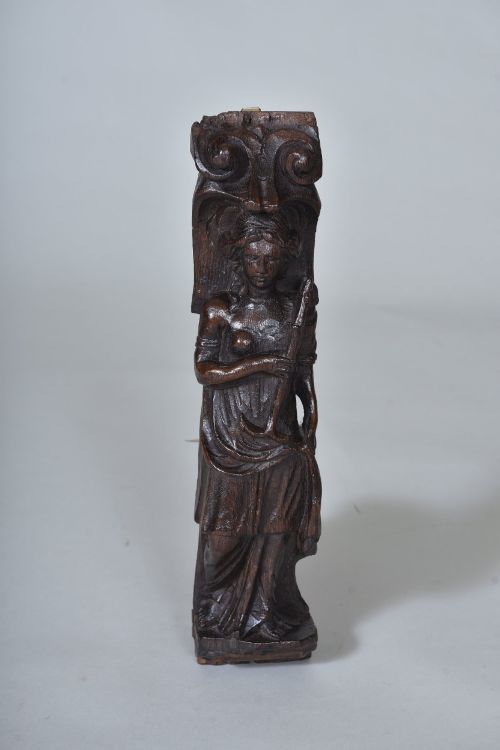
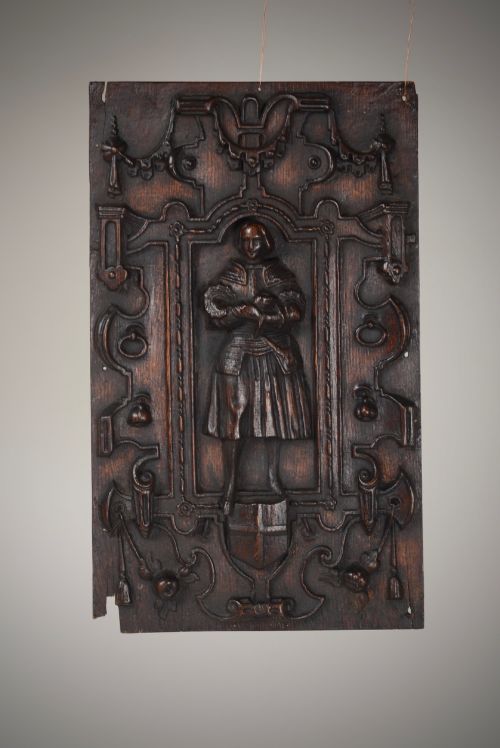
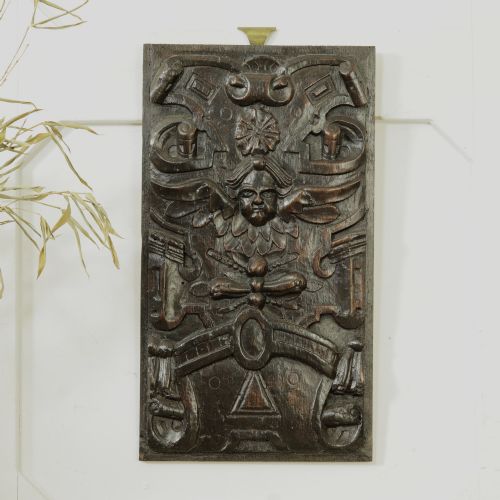
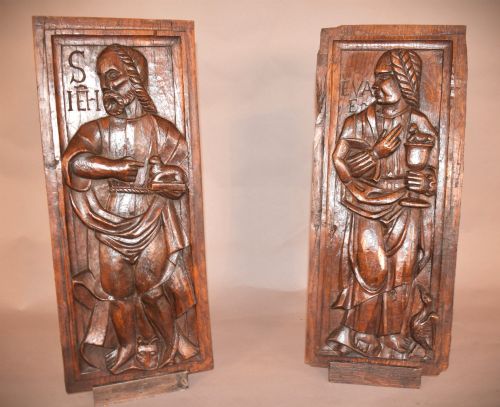
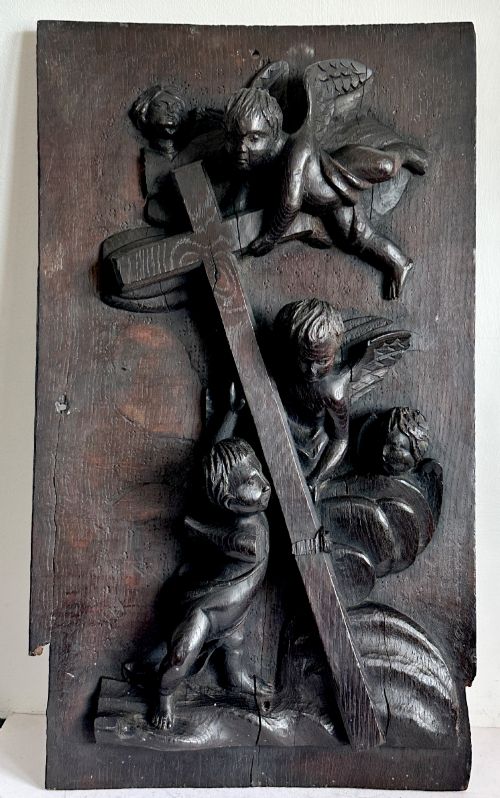
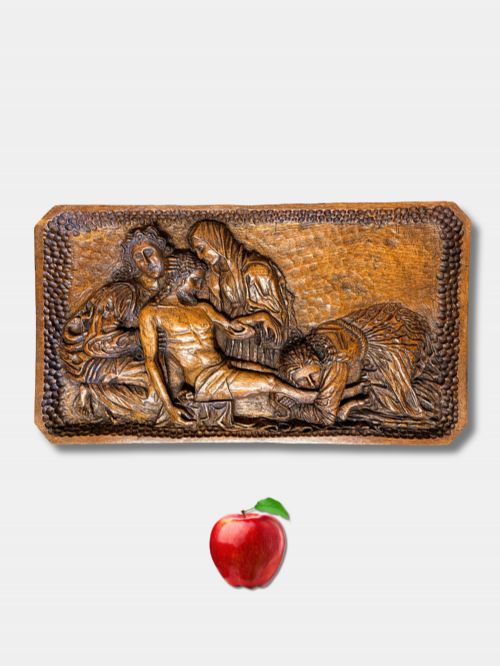
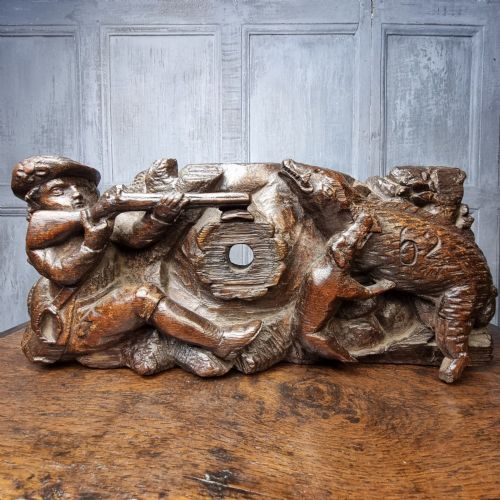
When you search for 17th century wood relief, you encounter substantial panels, friezes, and overdoor carvings fashioned for monumental interiors. These objects take the form of wall plaques, architectural salvage, and figural wood carvings depicting religious subjects, allegories, and heraldry.
The majority of pieces on this page originate in the seventeenth century, displaying Jacobean, Baroque, and Louis XIII stylistic traits. Oak and walnut dominate the selection, appearing alongside chestnut and ebonised wood.
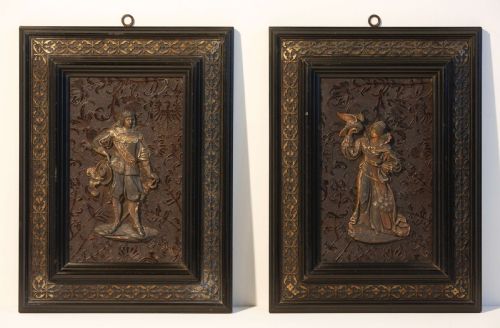
Makers shaped these panels to anchor staircase terminals, church interiors, and panelled chambers. Collectors find both single figural panels and matched pairs designed for symmetrical architectural schemes.
How they were made
Carvers worked primarily with seasoned hardwoods like oak, walnut, and chestnut, utilising chisel and gouge to achieve high relief and pierced openwork. Grain direction guided the depth of the carving, allowing intricate details such as acanthus leaves and drapery to stand clear of the background.
Some panels incorporate surface treatments like ebonising to contrast against gilt or bright metal elements, while others rely entirely on the natural warmth of polished timber.
Look closely among the saints and allegories to spot a Roman helmet sharing space with a cherub armorial.
What varies in quality
Scale and complexity also define the upper tier, where monumental overdoor panels or figural allegories display ambitious composition and precise anatomical rendering by named or attributed hands.
Edward Pearce
The 17th Century Wood Relief Glossary
- High-Relief
- A method of carving where figures and ornament project significantly from the background plane, often undercut to create deep shadow and three-dimensional form.
- Acanthus
- A stylised leaf ornament derived from Mediterranean flora, heavily utilised in Baroque and Jacobean architectural carving.
- Overdoor
- A decorative panel or relief positioned directly above a doorway, often scaled grandly to cap an architectural opening.
- Frieze
- A long, horizontal band of sculpted decoration situated along the upper section of a wall or architectural timber.
- Pierced Carving
- Openwork technique where the wood is cut entirely through in sections to create a lace-like, detached relief effect.
17th Century Wood Relief: Frequently Asked Questions
How do I hang a heavy wood relief?
Substantial 17th century wood panels require robust wall anchors and secure concealed battens attached directly to masonry or stud work. Because these oak and walnut carvings carry considerable weight, professional installation ensures the panel remains safely supported without placing stress on the historic timber.
Position the relief at eye level where the depth of the carving catches natural room light effectively. Adequate spacing from direct heat sources prevents the old wood from drying and splitting over time.
Are these panels from old buildings?
Many pieces originate as architectural salvage from period properties, churches, and formal domestic interiors. They were originally integrated into wall panelling, staircases, and overmantels before being removed during later alterations.
This architectural context explains why many items retain traces of original fixing points or rebate edges. The integration into historic rooms gives each carving its authentic character.
What is the difference between Jacobean and Baroque carvings?
Jacobean carvings tend to feature stiff, geometric strapwork and stylised floral motifs reflecting earlier sixteenth-century traditions. The forms are more linear and restrained in their projection from the background.
Baroque carvings introduce dynamic movement, deep undercutting, and exuberant forms like swirling acanthus leaves and dramatic figural poses. These later seventeenth-century pieces emphasise theatrical depth and muscular anatomical detail.