




17th Century Walnut Desk
A 17th century walnut desk brings rich grain and early craftsmanship into a room, offering both a working surface and a commanding historical presence.
17th Century Walnut Desk
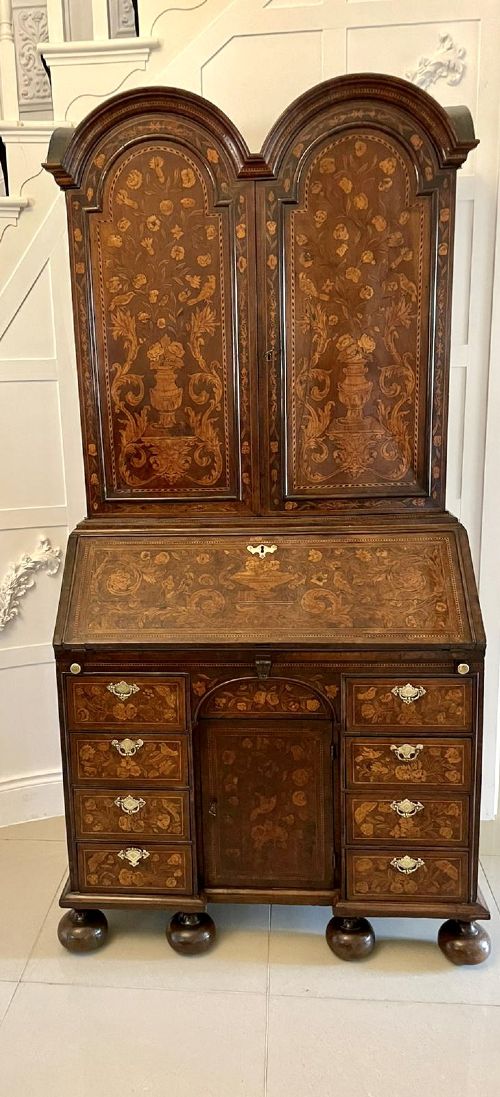
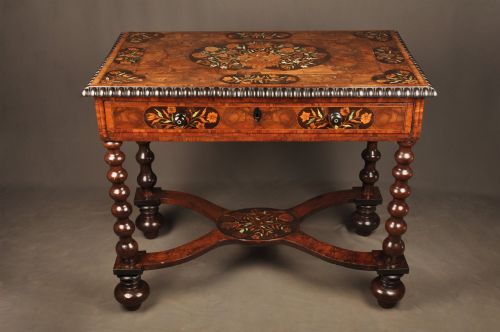
When you search for a 17th century walnut desk, you encounter pieces spanning from the Spanish Renaissance and Baroque periods through to William and Mary designs. These works incorporate forms such as desks, writing cabinets, bargueños, and bureau bookcases that served the administrative needs of their original owners. Many examples reflect the transitional tastes of the seventeen-hundreds, utilising solid construction alongside decorative cabinetry.
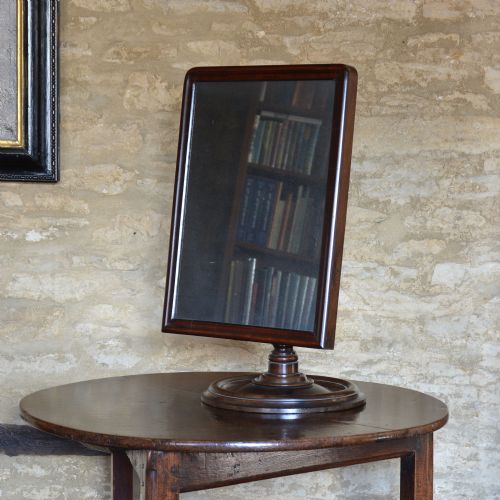
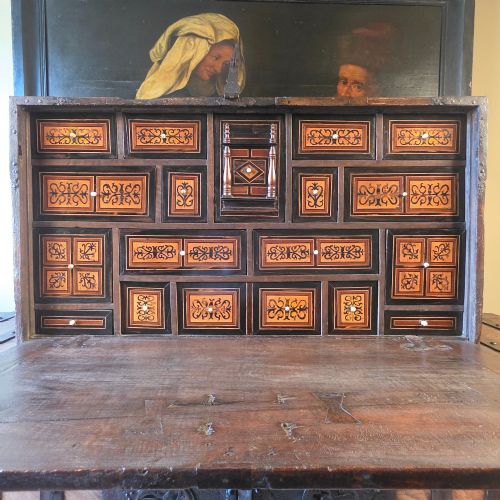
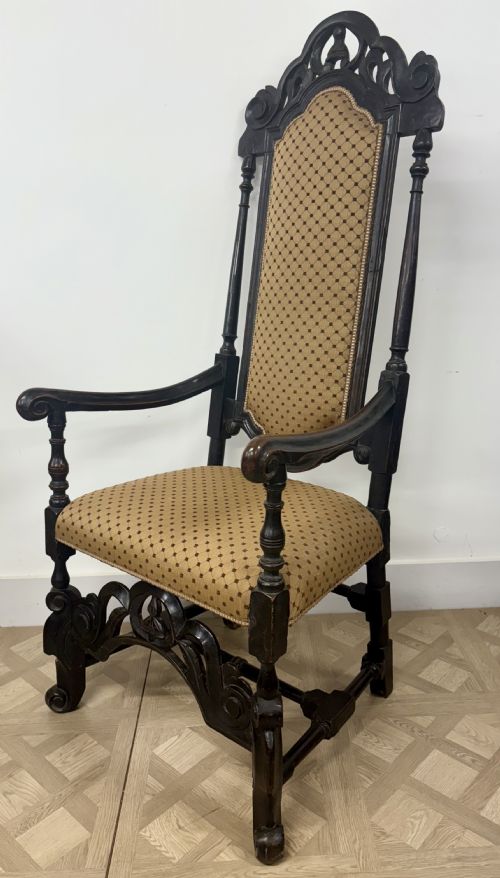
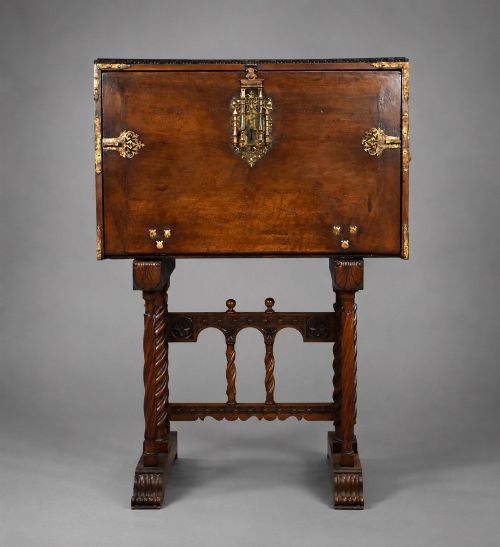
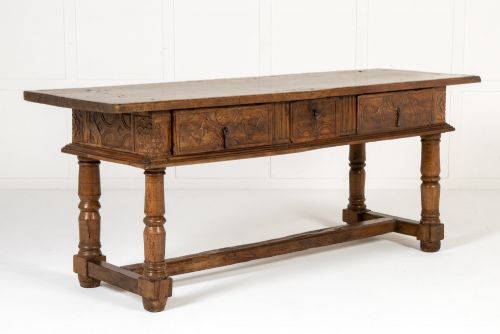
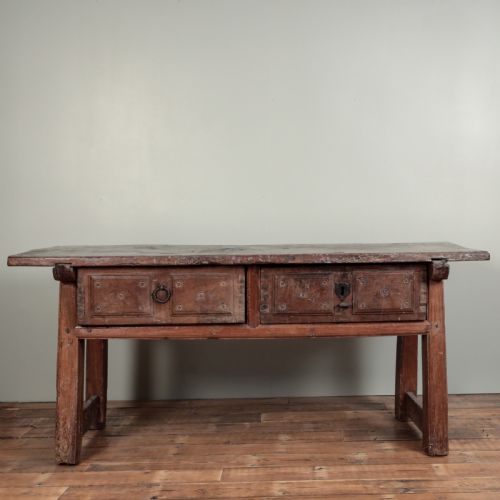
The selection on this page demonstrates the wide geographical spread of these forms, ranging from English bureau cabinets and escritoires to Spanish vargueno cabinets on stands and German marquetry table cabinets. While some pieces date strictly to the seventeenth century, others emerge from later periods referencing the same stylistic vocabulary. You will also find related supporting forms like centre tables, side tables, and armchairs that complement a primary writing surface.
Defining Quality and Character
The quality of a piece rests largely on the ambition of its timber selection and the precision of its decorative veneers. Highly figured grain patterns, intricate marquetry, and complex oyster work separate standard utilitarian furniture from exceptional cabinet work. The coherence of the design between the upper desk section and its supporting stand or base also dictates the desirability of the whole object.
Preservation of original surfaces and hardware heavily influences the integrity of a piece. Examples retaining their early patination, original brasses, and structural joinery command greater appreciation than those with extensive modern replacements. The balance of proportions and the crispness of surviving carved details reveal the skill of the original workshop.
Some seventeenth-century writing desks conceal secret compartments behind sliding panels, designed to guard private correspondence from curious household staff.
The 17th Century Walnut Desk Glossary
- Escritoire
- A writing cabinet featuring a fall-front that opens to reveal a fitted interior of small drawers and pigeonholes. These pieces became prominent during the William and Mary period.
- Vargueno
- A traditional Spanish drop-front cabinet supported on a stand, often fitted with elaborate interior drawers and decorated with bone inlay, gilding, or fine ironwork.
- Oyster veneer
- Slices cut transversely from small branches or roots of walnut to create circular or oval patterns resembling oyster shells. This technique defined many fine surfaces of the late seventeenth century.
- Marquetry
- The art of applying decorative veneer pieces of various woods to a structure to form intricate pictorial designs. It frequently ornaments the tabletops and cabinet doors of this era.
- Barley twist
- A turned wooden furniture leg or stretcher shaped in a spiral twist. This decorative turning became popular in English furniture during the mid to late seventeenth century.
- Kneehole bureau
- A compact desk featuring a central recess for the user's knees, flanked by banks of small drawers. This form developed as domestic interiors required more specialised writing spaces.
17th Century Walnut Desk: Frequently Asked Questions
How do I identify a William and Mary desk?
William and Mary desks typically feature seaweed marquetry, oyster veneers, or geometric drawer mouldings set on trumpet legs or intricate stands. They often employ rich figured walnut and brass drop handles.
These pieces reflect Dutch influences introduced following the late seventeenth-century accession of the monarchs. Look for tall, upright proportions and richly fitted interiors behind fall-front writing surfaces.
What is the difference between a bargueño and an escritoire?
A bargueño is a Spanish cabinet with a heavy rectangular drop-front lid that opens downward for writing, traditionally placed upon a separate trestle or arcaded stand. An escritoire is typically an English or continental cabinet where the fall-front is supported by pull-out lopers.
Bargueno interiors often display complex arrangements of small drawers with architectural facades and gilded details. Escritoires lean towards fitted compartments designed for European correspondence and document storage.
Where were these writing cabinets placed in a seventeenth-century home?
These pieces occupied principal reception rooms, private closets, or bedchambers where wealthy owners managed correspondence and financial accounts. They served as status symbols as well as functional furniture.
Because they were costly to produce, they remained in public areas of the house to impress visitors with the owner's refinement and access to exotic materials.
How should I care for antique walnut furniture?
Keep walnut furniture away from direct sunlight and heat sources to prevent the timber from drying out and the veneers from lifting. Maintain stable room humidity levels year-round.
Apply occasional microcrystalline wax to nourish the wood and protect the historic patina. Avoid modern liquid polishes containing silicones or harsh cleaning agents.