




Baroque Walnut Side Table
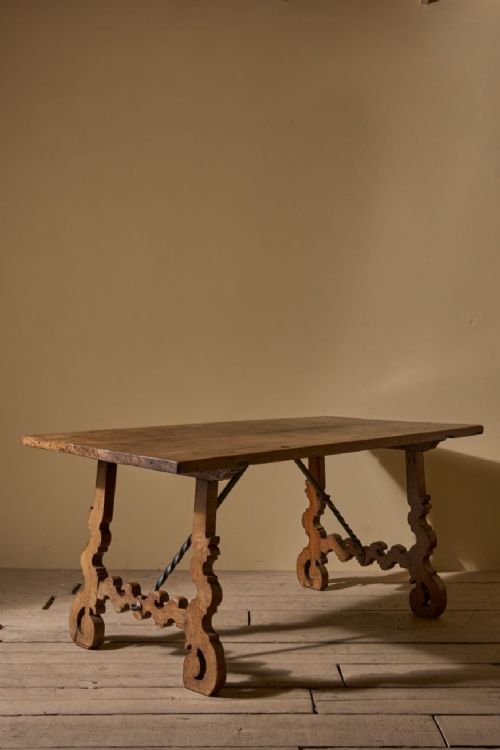
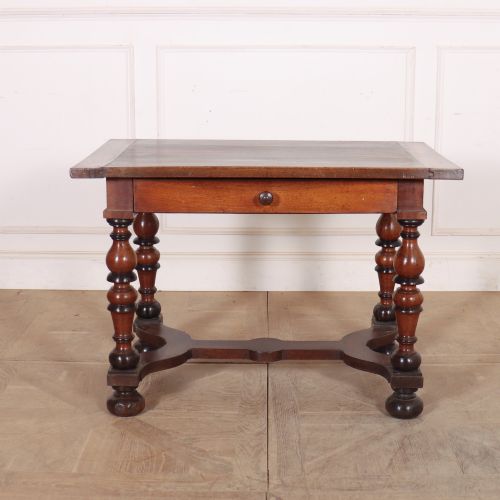
A baroque walnut side table brings robust seventeenth and eighteenth-century craftsmanship, rich timber grain and commanding architectural presence to a room.
Baroque Walnut Side Table
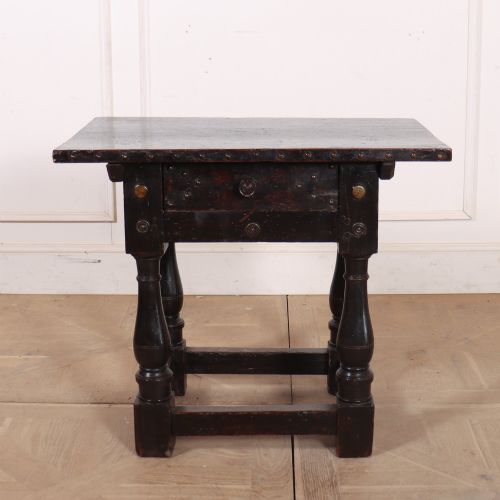
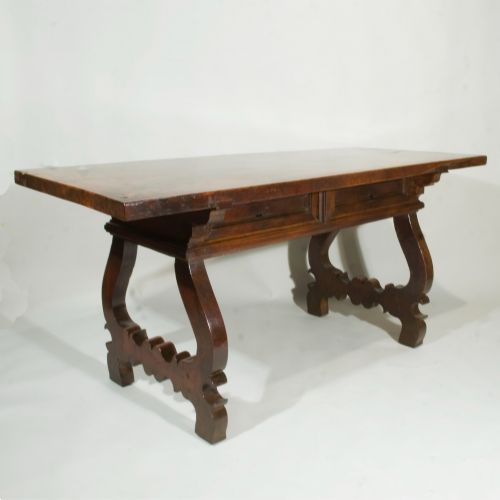
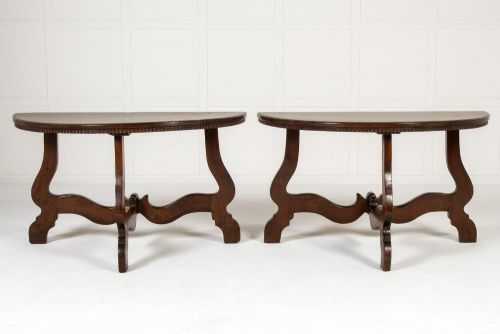
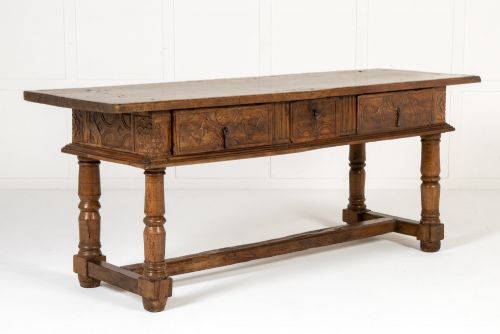
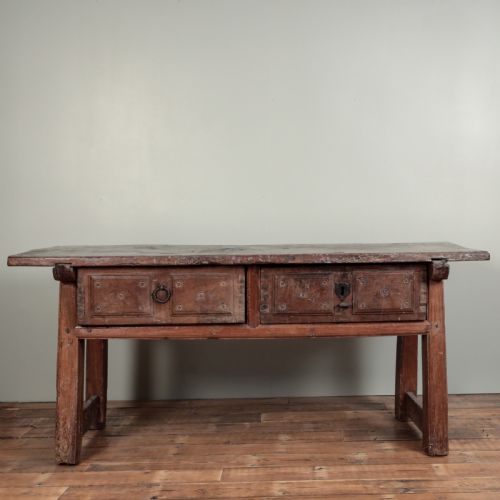
When you search for a baroque walnut side table, you encounter substantial forms spanning the seventeenth and eighteenth centuries, originating primarily from Spain, Italy, and the Netherlands. These pieces serve practical functions as console tables, centre tables, and side tables, often displaying regional interpretations of the baroque style.
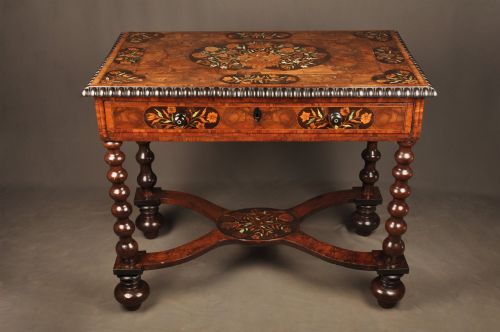
You are most likely to meet eighteenth-century Spanish walnut tables and Italian console tables on this page, alongside Dutch marquetry and parquetry card tables. Many examples incorporate fruitwood or oak elements, while select pieces feature marble tops or elaborate carved details such as eagles.
The selection ranges from early solid timber constructions with deep original patina to later nineteenth-century revivals and twentieth-century interpretations. These tables function effectively as focal points in hallways, reception rooms, and studies, combining period utility with decorative presence.
What varies in quality
The quality of a baroque walnut side table depends upon the crispness of the carving, the complexity of the parquetry or marquetry patterns, and the integrity of the timber. Pieces retaining their original patination and early surfaces command greater interest from collectors than heavily restored examples.
Proportion and structural balance separate exceptional regional pieces from simpler provincial work. Finer examples display harmonious integration between the walnut carcase, decorative inlays such as fruitwood marquetry, and original supporting elements like wrought iron stretchers or marble tops.
Listings feature walnut, fruitwood, oak, wrought iron, brass, and marble across seventeenth- and eighteenth-century Italian, Spanish, and Dutch forms.
The Baroque Walnut Side Table Glossary
- Baroque
- An artistic style originating in the seventeenth century characterised by ornate detail, dramatic movement, and robust sculptural forms. This aesthetic defined furniture design across Italy, Spain, and the Netherlands.
- Marquetry
- The art and craft of applying decorative veneer pieces to a structure to form intricate pictorial designs or geometric patterns. Makers frequently utilised fruitwood alongside walnut for contrasting tones.
- Parquetry
- A geometric mosaic of wood pieces used for decorative surfaces on table tops and panels. This technique highlights the natural grain variations of walnut and allied timbers.
- Console Table
- A table designed to be fixed against a wall, frequently supported by sculptural legs or brackets rather than four freestanding posts. These pieces often feature marble tops or elaborate carvings.
- Demi Lune
- A half-moon shaped table designed to stand flat against a wall. This form appeared in eighteenth-century Italian pairings.
Baroque Walnut Side Table: Frequently Asked Questions
How do I identify a seventeenth-century Spanish walnut table?
Seventeenth-century Spanish tables typically display heavy solid walnut construction, straightforward rectangular proportions, and structural stretchers made of wood or wrought iron. They often exhibit a deep, darkened original patina developed over centuries of use.
Makers from this period focused on robust utility rather than excessive surface ornamentation, allowing the dense grain of the timber to provide the primary visual interest.
Where should I place a baroque console table?
A baroque console table suits a hallway, landing, or living room where its architectural presence can function as a focal point. Wall-mounted or demi-lune versions anchor well beneath large mirrors or paintings.
Ensure the depth of the table matches your circulation space, particularly with larger carved examples that project significantly from the wall.
What is the difference between marquetry and parquetry?
Marquetry involves arranging wood veneers to create pictorial scenes, floral motifs, or complex organic patterns. Parquetry restricts the design to repeating geometric arrangements such as cubes, chequers, or stripes.
Both techniques appear frequently on Dutch and Italian table tops from the seventeenth and eighteenth centuries.
How do I care for an antique walnut surface?
Maintain antique walnut furniture by keeping it away from direct sunlight and sudden temperature fluctuations that can dry out the timber. Apply a traditional wax polish sparingly to nourish the wood and preserve the historic patina.
Avoid placing damp items directly onto unsealed wood or marble tops to prevent staining and surface degradation.
Are these tables suitable for daily use?
Most baroque side tables and centre tables remain structurally sound for everyday domestic placement, such as holding lamps or decorative objects. Card tables retain their folding mechanisms, though original hinges require gentle handling.
Consider the specific construction and weight of each table when deciding whether it serves a purely decorative role or active daily function.