
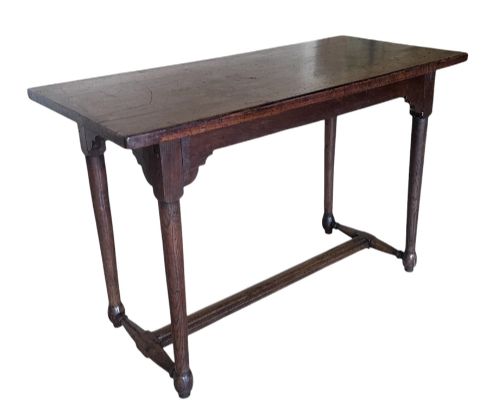
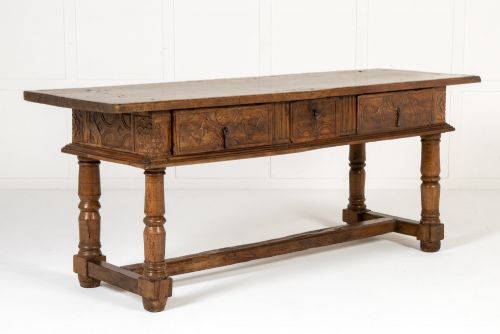

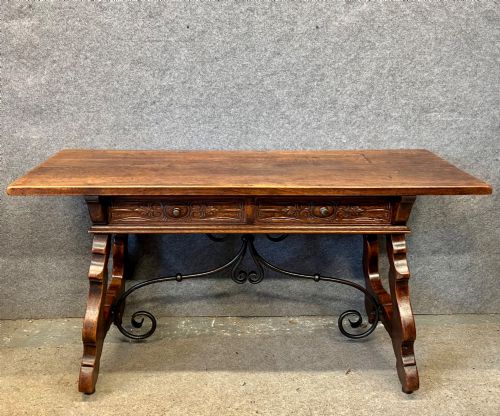


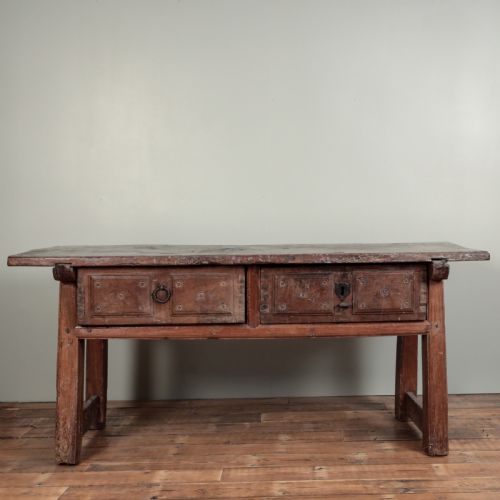


Rustic Spanish Console Table
These rustic spanish console table examples bring grounded warmth and historical character to a hallway.
Rustic Spanish Console Table
A rustic spanish console table embodies centuries of domestic utility, built to stand against heavy stone walls in Iberian halls. Buyers seeking this look want a piece that anchors a narrow space with genuine age.
The versions most commonly met span from the seventeenth century through to the early twentieth century. They appear in oak and walnut, often adopting traditional or provincial styles.
Forms range from dedicated console tables to wider side tables and servers. Each design prioritises sturdy timber construction over delicate ornamentation.
Materials and construction
Construction relies heavily on robust hardwoods like oak and walnut, selected for their structural endurance. Craftsmen shaped these timbers using traditional joinery that allowed the wood to settle naturally over decades.
Judgements of quality
Quality rests primarily in the integrity of the timber and the depth of its patination. Pieces retaining their original surface finish show a smoother integration of grain and colour that later interventions cannot replicate.
Proportion and structural honesty separate finer examples from simpler provincial work. A well-balanced frame with original iron hardware demonstrates a higher standard of period craftsmanship.
The Rustic Spanish Console Table Glossary
- Console table
- A table designed to stand flat against a wall, frequently supported by brackets or legs at the front. These pieces serve narrow circulation spaces efficiently.
- Wrought iron
- Iron beaten into shape while hot by a blacksmith, commonly utilised for structural stretchers on these tables. Its fibrous texture distinguishes it from cast alternatives.
- Provincial
- Denoting styles originating from regional areas rather than major metropolitan centres. Such pieces often display simpler, more direct construction methods.
- Patina
- The surface sheen and colour developed by wood and metal over long periods of handling and exposure. It acts as a visual indicator of genuine age.
Rustic Spanish Console Table: Frequently Asked Questions
Where should I place a console table?
These tables fit naturally in entrance halls, corridors, or living spaces where floor area is restricted.
Their narrow profile allows them to sit flush against walls without obstructing movement through the room.
How do I care for old timber?
Maintain the wood by dusting with a dry cloth and avoiding excessive moisture. Direct sunlight can dry out historical timber over time.
Applying a traditional wax occasionally helps nourish the grain and protect the surface finish.
Are these tables sturdy enough for daily use?
Constructed from dense hardwoods like oak and walnut, these frames offer substantial physical stability. Their original purpose demanded durability for everyday domestic tasks.
Iron stretchers further reinforce the legs against lateral movement.
How can I tell periods apart?
Earlier seventeenth-century examples tend to feature darker walnut and heavier proportions reflecting baroque influences. Later nineteenth-century pieces often showcase lighter oak or bleached finishes.
Tool marks and construction joints also offer clues to the approximate date of manufacture.