


Spanish Colonial Trestle Table
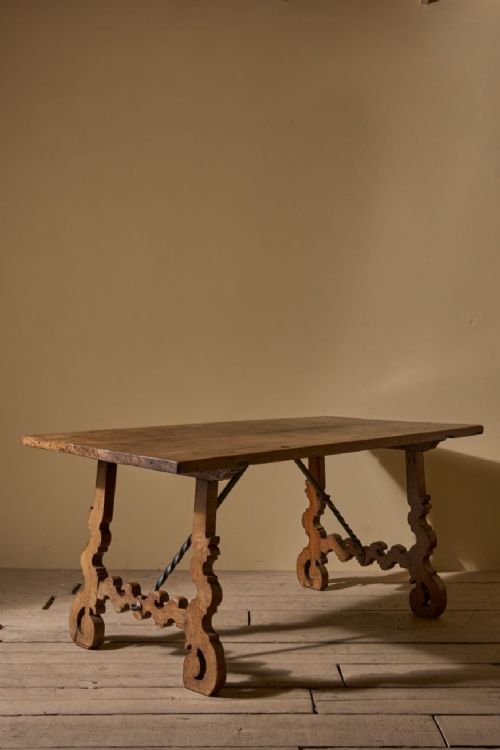
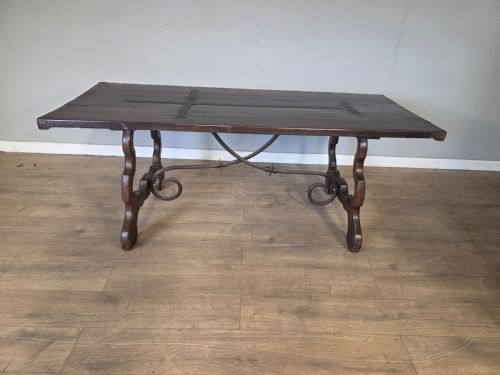
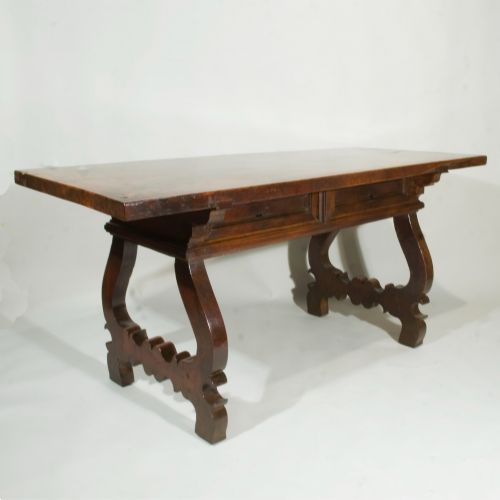
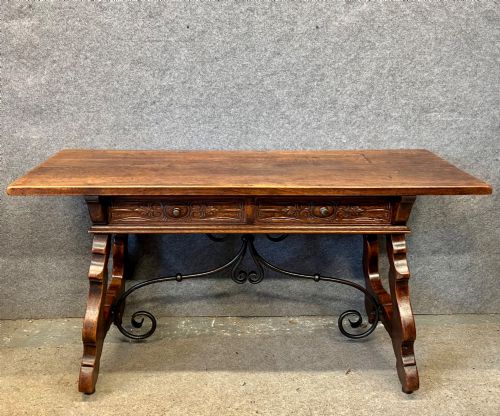
These heavy timbers and wrought iron braces make a Spanish colonial trestle table the anchor of any room it occupies.
Spanish Colonial Trestle Table
A Spanish colonial trestle table combines robust domestic utility with the formal presence of earlier European traditions. You encounter these surfaces in formats ranging from grand dining tables to compact side tables, desks, and low coffee tables.
The pieces on this page span several centuries, reaching from the seventeenth century through the eighteenth and nineteenth centuries into early twentieth-century revival interpretations. Walnut, oak, and fruitwood dominate the construction, often paired with exposed ironwork.
Dining tables and centre tables display the characteristic underframe of upright trestles tied together by floor stretchers. These proportions suit large spaces where a long timber top can sit comfortably without crowding the room.
How they were made
Joinery relies on solid domestic hardwoods like walnut, oak, and fruitwood, selected for stability across long spans. Cabinetmakers shaped thick planks by hand, leaving subtle tool marks that confirm early hand-working methods.
Wrought iron forms structural braces and decorative stretchers beneath the surface, hammered into shape by blacksmiths to support the heavy wooden tops. These metal elements lock the trestle legs firmly against lateral movement.
Early blacksmiths often hammered their own initials directly into the wrought iron stretchers beneath the top.
What varies in quality
Quality rests on the selection of the timber and the integrity of the original construction. Dense, well-figured walnut commands attention through its depth of grain and the natural patination built up over generations of use.
The harmony between the wrought iron stretchers and the wooden frame dictates the visual balance of the piece. Rigidity in the trestle joints separates robust architectural survivals from later, lighter adaptations.
The Spanish Colonial Trestle Table Glossary
- Trestle table
- A board resting on two or more supports connected by a horizontal beam. This form provides maximum legroom along the length of the surface.
- Refectory table
- A long dining table traditionally used in monastic or large communal dining halls. These examples use sturdy wooden stretchers to keep the long frame rigid.
- Spanish Baroque
- A decorative style characterised by dramatic contrasts, rich carving, and heavy proportions. This aesthetic influenced furniture design across Spain and its colonies during the seventeenth and eighteenth centuries.
- Wrought iron
- Iron beaten into shape while hot by a blacksmith. This material provides strong structural support for table underframes.
- Fruitwood
- Timber derived from fruit-bearing trees such as pear or apple, prized by makers for its fine grain and warm tone. It appears frequently in provincial cabinetmaking.
Spanish Colonial Trestle Table: Frequently Asked Questions
How do I clean a walnut table?
Dust the surface regularly with a dry cloth to prevent grit accumulation.
Nourish the wood occasionally with traditional beeswax to maintain the finish without sealing the grain permanently.
Can I use a trestle table daily?
These pieces were built for heavy domestic service and withstand regular use.
Protect the antique timber from excessive moisture and heat by using coasters and placemats.
What rooms suit a Spanish table?
Dining rooms and large kitchens accommodate the long proportions of refectory and dining formats.
Smaller side tables and desks fit easily into hallways, studies, or living areas.
How do I identify a revival piece?
Twentieth-century revival examples often show cleaner machine-cut joinery compared to earlier hand-tooled surfaces.
Examine the underside of the top boards for modern fixings or saw marks that indicate a later production date.