
Rustic Wood Refectory Table
A rustic wood refectory table brings sturdy timber and centuries of utilitarian history straight into a modern dining room.
Rustic Wood Refectory Table
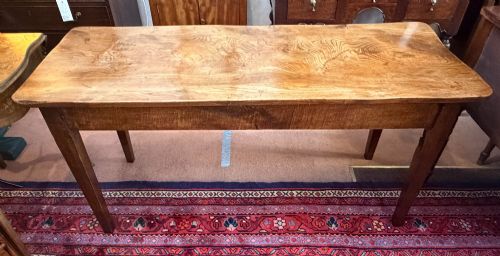
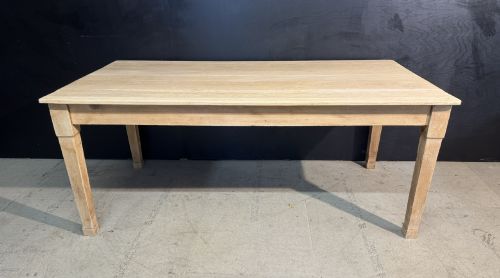
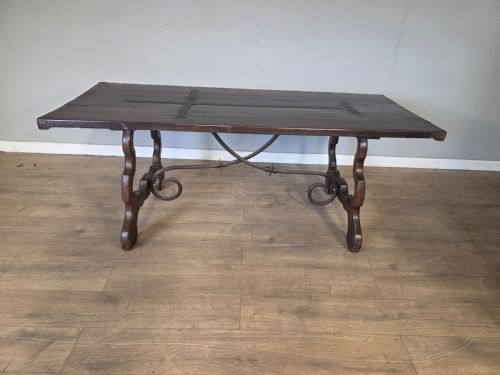
A rustic wood refectory table is a long, substantial surface designed originally for communal dining in monastic or domestic settings. You will encounter many examples originating from French provincial regions alongside English and Swedish pieces.
The form appears most frequently as a dining table, though smaller variations serve as coffee tables or serving tables. The listings show construction ranging from early eighteenth-century George I pieces up to twentieth-century reproductions and country styles.
How they were made
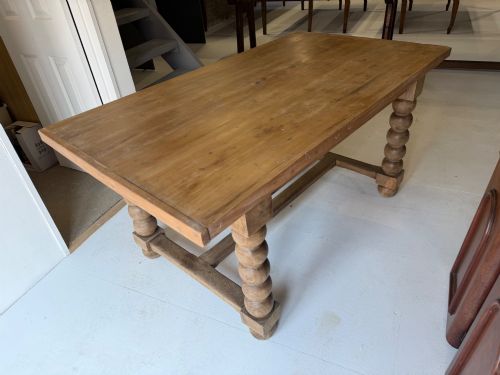
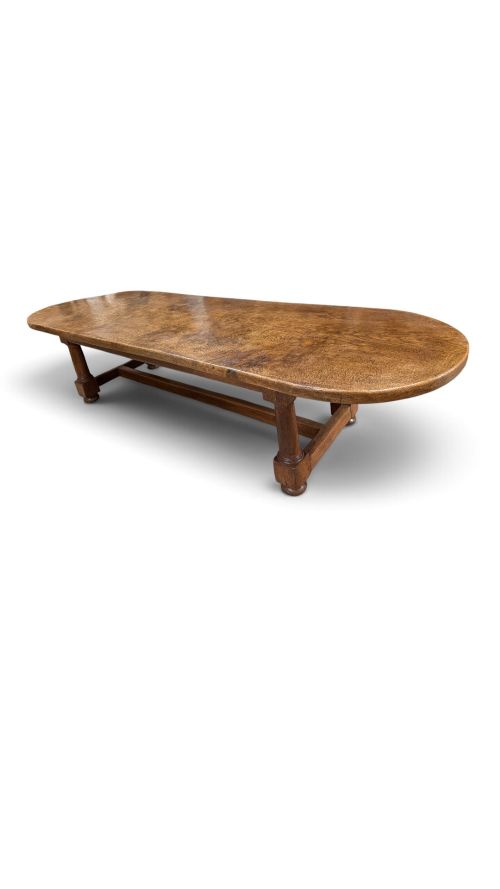
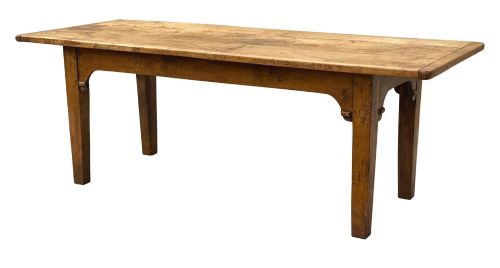
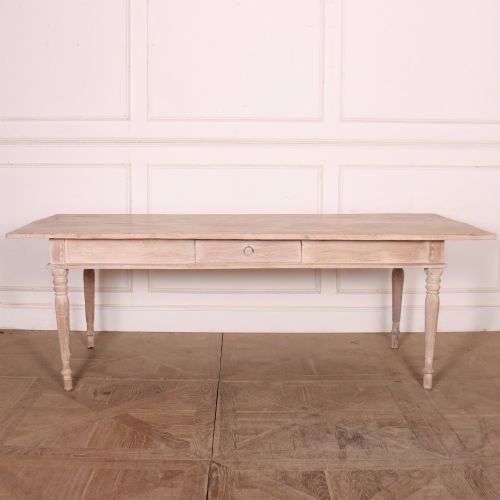
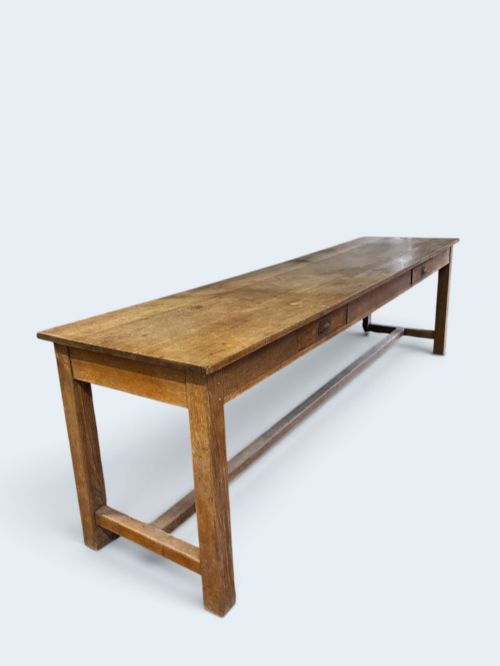
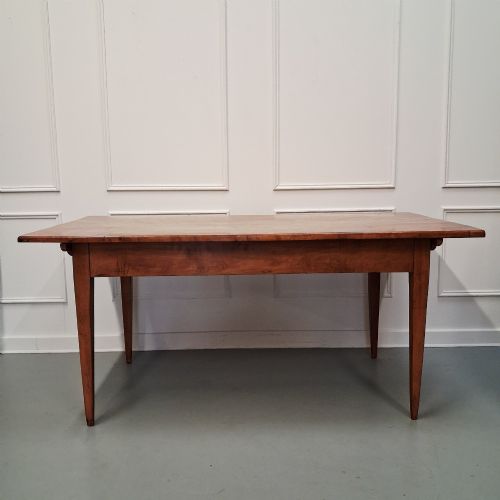
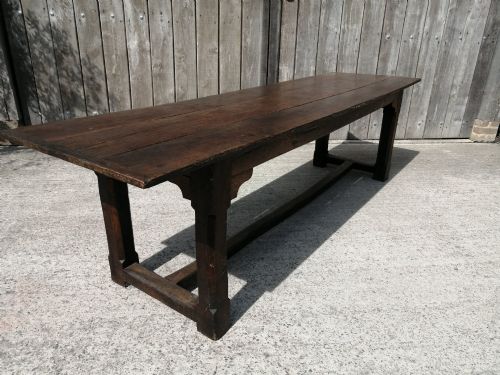
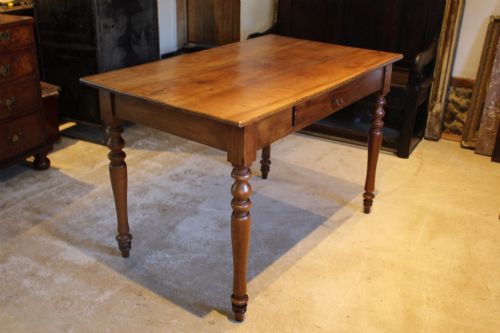
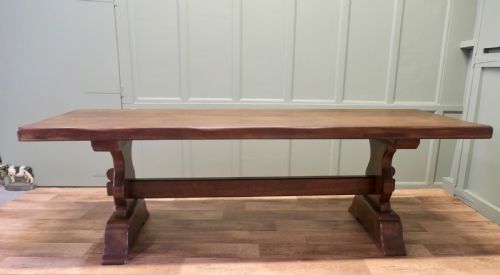
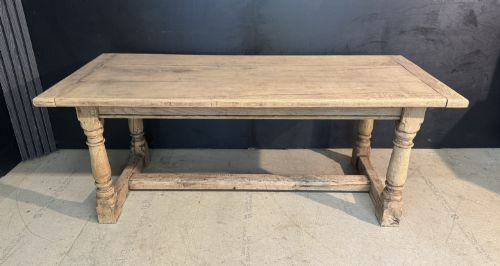
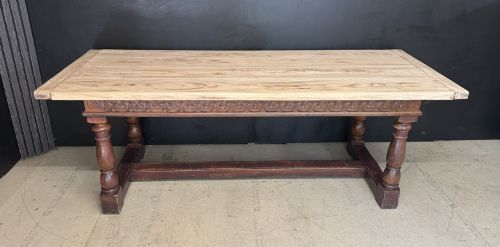
Carpenters built these tables using dense domestic hardwoods and softwoods including oak, elm, pine, cherry wood, sycamore, walnut, ash, beech, and satin birch. Tops often consist of a single plank or two boards joined together, supported by heavy trestles, end stretchers, or bobbin legs.
Joinery relied on traditional pegged and jointed construction methods designed to withstand daily use. Surfaces show the marks of hand tools, adzes, and centuries of wear rather than industrial factory finishing.
The listings show regional variety across oak, elm, pine, and cherry wood from the eighteenth century to the twentieth century.
What varies in quality
Quality rests upon the integrity of the timber selection and the proportion of the frame. Tables built from single-board tops or dense old-growth oak and fruitwoods command greater interest than those constructed from patched or lesser secondary woods.
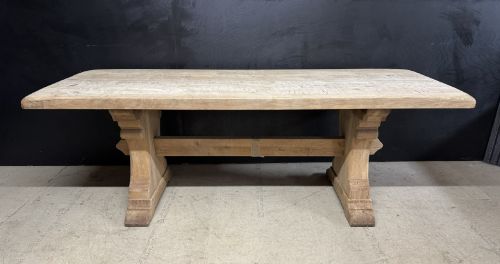
The balance between the top and the base dictates visual success. Finer examples retain their original stretchers, patination, and structural rigidity without excessive modern intervention or unsympathetic bleaching.
The Rustic Wood Refectory Table Glossary
- Refectory table
- A long dining table traditionally used in monasteries and large households for communal meals. They typically feature long boards supported by trestles or robust legs connected by stretchers.
- Single plank
- A tabletop fashioned from one continuous width of timber cut from a single tree. This feature indicates a mature tree of significant girth.
- End stretcher
- A horizontal beam connecting the legs near the floor to provide structural stability. These components prevent the table legs from wobbling under heavy use.
- Bleached oak
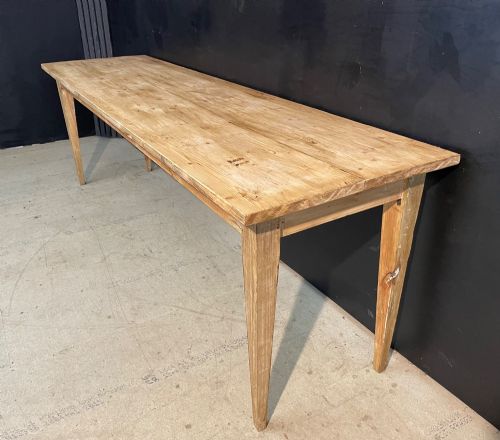
- Oak timber treated to lighten its natural tone, a finish commonly found on twentieth-century French farmhouse tables. This process softens the visual weight of the wood.
- Patina
- The surface sheen and colour developed through age, handling, and waxing over many decades. It serves as a visual record of a piece's history.
Rustic Wood Refectory Table: Frequently Asked Questions
How do I clean a rustic wood table?
Wipe the surface with a soft, slightly damp cloth to remove everyday dust and debris. Avoid harsh chemical cleaners that strip the historic finish and dry out the timber.
Apply a traditional beeswax periodically to nourish the wood and maintain its natural lustre. Buff gently with a dry cloth after application to protect against moisture rings.
Can I use a refectory table every day?
These pieces were built precisely for heavy domestic use, making them ideal for daily family dining. The robust timber construction handles regular meals, homework sessions, and gatherings with ease.
Use felt pads under hot dishes and placemats for liquids to prevent marking the antique wood. Embracing minor operational wear allows the table to continue accumulating its natural history.
How do I date an antique wooden table?
Examine the underside and joints for hand-cut tool marks, pegged joinery, and the type of saw cuts used on the timber. Eighteenth-century examples often display irregular hand-planed boards and pegged tenons.
Compare the timber species, leg turnings, and stretcher configurations against documented regional styles. Regional French and English cabinet-making traditions developed distinct structural signatures over time.
Will a large refectory table fit my kitchen?
Measure your floor space carefully, allowing at least one metre of clearance around all sides for chairs to pull out comfortably. Consider the length of the base stretchers, as these can sometimes restrict legroom for diners seated near the ends.
Check doorways and stairwells in your home before purchasing to ensure the table can be delivered safely. Many refectory designs feature fixed, non-demountable frames that require generous clearance.