
17th Century Wall Panelling
17th century wall panelling encompasses architectural timber and textile fragments that bring period texture to historic rooms.
17th Century Wall Panelling
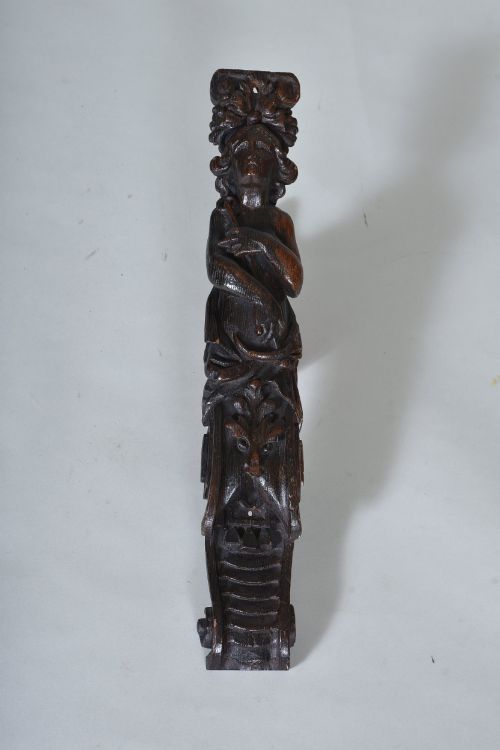
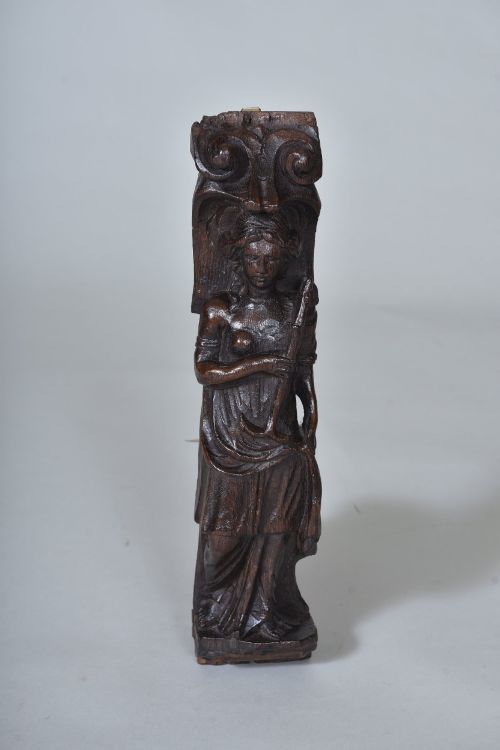
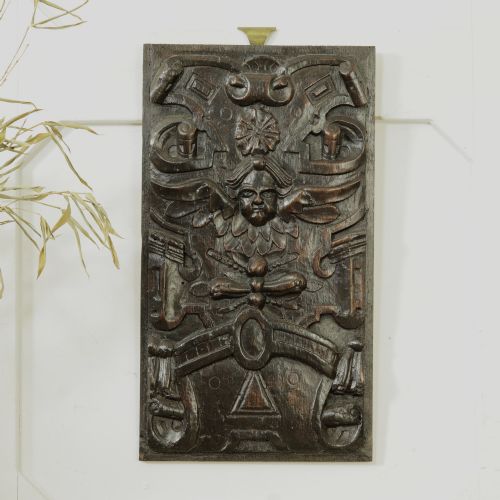
When searching for 17th century wall panelling, buyers encounter a diverse selection of architectural salvage, carved wooden panels, overmantles, and textile wall hangings. These pieces originate from various European traditions, reflecting the robust joinery and decorative arts of the period.
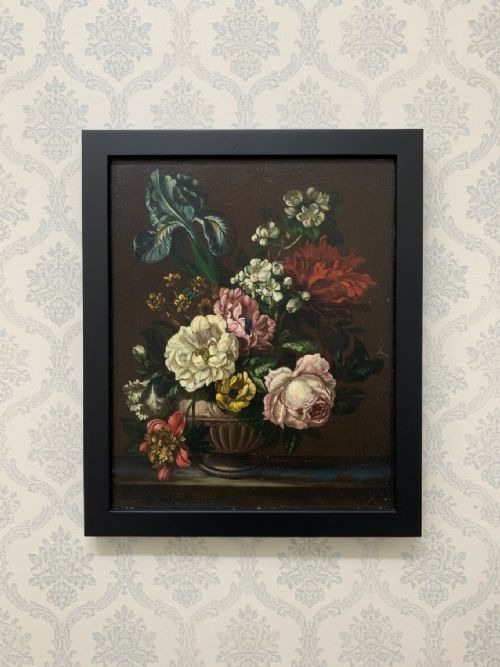
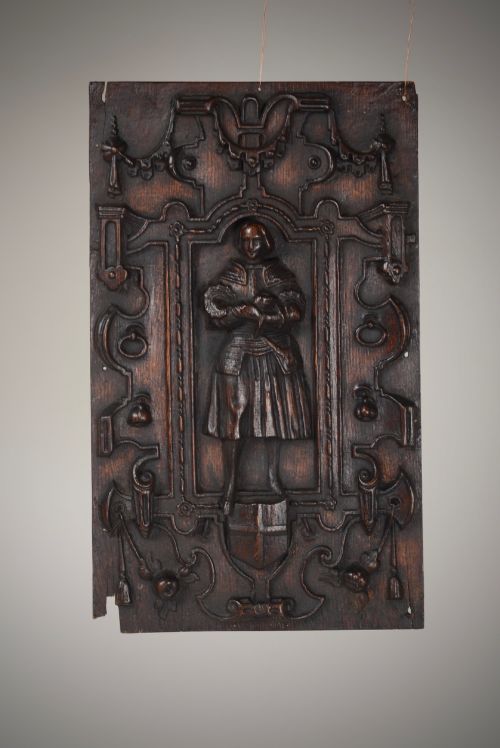
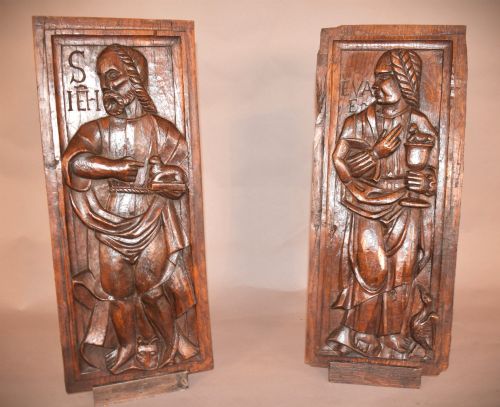
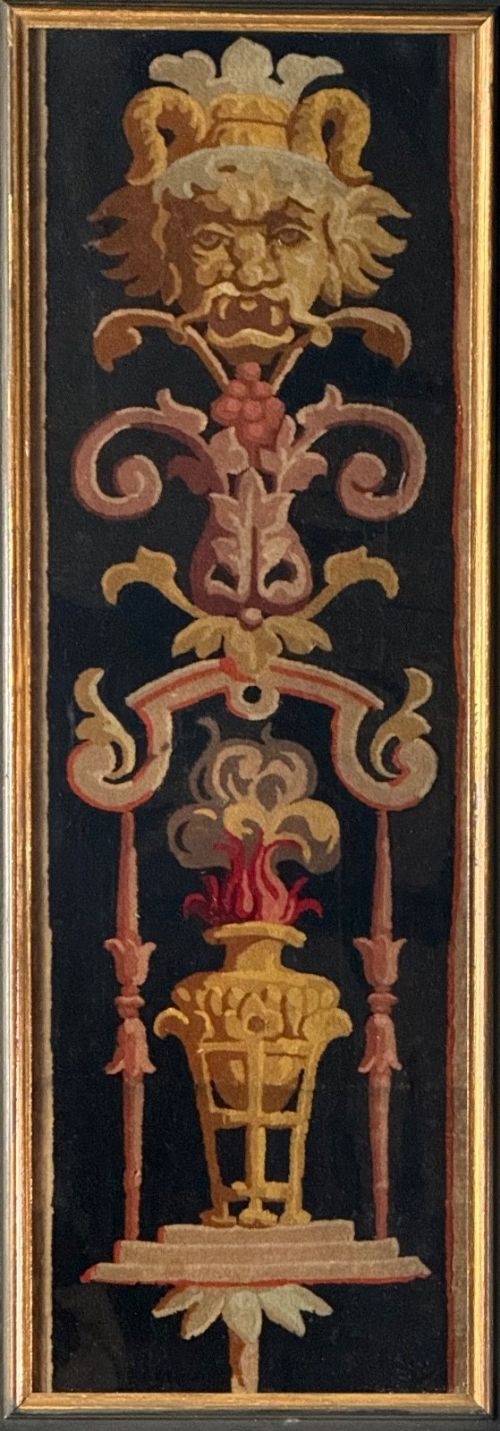
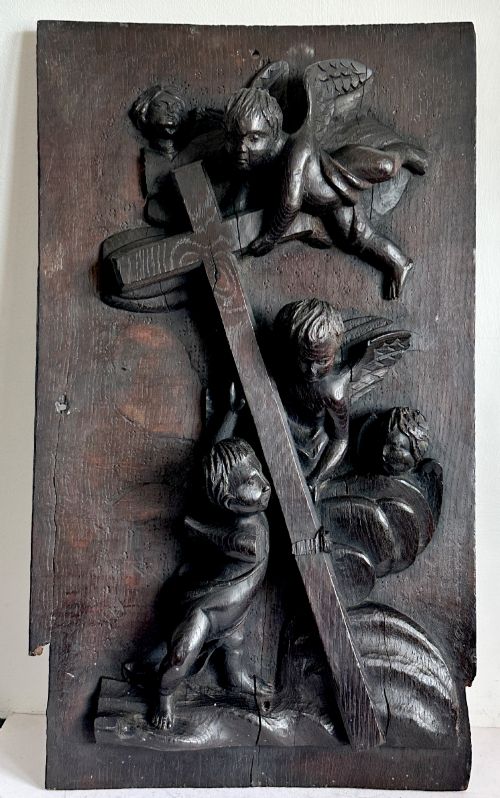
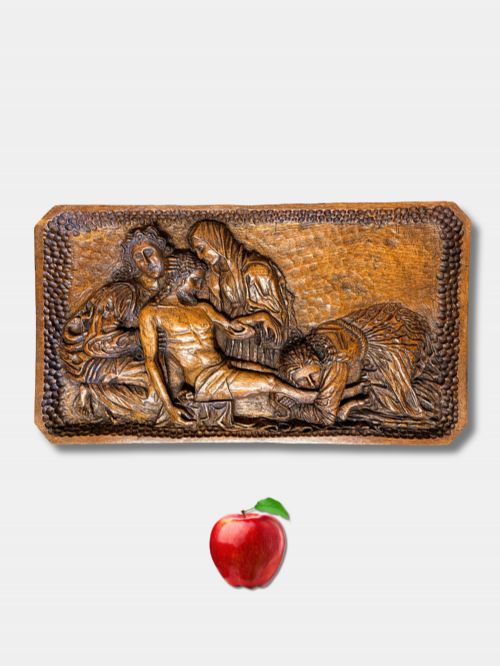
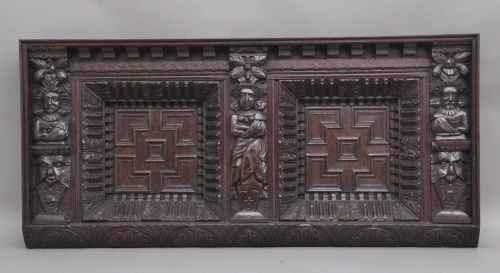
Oak carving forms a significant portion of what is available, alongside walnut and chestnut panels depicting religious scenes, classical motifs, and portraits. Verdure tapestries and embroidered textile panels also populate the selection, offering softer wall treatments contemporary to the timber elements.
Variations in Quality
Quality rests upon the depth and definition of the hand carving, where crisply rendered details in wood or textiles distinguish superior pieces from simpler work. The competency of the maker, whether an accomplished regional workshop or a notable carver, dictates the artistic merit of the relief or panel.
Condition and intactness also define the hierarchy, as fragments retaining their original colour, structural integrity, and early framing command greater interest than heavily restored or fragmentary examples.
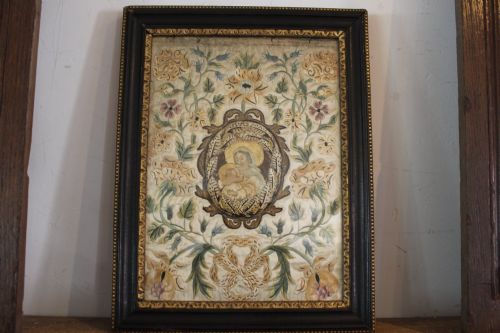
Stumpwork panels from the period occasionally feature tiny, slightly bulging silk faces peering out from remarkably elaborate embroidered landscapes.
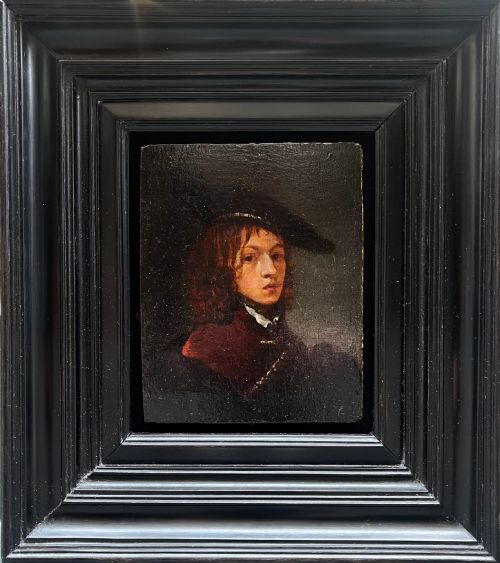
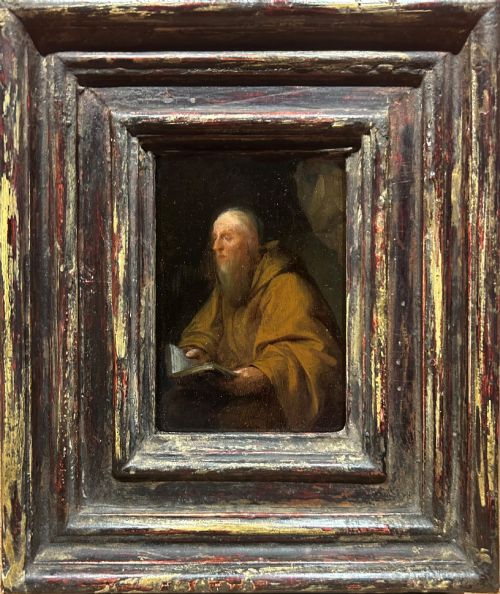
Edward Pearce·Philipp Peter Roos·Jan van Staveren
The 17th Century Wall Panelling Glossary
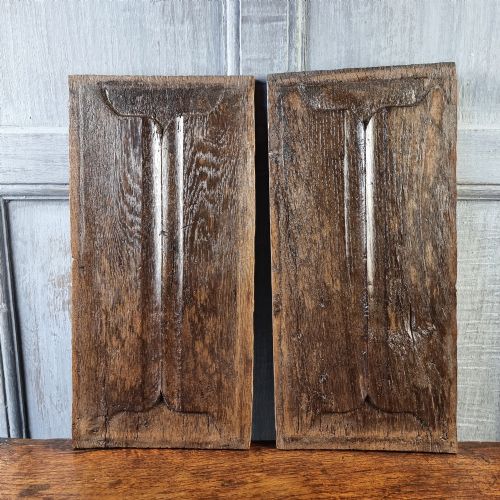
- Linenfold
- A style of wood carving that imitates folded linen cloth, frequently seen on late medieval and 17th century panels. This technique gives flat timber a textured, draped appearance.
- Verdure Tapestry
- A type of woven wall hanging featuring a predominant landscape design with foliage, trees, and often animals. These textiles were widely produced in Flanders and France during the 17th century.
- Stumpwork
- A raised embroidery style popular in the 17th century that uses padding and wire to create three-dimensional figures and motifs on silk or satin. It frequently depicts historical or biblical scenes.
- Overmantle
- A decorative architectural element positioned directly above a fireplace opening. In 17th century interiors, these frequently featured large carved wooden panels or oil paintings.
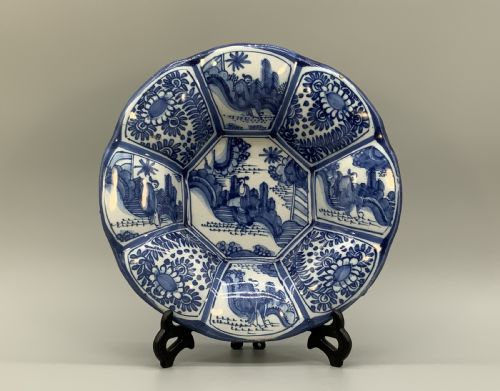
- Kraak Style
- A type of Chinese porcelain exported to Europe and imitated in Dutch delftware during the 17th century, characterised by panelled borders and blue and white motifs.
17th Century Wall Panelling: Frequently Asked Questions
How were 17th century panels originally installed?
Carpenters fitted wooden panels directly onto interior walls using tongue-and-groove joints or secured them within framing styles to cover masonry and insulate rooms.
Larger sculptural pieces often served as overmantles above hearths or formed part of extensive wainscoting schemes in wealthy residences.
Are textile panels fragile?
Historic textiles like tapestries and embroideries require careful handling due to the natural degradation of silk, wool, and linen over the centuries.
Displaying them away from direct sunlight helps preserve the dyed threads and fragile woven structures.
What is the difference between oak and walnut panels?
Oak panels tend to feature heavier grain patterns and were the standard domestic timber used across Northern Europe during the 16th and 17th centuries.
Walnut offered a finer grain that allowed for more intricate, shallow relief carving, frequently favoured in continental workshops.
How do you clean antique wood panels?
Maintenance generally requires only gentle dusting with a dry, soft cloth to prevent the accumulation of dirt within deep carvings.
Applying modern polishes or harsh chemical cleaners should be avoided to protect the aged patina and original surface finish.