


17th Century Seat
When seeking a 17th century seat, you are looking at heavy timber armchairs, joined stools and settle benches that defined early domestic rooms.
17th Century Seat
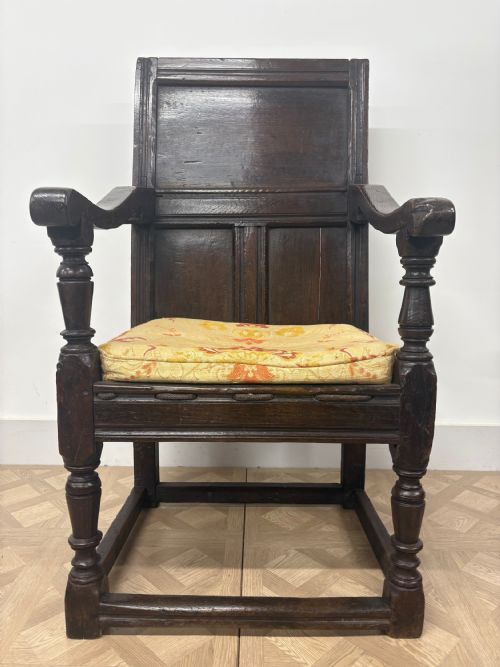
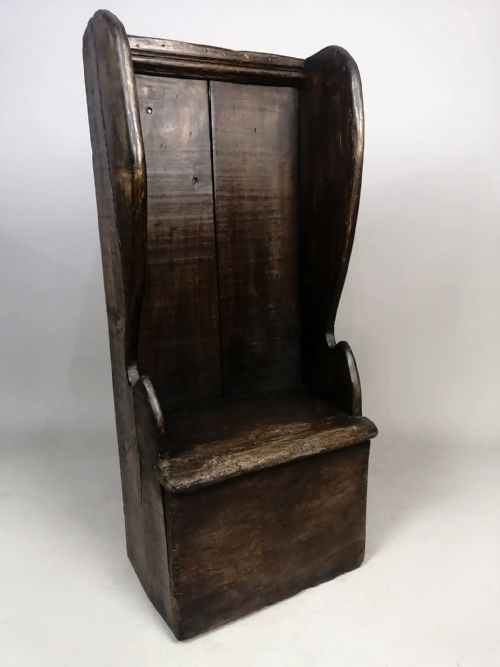
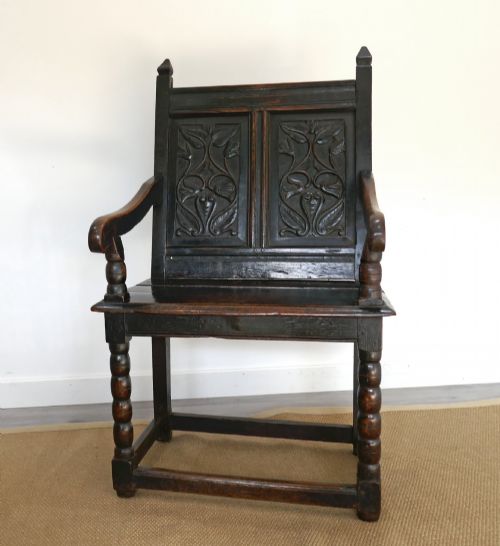
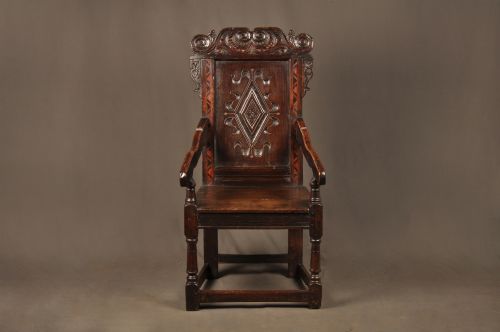
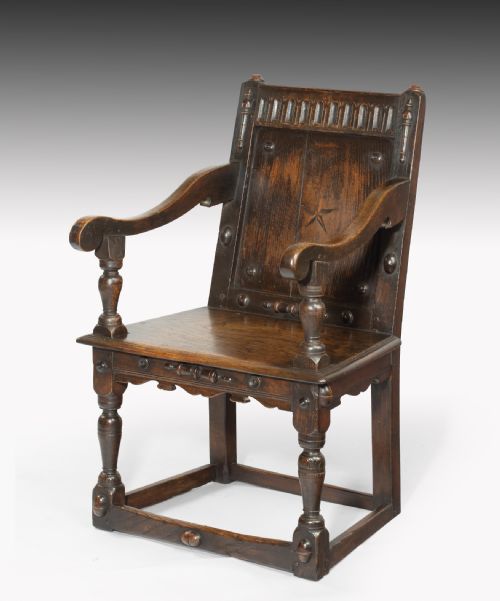
A 17th century seat encompasses sturdy oak wainscot armchairs, panelled box settles, and joined stools originating from English regional workshops. These survivors range from regional vernacular chairs with high wooden backs to later revival pieces created in the nineteenth and early twentieth centuries.
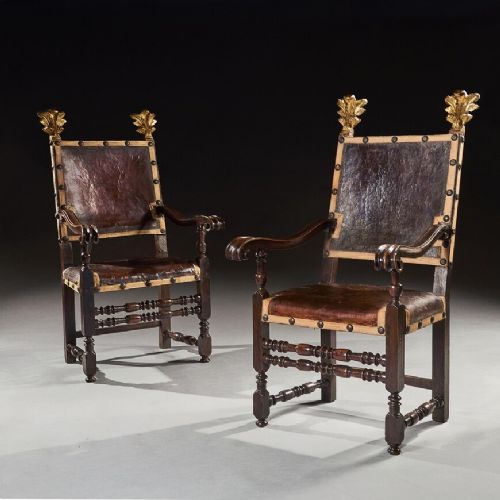
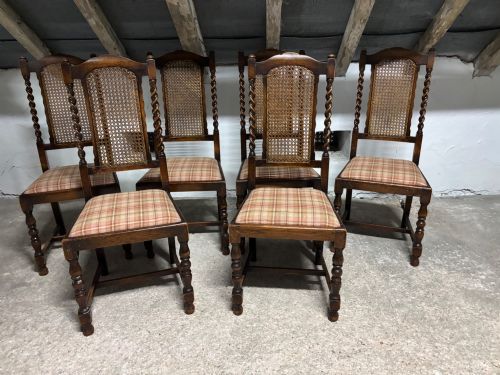
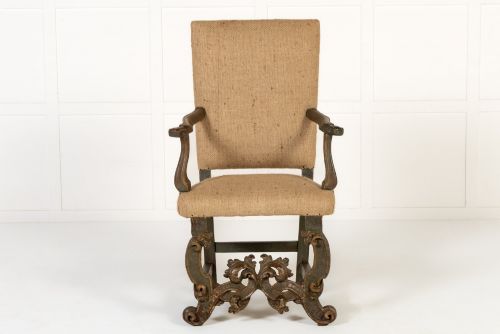
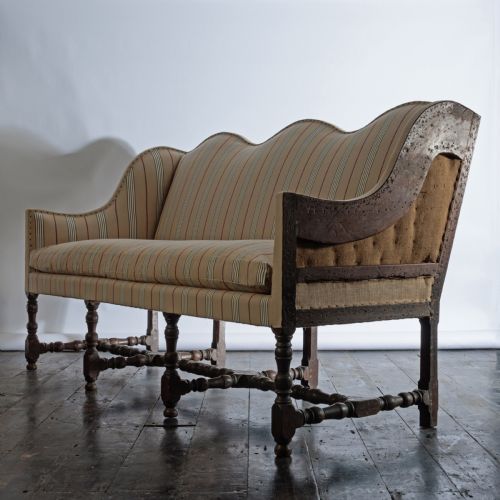
Buyers also encounter sophisticated continental examples, including Italian Baroque walnut armchairs and carved seating utilising exotic woods from distant trade routes. Alongside these timber forms appear long benches, dining chairs with caned panels, and upholstered wingback sofas bearing the hallmarks of Carolean and William III aesthetics.
How they were made
Construction relies heavily on solid oak, walnut, and fruitwood joined together with mortise and tenon framing secured by wooden pegs rather than modern metal fasteners. Panel work within backs and box seats provides structural stability while offering flat surfaces for intricate geometric or floral carving.
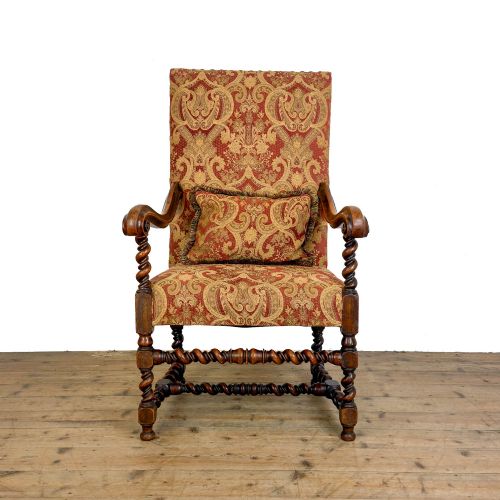
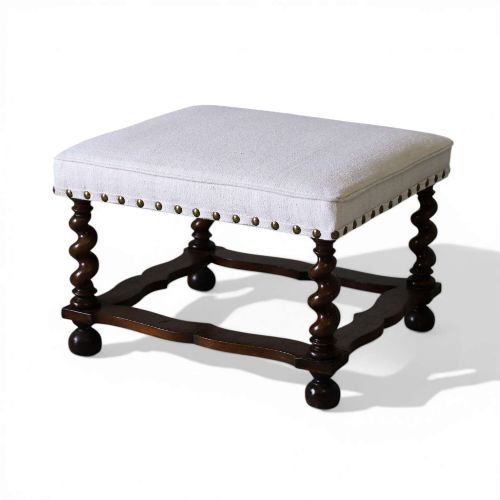
Surface detailing involves hand carving, turning on lathes to produce components like barley-sugar legs, and applying applied mouldings. Upholstered versions incorporate stretched leather, heavy fabric, or cane work laced through drilled timber frames.
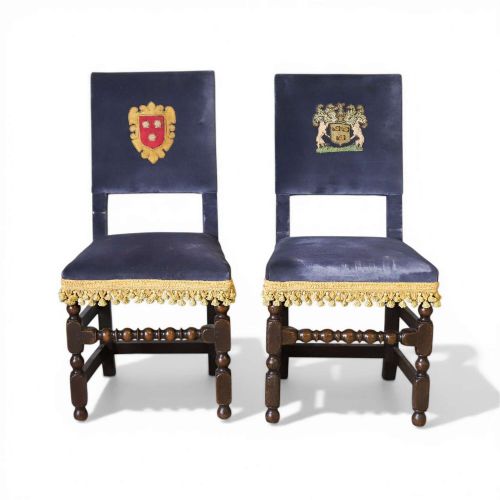
Listings feature regional English oak wainscot chairs alongside Italian Baroque walnut armchairs and twentieth-century revival dining sets.
What varies in quality
The degree of original surface patination and timber selection distinguishes superior examples from standard ones, with dense, deeply grained oak and richly figured walnut commanding greater attention. The crispness and depth of hand-carved details, from heraldic crests to regional strapwork, reflect the skill of the original maker.
Structural integrity also dictates worth, as pieces retaining their primary joints, unreplaced stretchers, and period upholstery methods hold more historical weight than those heavily restored or assembled from mismatched elements across centuries.
The 17th Century Seat Glossary
- Wainscot
- A heavy wooden armchair with a panelled back and solid seat, typical of domestic interiors. These pieces often feature carved crest rails and sturdy arm supports.
- Settle
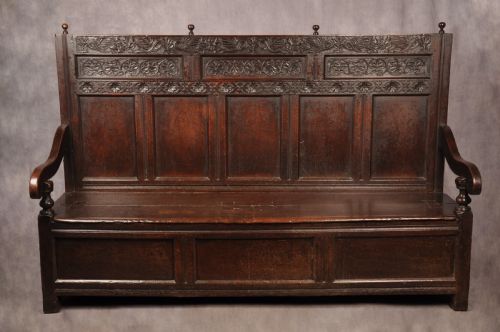
- A high-backed wooden bench with solid sides and a box base used to block drafts in large halls. Many incorporate hinged seats concealing storage space beneath.
- Joint stool
- A low wooden stool constructed with mortise and tenon joints using turned legs and stretchers. They served as versatile seating and small side tables.
- Barley-sugar twist
- A turned wooden furniture leg or stretcher carved in a spiral resembling confectionery. This decorative technique became prominent during the seventeenth and revival periods.
- Oyster veneer
- Slices cut across small branches of walnut to create circular oyster-like patterns on furniture surfaces. This decorative technique demands precise cabinet-making skills.
17th Century Seat: Frequently Asked Questions
How do I spot a true 17th century seat?
Examine the timber joints for hand-cut pegged mortises and look for natural surface wear that matches centuries of use. Genuine early examples display tool marks from adzes and pits rather than modern machine saws.
Check the timber species and construction methods against regional styles. Lancashire and Yorkshire pieces often exhibit distinct panel carvings and proportions unique to those northern English workshops.
What is the difference between wainscot and panelled seats?
A wainscot chair specifically refers to a heavy wooden armchair featuring a panelled back construction derived from wall panelling techniques. They are substantial pieces meant for heads of households.
Other panelled seats include box settles and chests adapted for sitting, which utilise similar tongue-and-groove framing. These structures prioritised enclosed storage alongside seating utility.
Can I use an antique settle daily?
Solid oak and walnut settles remain exceptionally sturdy and function well in modern hallways or kitchens. Their robust timber frames tolerate regular sitting provided humidity in the room remains stable.
Protect antique wood surfaces from direct heat sources and moisture to prevent timber shrinkage. Adding simple loose cushions protects historic upholstery or bare wooden seats from excessive wear.
Why do some 17th century style seats date to later periods?
Victorian and Edwardian craftsmen frequently revived seventeenth-century aesthetics, producing high-back dining chairs and carved armchairs to satisfy historicist tastes. These revival pieces imitate earlier joinery and decorative motifs.
Inspect the undersides, interior timber colour, and fastener types to determine age. Revival pieces often utilise secondary woods or mechanical fastenings inconsistent with seventeenth-century joinery practices.