


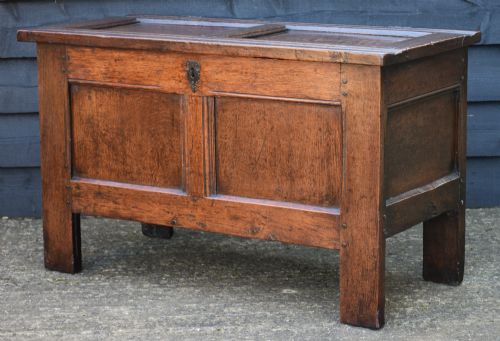
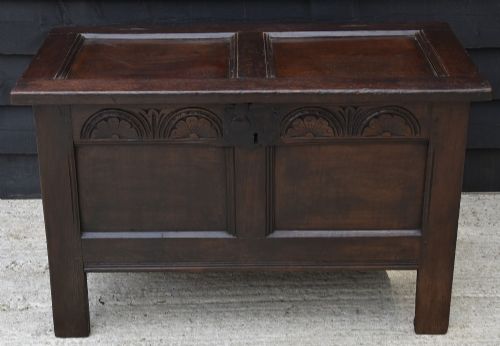
17th Century Panelled Chest
A 17th century panelled chest offers robust timber construction and historic joinery, providing practical storage with deep period character.
17th Century Panelled Chest
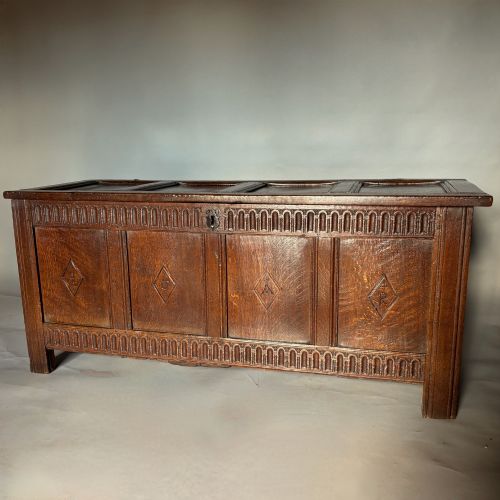
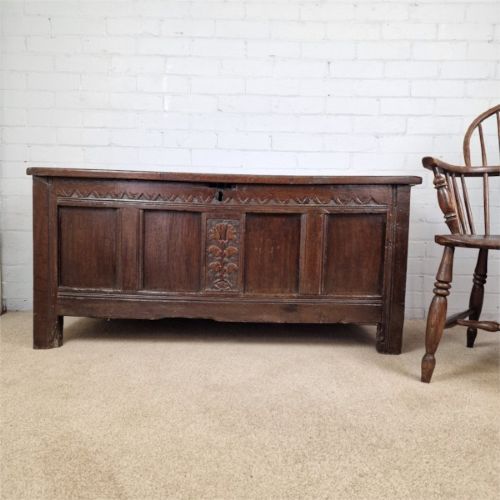
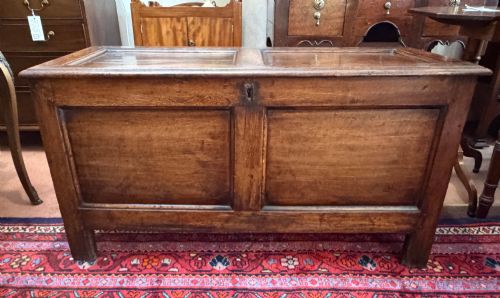
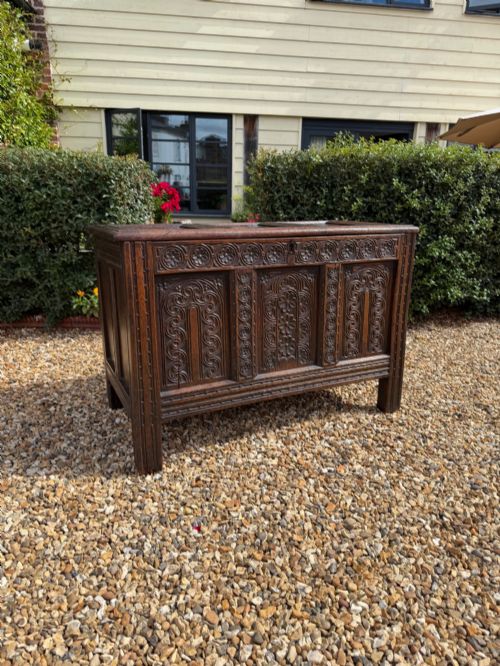
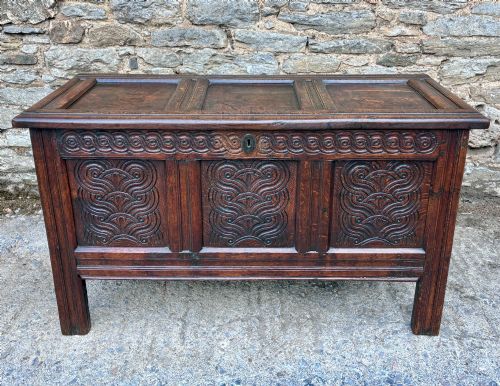
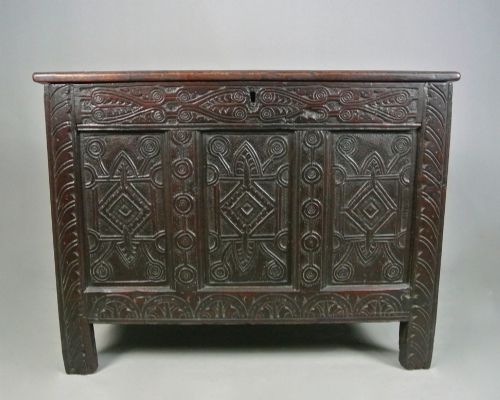
A 17th century panelled chest typically appears as an oak coffer or storage box constructed with framed panels to accommodate timber shrinkage. These sturdy pieces served homes for storing textiles, valuables, and household goods across generations.
The versions most common on this page span the Jacobean and Charles II eras, alongside later revival pieces from the twentieth century. Regional examples from Wales, Cornwall, and Dorset frequently join broader English iterations in oak.
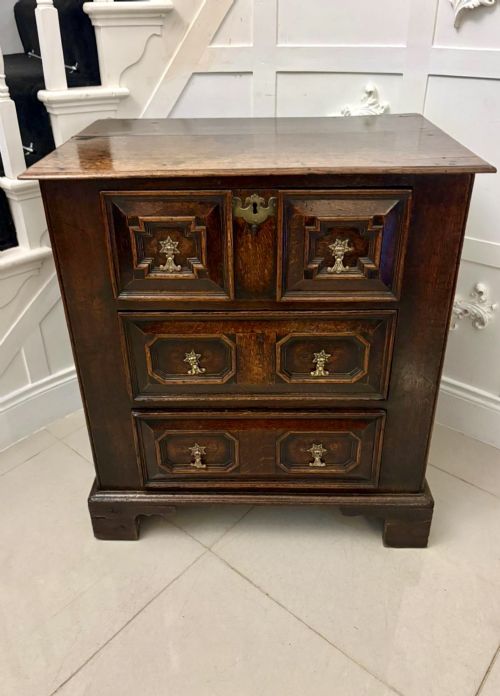
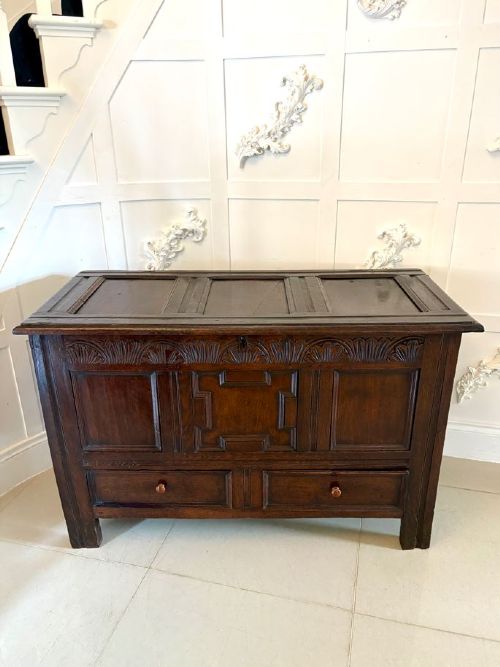
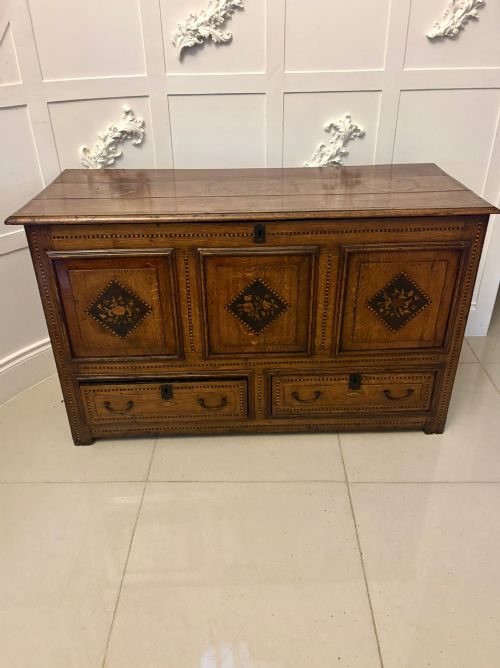
Beyond standard coffers, related forms include mule chests fitted with lower drawers, chests of drawers, and chests on stands. Some examples incorporate walnut, marquetry inlay, or brass details alongside the primary solid oak framework.
Materials and Construction Methods
Makers relied principally on solid oak, utilising frame-and-panel construction to build bodies that could endure seasonal humidity changes without splitting. Joinery relied on mortise and tenon joints secured with wooden pegs rather than metal nails.
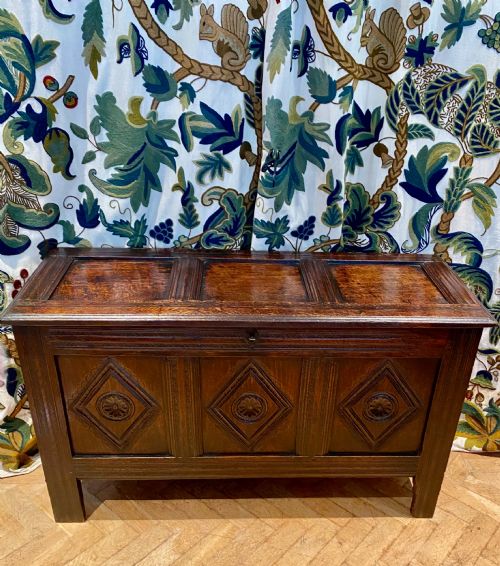
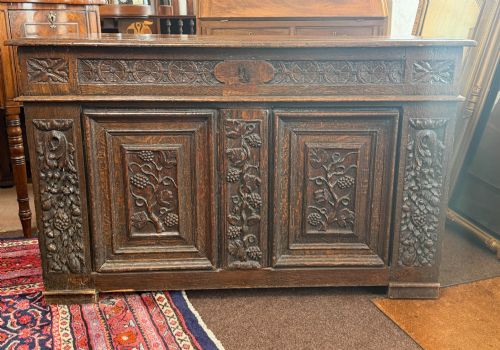
Carving, moulding, and geometric panelling added surface detail to the front sections, sometimes enhanced by marquetry inlay or contrasting ebonised wood. Iron hinges, locks, and brackets provided functional reinforcement to lids and storage compartments.
Period styles span Jacobean, Charles II, William and Mary, and Georgian eras, alongside twentieth-century revival interpretations.
Evaluating Quality and Character
Quality rests heavily on the integrity of the original timber and the crispness of hand carving or geometric moulding on the panels. Pieces retaining their early boarded lids, working iron hardware, and honest surface patina command stronger interest from collectors.
Proportion and scale also influence standing, with smaller dimensions or distinct regional traits such as Welsh Gower or Cornish Gothic carving marking out particular craftsmanship. Alterations to the base, feet, or lid structure differentiate untouched survivals from heavily restored examples.
The 17th Century Panelled Chest Glossary
- Panelled chest
- A storage box constructed from wooden frames fitted with floating centre panels designed to stabilise the wood. This technique prevents the timber from cracking as atmospheric conditions shift.
- Coffer
- A heavy wooden chest traditionally used for safekeeping valuables and documents. Many early examples feature hinged flat lids and deep interior compartments.
- Mule chest
- A storage chest featuring one or more drawers built into the base beneath the main compartment. They bridge the design gap between traditional coffers and modern chests of drawers.
- Geometric panelling
- Surface decoration formed by applied mouldings arranged in geometric patterns across the drawer fronts or chest panels. It became particularly popular during the later seventeenth century.
- Marquetry
- The art of applying decorative veneer pieces in wood to form intricate patterns on furniture surfaces. It appears on selected high-status chests alongside traditional carving.
17th Century Panelled Chest: Frequently Asked Questions
What were 17th century panelled chests used for?
These boxes served primarily to store textiles, heavy garments, linens, and household valuables safely away from damp floors. In larger households, they also functioned as impromptu benches or tables within the main hall.
Over time, their role evolved as drawer additions allowed owners to organise smaller items more efficiently without lifting the main top lid.
How do I spot a later revival chest?
Twentieth-century revival pieces often display machine-cut timber marks, uniform colour, and modern internal hardware that differs from seventeenth-century manufacturing methods. Examining the underside, peg construction, and wear patterns helps clarify the actual age of the timber.
Revival furniture from the 1920s and 1930s frequently mimics Jacobean styles closely, requiring careful inspection of the joints and patination to determine period authenticity.
Where were these chests made?
Most surviving examples originate from English workshops, with distinct regional variants emerging from areas such as Wales, Cornwall, and Dorset. Regional cabinet makers utilised local timber stocks and traditional local carving motifs.
Occasional pieces from further afield, including Portuguese colonial workshops, introduced exotic hardwoods like mahogany combined with brass mounts to the broader market.
How should I care for an oak chest?
Keep wooden chests away from direct heat sources and dramatic humidity swings to prevent the oak panels from shrinking or warping. Applying occasional traditional wax helps maintain the surface sheen and nourishes the historic finish.
Avoid heavy liquid polishes that can build up a sticky residue over the hand-carved details and original patinated surfaces.