


Carved Oak Storage Coffer
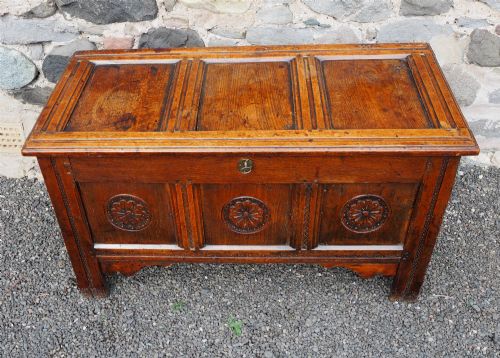
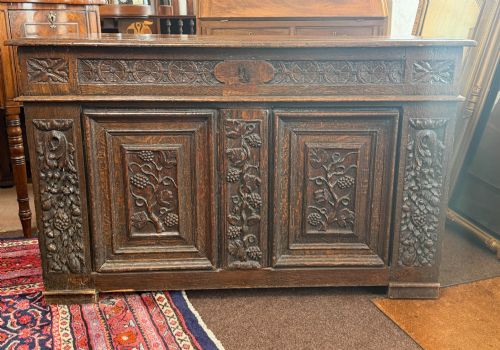
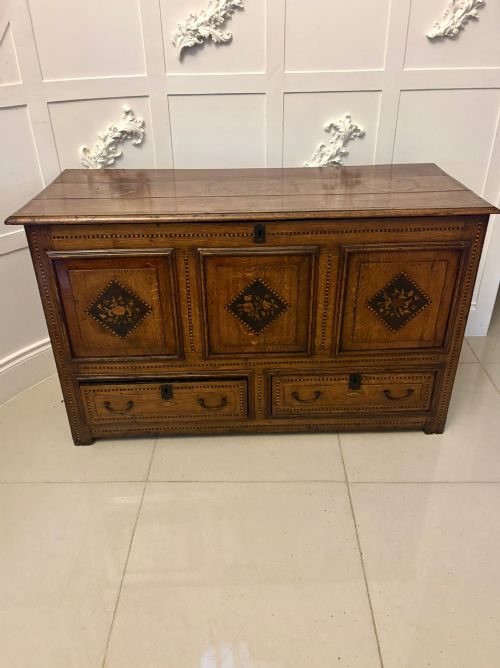
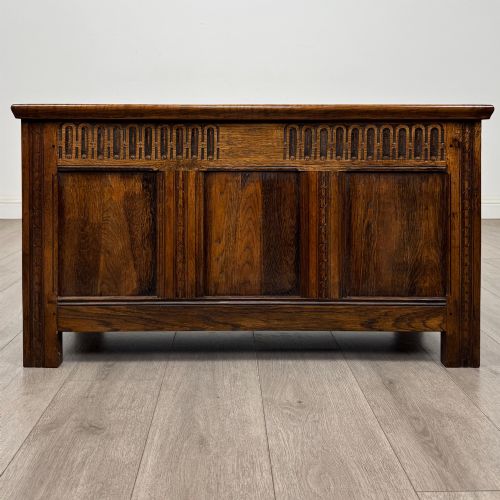
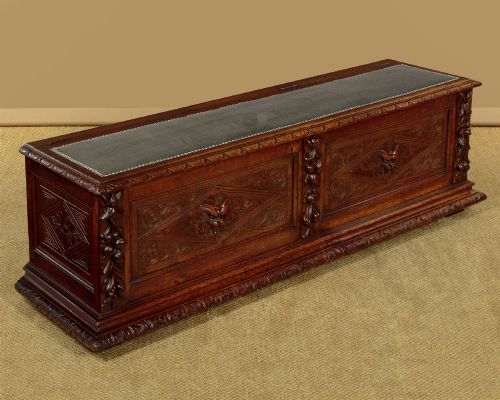
These heavy timber boxes provide a carved oak storage coffer to anchor a room while swallowing household clutter.
Carved Oak Storage Coffer
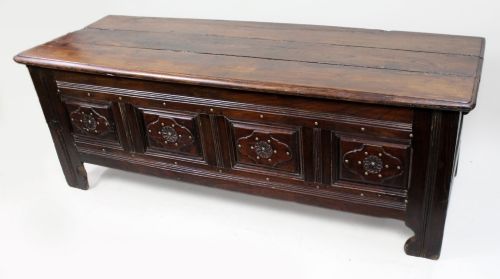
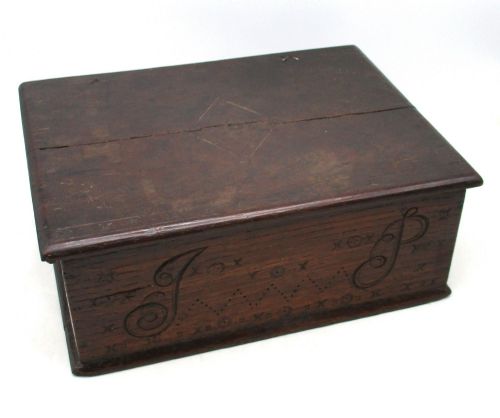
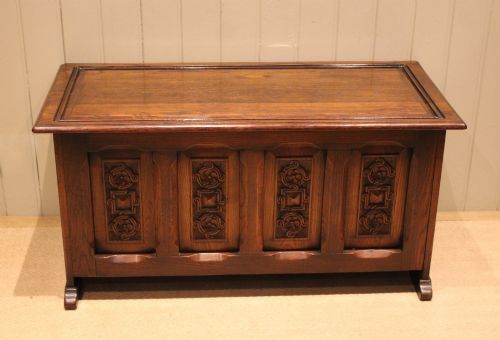
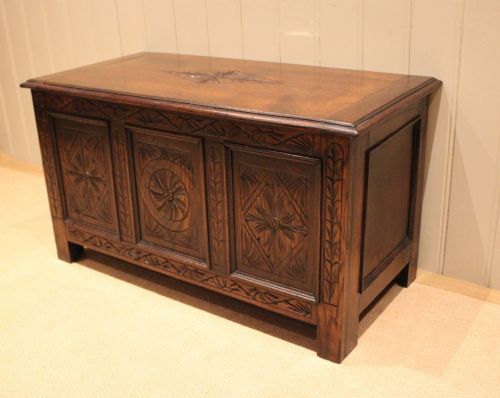
A carved oak storage coffer stands as a sturdy domestic container built primarily to hold linens, documents and valuables in pre-modern homes. The examples gathered here range from early provincial pieces dated to the sixteenth and seventeenth centuries through to later revival interpretations made in the twentieth century.
Most items on this page take the form of panelled chests, mule chests fitted with lower drawers, or hinged blanket boxes. Regional variations appear among the Welsh and English pieces, showing how local joiners adapted standard box construction to domestic needs.
How they were made
Makers built these pieces using solid oak planks assembled with frame and panel construction to accommodate the natural seasonal movement of timber. Joiners utilised mortise and tenon joints secured with wooden pegs rather than metal nails.
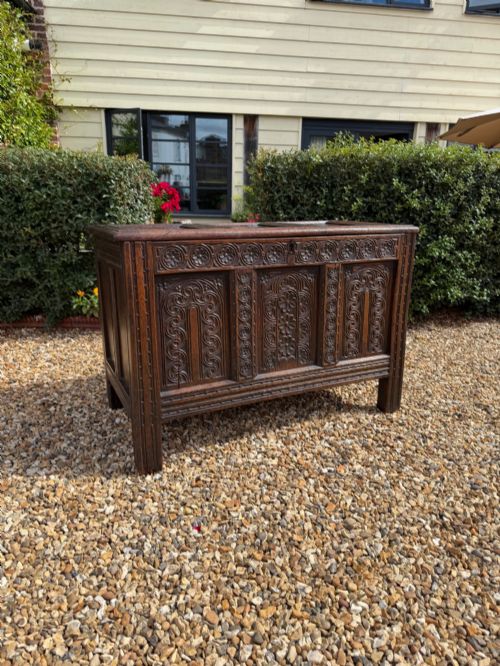
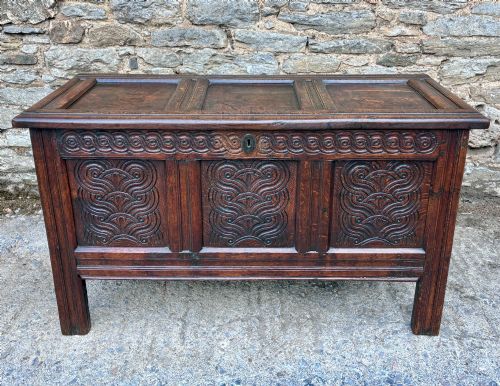
Surface ornament relied on hand chisels to gouge out strapwork, lunettes and floral motifs directly into the heartwood. Iron hinges, brackets and latches forged by hand provided the functional hardware necessary for daily opening and closing.
Carved Oak Storage Coffer Retail Price Guide 2026
Typical asking prices for carved oak storage coffer among the pieces listed under this phrase on Sellingantiques today, from the lower quarter to the upper quarter. They describe what is for sale here now, not the wider market.
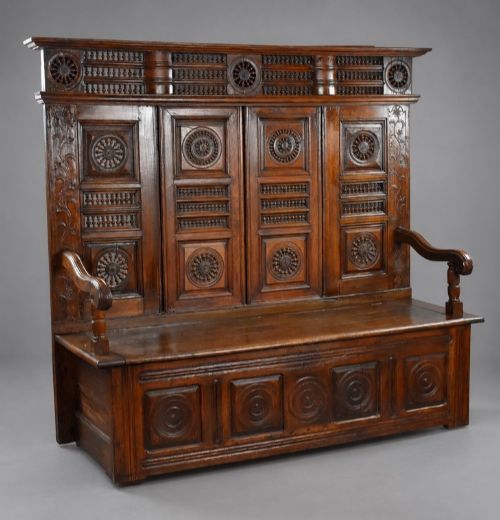
Several listings manage to disguise themselves as seats, folding out into monks' benches with unexpected dual personalities.
What varies in quality
The sophistication of the carved relief work dictates the upper tier of quality, distinguishing pieces carved by trained hands from those executed by rural carpenters with simpler tools. Crisp depth in the chiselling and well-proportioned stile and rail framing separate superior items from plain utility boxes.
Integrity of the original timber structure and the survival of early hardware heavily influence standing. Pieces retaining their original board lids, floorboards and mounting ironwork command greater respect than those rebuilt with replacement panels or modern hinges.
The Carved Oak Storage Coffer Glossary
- Mule chest
- A storage chest featuring one or more drawers beneath the main lift-top compartment. This form emerged when makers realised lower drawers offered easier access without disturbing items stacked inside the upper well.
- Stile
- The vertical framing member in panel construction that gives structural rigidity to the front and sides of a coffer. Stiles receive the tenons cut from horizontal rails to form the structural skeleton.
- Marquetry
- Decorative veneer work using different coloured wood or other materials laid in geometric or pictorial patterns onto a solid core. It appears on select high-status seventeenth-century examples.
- Panelling
- Construction method where thinner boards fit into grooved frames to prevent warping as the wood expands and contracts. This technique defines the walls of most period coffers.
Carved Oak Storage Coffer: Frequently Asked Questions
What did people store in an oak coffer?
Households used these heavy chests to keep valuable woollen blankets, fine linen sheets, silver and important legal documents safe from damp and thieves.
Because houses lacked built-in wardrobes, the coffer served as the primary portable wardrobe for a family's most cherished portable possessions.
How do I date an old oak coffer?
Examine the construction marks, joint types and the style of the hand-carving on the front panels. Early pieces rely entirely on pegged mortise and tenon joinery and hand-rived boards.
Hardware such as forged iron strap hinges and the absence of circular saw marks also point towards earlier sixteenth or seventeenth-century production dates.
Where should I place a coffer at home?
These robust pieces function well at the foot of a bed, beneath a hallway window or serving as a low coffee table in a living room. Their flat lids provide a sturdy surface for lamps, books or decorative objects.
Keep them away from direct heat sources and radiators to prevent the dry oak boards from splitting or warping over time.
What is the difference between a coffer and a chest?
The terms are often used interchangeably, though a coffer traditionally denotes a heavy box with a domed or flat lid intended for valuables and travel. Chests can sometimes refer strictly to bedroom storage furniture.
In historical terminology, a coffer often implies a higher grade of construction and ornamentation meant for display in the main rooms of a house.